

Stellantis is a multinational automotive manufacturing company headquartered in Amsterdam, established between Fiat Chrysler Automobiles and the PSA Group. The CS.00056 standard developed by this company defines the minimum environmental stress-based qualification and verification requirements for the qualification of all electrical/electronic components (devices) used in Stellantis programs. This standard describes environmental and durability tests for electrical/electronic components based on mounting location.
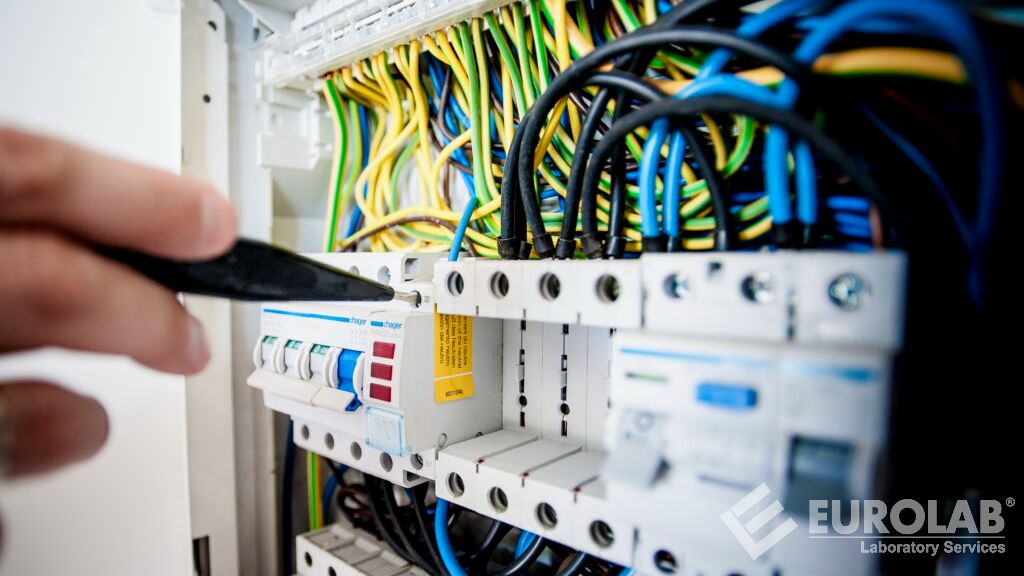
The CS.00056 standard applies to the E2 component type classification. Devices with passive electronic components without a control function, for example LEDs, varistors, resistor filters, capacitors, inductances, fall within the scope of this standard. Electric motors without integrated electronic controllers, relays and switches are also covered by this standard when they contain diodes, varistors, capacitors, resistors, inductors or potentiometers.
CS.00056 also applies to the E3 component type classification. Devices with control/monitoring functions, such as electronic modules, active sensors, display systems, motors and actuators with active electronics, and more generally devices equipped with microcontrollers, integrated circuits, transistors and the like, fall within the scope of this standard. Simple analog electronic circuits with transistors or other solid state devices also fall into this category when performing any type of signal processing or control function.
The main tests performed under this standard are: solder evaluation, transport/storage temperature exposure, low temperature operating durability, high temperature operating durability, enhanced thermal cycling durability, thermal shock, thermal humidity cycling, high temperature and high humidity resistance, solar radiation, mechanical vibration, mechanical shock, mechanical operating durability, ingress of dust, immersion in salt water, heavy fog and chemical exposure.
The electrical and electronics industry impacts the environment and will continue to do so as it develops. The increasing use of electronics in power generation, lighting, motor control, sensors, and many other applications has led to positive developments in energy efficiency and the ability to monitor and control the environment . However, the proliferation of electronic products results in significant e-waste in landfills, increased energy consumption, and the release of hazardous substances into the environment. In this respect, standards like CS.00056 are becoming increasingly important.
Among the numerous test, measurement, analysis and evaluation studies it provides for businesses in various sectors, our organization also provides environmental properties testing services for electrical/electronic components within the scope of CS.00056 standard, with its trained and expert staff and advanced technological equipment.
To get an appointment, to get more detailed information or to request an evaluation, you can ask us to fill in our form and reach you.

