
DIN 53482 Measurement of Electrical Resistance of Non-Metallic Materials for Electrical Purposes (VDE Specification)

DIN 53482 Measurement of Electrical Resistance of Non-Metallic Materials for Electrical Purposes (VDE Specification)

The standard “DIN 53482 Test methods for electrical materials - Measurement of electrical resistance of non-metallic materials (VDE specification)”, published by the German Institute for Standardization (DIN), describes methods for testing the electrical resistance of non-metallic insulating materials. These methods were primarily used to determine the volumetric and surface resistance of a material to assess its suitability for electrical insulation and its ability to dissipate electrostatic charges. This standard is no longer actively used and has been completely replaced by the following international equivalents:
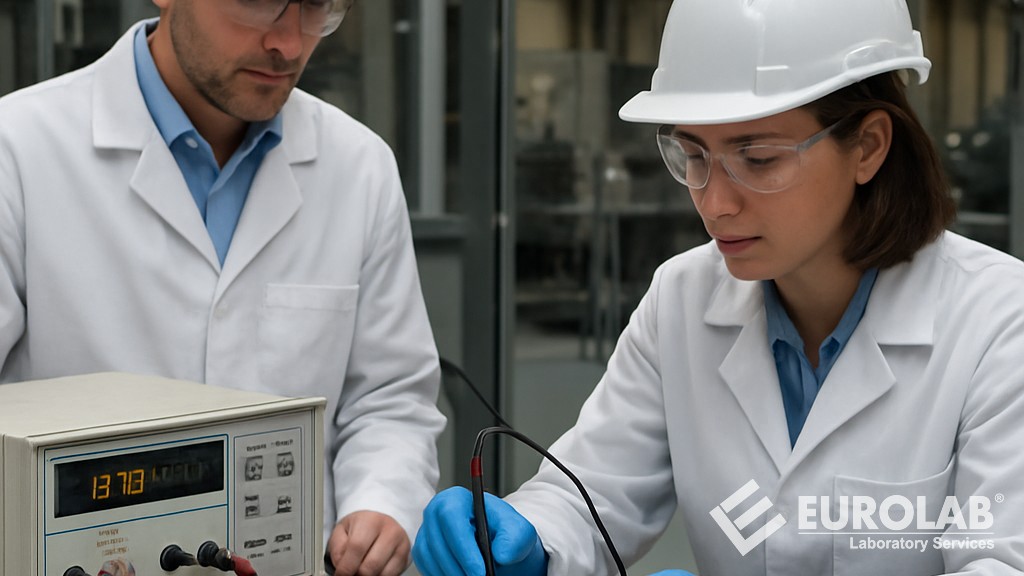
DIN 53482 Measurement of Electrical Resistance of Non-Metallic Materials for Electrical Purposes (VDE Specification)

  • DIN IEC 60093 VDE 0303-30 Test methods for insulation materials - Volumetric resistivity and surface resistivity of solid electrical insulation materials
  • DIN IEC 60167 VDE 0303-31 Test methods for insulation materials - Insulation resistance of solid insulation materials

The DIN 53482 standard defines specific geometries and conditions for measuring how materials resist electrical current:

  • Surface resistance: Measured on a flat sample using spring-loaded metal blade electrodes (100 mm long) at a distance of 10 mm or rod electrodes (25 mm long) at a distance of 2 mm.
  • Volumetric resistance: Determined by measuring the current passing through the thickness of the material; shielding ring electrodes are often used to eliminate surface conductivity interference.
  • Test conditions: According to this standard, resistance is typically determined at 1.000 Volts DC. Tests for antistatic materials have sometimes been performed at 100 Volts DC.

Materials tested under this standard are widely used in industries requiring high insulation or controlled conductivity:

  • Electrical components: Used in testing insulation varnishes, electric motors, and generators.
  • Antistatic floor coverings: Used in intensive care units or areas with a risk of explosion to evaluate the ability of floor coverings to transfer loads to the ground.
  • Plastics: Used in the electrical testing of non-metallic materials such as polycarbonate and PVC-U.

The DIN 53482 standard covers test methods for materials used in electrical applications and focuses specifically on determining the electrical resistance (both volumetric and surface resistance) of non-metallic materials. It is particularly important in the fields of electrical insulation, plastics, rubbers, composites, antistatic materials, and other dielectrics.

This standard is also referred to as VDE 0303-3 (Electrical, Electronics and Information Technology Association Specification).

The DIN 53482 standard is no longer in effect, but it is still widely referenced and frequently cited in material data sheets, scientific articles, and product specifications today.

The method described in this standard includes the following measurement procedures:

  • Volumetric resistance: This is the resistance within the material.
  • Surface resistance: The resistance of a material determined across its surface.

This standard applies especially to:

  • Insulating plastics (e.g., polycarbonate, PMMA, PVDF)
  • Antistatic/conductive compounds (e.g., carbon black filled polymers)
  • Floor coverings, hoses, conveyor belts, packaging cases for electronic products.

Currently, the globally accepted methods are as follows:

  • IEC 62631-3-1 Determination of volume resistance
  • IEC 62631-3-2: Determination of surface resistance
  • ASTM D257 (a very similar standard)

In short, the procedures described in the DIN 53482 standard have helped engineers evaluate how effectively a material resists the flow of electric current.

The primary purpose of this standard is to provide a consistent method for measuring the electrical resistance of insulating materials. This test enables manufacturers and researchers to:

  • To evaluate the insulation performance of plastics and non-metallic materials.
  • Comparing different materials under standardized conditions.
  • To assess suitability for electrical and electronic applications.
  • To examine how environmental factors affect electrical resistance.

Electrical resistance testing is particularly important for materials used in the following areas:

  • Cable insulation
  • Electrical housings
  • Circuit board substrates
  • Protective coatings
  • Antistatic or insulating components

Non-metallic materials generally have much higher electrical resistance than metals. Their resistance properties determine whether or not they behave in the following ways:

  • Insulators: They exhibit strong resistance to current flow.
  • Semiconductor materials: They allow limited current.
  • Antistatic materials: They prevent the accumulation of static charge.

The DIN 53482 standard helped to define two main electrical parameters:

  • Volumetric strength: Resistance throughout the thickness of a material.
  • Surface resistance: Resistance across the surface of a material.

These characteristics are crucial for evaluating the electrical reliability and safety of insulation components.

The DIN 53482 test method involves applying a controlled electrical voltage to a prepared sample and measuring the resulting current flow. From these values, electrical resistance can be calculated using Ohm's law.

The typical procedure follows these steps:

  • Sample preparation: Flat samples with specific dimensions are used. Clean and dry surfaces are required to prevent contamination.
  • Electrode placement: Special test electrodes are placed on the sample surface. Configurations designed to measure surface or bulk resistance are followed.
  • Voltage application: A known DC voltage is applied between the electrodes.
  • Current measurement: Sensitive instruments measure the small current passing through the sample.
  • Calculation: Electrical resistance is calculated from voltage and current values. Environmental conditions such as temperature and humidity are checked, as they can significantly affect resistance values.

Tests according to the DIN 53482 standard generally require the following:

  • High-resistance measuring devices (electrometers or megohmmeters)
  • Stable DC voltage supply.
  • Standardized electrode systems
  • Insulated test setups
  • Controlled climate conditions

Since the currents involved are usually extremely small, highly precise measuring instruments are required.

The method described in the DIN 53482 standard has been widely used in material evaluation in the following industries:

  • Electrical engineering:
  • Insulating plastics
  • Cable cases
  • Switchgear housings
  • Electronics manufacturing:
  • Circuit board laminates
  • Encapsulation materials
  • Protective coatings
  • Automotive industry:
  • Plastic electrical connectors
  • Internal components requiring electrostatic control.
  • Insulated structural components

Electrical resistance testing remains very important because it helps materials to:

  • To prevent electrical leaks and short circuits.
  • To provide reliable electrical insulation.
  • Controlling static electricity.
  • Maintaining performance under varying environmental conditions.

In conclusion, the DIN 53482 standard represents an important part of the historical standardization of dielectric property testing in European industry. Although formally replaced by IEC methods, it remains reliable today and is still used as a reference in practice.

For many years, our organization, with its competent and experienced staff, has been understanding the needs of its clients, providing the advanced testing services they require, and assisting them in the establishment, implementation, and improvement of management systems. Within this framework, we also provide testing services in accordance with the DIN 53482 standard.

WhatsApp

