

The European standard, “EN 50577 Electrical cables - Fire resistance test for unshielded electrical cables (P classification)”, describes a test method for evaluating the preservation of circuit integrity of electrical cables with natural fire resistance under fire conditions and for classifying electrical cables according to the EN 13501-3 standard.
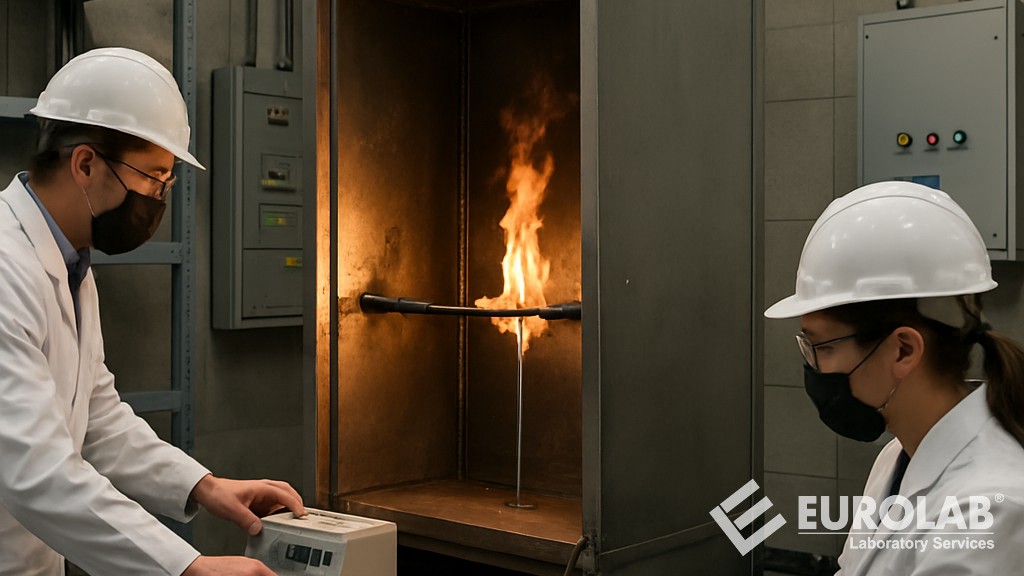
This test determines the duration for which an electrical cable's circuit integrity can withstand fire exposure under the time/temperature curve conditions specified in the EN 1363-1 standard. This standard is used in conjunction with the EN 1363-1 standard.
This European standard applies to electrical power and control cables with a nominal voltage up to (inclusive) 600/1000 Volts. The cable is tested under a standardized representative installation condition. This test does not evaluate the performance of the cable management system.
Fiber optic cables and copper communication cables can be tested using this method, but verification procedures for such cables are still under development and therefore do not form part of this standard.
For the purposes of this standard, the following definitions apply, in addition to the terms and definitions given in EN 1363-1 and EN ISO 13943:
In an era where fire safety is paramount in building design and electrical infrastructure, standards like EN 50577 play a critical role in protecting lives and property. The EN 50577 standard, which ensures fire-resistant circuit integrity in electrical wiring, provides a rigorous method for evaluating the fire resistance of electrical wiring and ensuring its ability to maintain circuit integrity under extreme heat conditions. As buildings become more complex and increasingly reliant on electrical systems for critical functions such as fire alarms, emergency lighting, and control circuits, compliance with the EN 50577 standard helps manufacturers, engineers, and regulators verify that wiring can perform at critical moments.
The need for fire-resistant cables stems from the devastating potential of electrical fires in buildings. Conventional cables can rapidly degrade when exposed to flames, leading to power loss in essential safety systems. The EN 50577 standard addresses this issue by focusing on unprotected electrical cables, i.e., those without additional fire-resistant layers such as conduit or intumescent sheathing. The P classification refers to the cable's ability to maintain circuit integrity (i.e., continue to operate electrically) during a fire, not just its ability to resist the spread of flame.
This standard is part of a broader ecosystem of European fire safety norms. It is based on EN 1363-1, which defines the standard time-temperature curve for fire resistance testing and simulates a fully developed fire in a building compartment. The results from EN 50577 tests are directly transferred to EN 13501-3, the classification scheme for building products and structural elements used in fire-resistant services such as ducts and dampers. Together, these standards provide a holistic approach to fire safety in electrical installations.
The EN 50577 standard essentially involves a controlled laboratory test to measure how long a cable can withstand being in an electrical circuit when exposed to intense heat. The procedure is methodical and repeatable, designed to simulate real-world fire scenarios without unnecessary complexity.
The basic steps of this method are as follows:
The tests are conducted in accredited laboratories to ensure impartiality.
According to test results, cables are classified under the EN 13501-3 standard using notations such as PH30 (horizontal orientation, 30-minute integrity) or PV60 (vertical, 60-minute integrity). These classifications define the installation requirements.
For many years, our organization, with its competent and experienced staff, has been understanding the needs of its clients, providing the advanced testing services they require, and assisting in the establishment, implementation, and improvement of management systems. Within this framework, we also provide testing services to businesses in accordance with the "EN 50577 Electrical cables - Fire resistance test for unshielded electrical cables (P classification)" standard.
To get an appointment, to get more detailed information or to request an evaluation, you can ask us to fill in our form and reach you.

