

The IEC 60068 standard, published by the International Electrotechnical Commission (IEC), is an international standard used for environmental testing of electrotechnical products. The IEC 60068 series contains basic information about standards, environmental test procedures and the severity of tests.
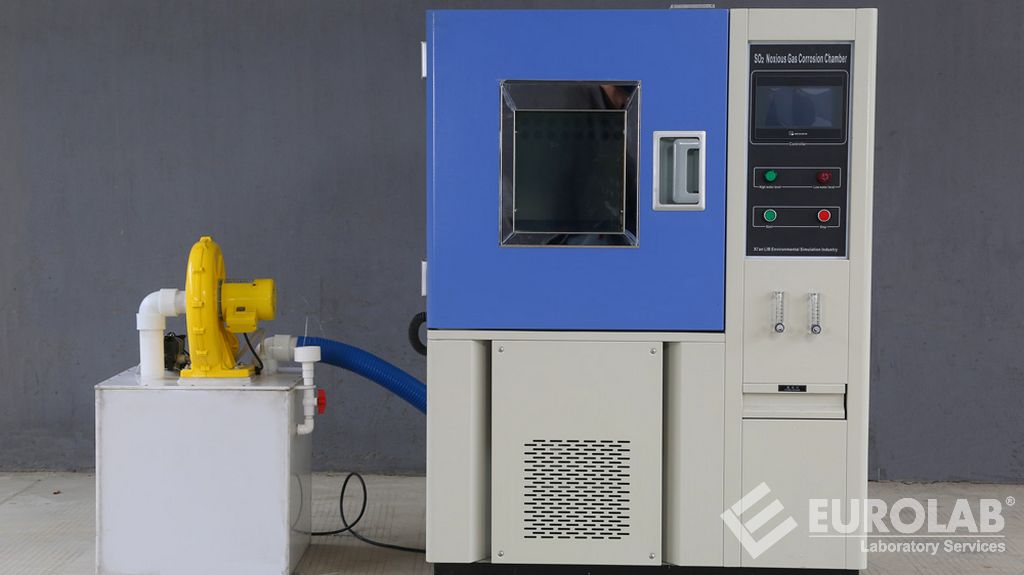
This series of standards has been prepared to achieve uniformity and repeatability in environmental testing of a particular type of product (electrical, electromechanical or electronic equipment and devices, their subgroups and their constituent parts and components). This series of standards is primarily designed for electrotechnical products, but most of the environmental testing procedures in the second part apply equally to other industrial products.
The term environmental conditioning or environmental testing refers to the natural and artificial environments to which samples may be exposed in practice so that an assessment of their performance under storage, transportation, installation and use conditions can be made.
However, requirements for the performance of samples subjected to environmental conditioning are within the scope of this standard. The relevant specification for the sample tested defines the permissible performance limits during and after environmental testing. When drafting a relevant specification or purchase contract, technical and economic aspects should be taken into account and only the tests required for the relevant sample should be specified.
Briefly, the IEC 60068 series of standards is a set of test methods for environmental testing of electronic equipment and products to evaluate their ability to perform under environmental conditions, including extreme cold and dry heat. This set of standards provides appropriate severity ratings for measurements and tests and describes various environmental conditions.
The IEC 60068 standard consists of the following three sub-titles under the main title of "Environmental tests":
The IEC 60068-1 standard defines a number of methods for environmental testing with their appropriate intensities and describes various atmospheric conditions for measurements and tests designed to evaluate the ability of samples to perform expected under all aspects of transport, storage and operation.
However, although it is generally intended for electrotechnical products, this standard is not limited to these and can be used in other areas if desired. Other environmental testing methods specific to individual sample types may be included in the relevant specifications. To assist in the generation of test specifications with appropriate tests and test severity, this standard provides the framework for the environmental test adaptation process.
The IEC 60068-2 standard generally covers the following types of tests: cold, dry heat, moist heat (steady state), moist heat (cyclic), impact (e.g., shock and hard handling shocks), vibration, acceleration (steady state), mold growth, corrosive atmospheres (e.g., salt spray), dust and sand, air pressure (high or low), temperature variation, sealing (including panel sealing, container sealing and protection against liquid ingress and leakage), water (e.g., rain, dripping water), radiation (e.g., solar, but excluding electromagnetic), soldering (including resistance to heat from soldering) and integrity of terminations (of components).
The IEC 60068-3 standard provides supporting documents and guidance dealing with background information on this series of standards. For example, choosing between cold and dry heat tests, seismic test methods for equipment, moist heat tests, verification of performance of temperature chambers, verification of performance of temperature / humidity chambers, measurements in temperature chambers for cold and dry heat (with load) tests, vibration tests, such as calculating the uncertainty of conditions in climatic test rooms, a method for assessing the possible lead-free solder reflow temperature profile, and supporting documentation and guidance on soldering.
Our organization also provides environmental testing services within the scope of IEC 60068 standard, with its trained and expert staff and advanced technological equipment, among the numerous test, measurement, analysis and evaluation studies it provides for businesses in various sectors.
To get an appointment, to get more detailed information or to request an evaluation, you can ask us to fill in our form and reach you.

