

The Electronic Components Manufacturers Association (ECIA) standard, “EIA 364-31 Moisture testing of electrical connectors and sockets,” describes a procedure for evaluating the properties of materials used in connectors. These properties are assessed based on whether they are affected or degraded by high humidity and high temperature conditions. This procedure is an accelerated environmental test performed by continuously exposing the sample to high humidity at various temperatures.
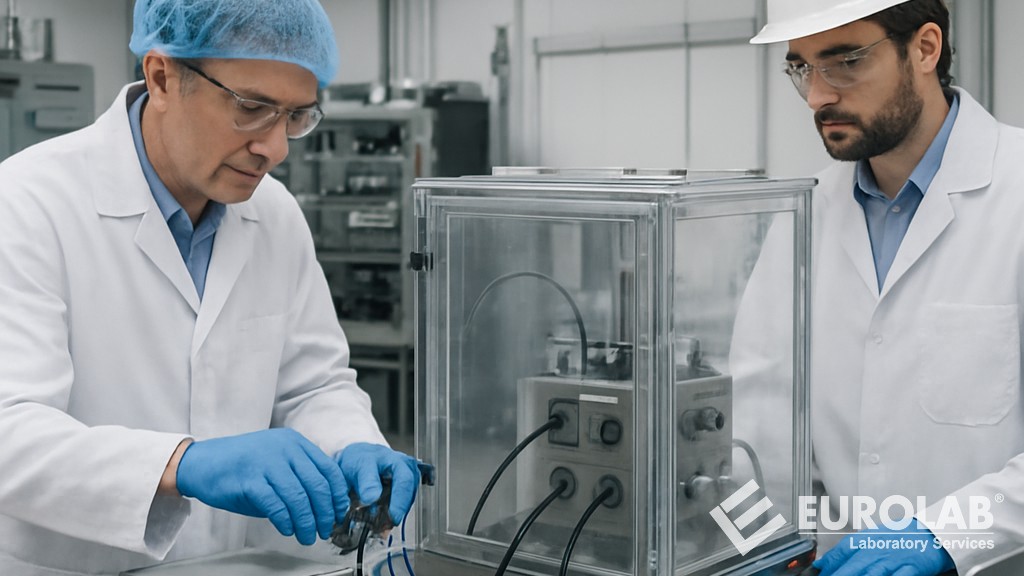
In advanced laboratories, the test chamber and its accessories are designed and arranged to prevent condensation from dripping onto the test sample. The chamber is also sealed off from the atmosphere to prevent the build-up of total pressure. Furthermore, relative humidity is determined using a thermometer comparison method or an equivalent method approved by the supplying authority. In short, the EIA 364-31 standard evaluates materials used in connectors exposed to humid conditions.
In the electronics and telecommunications world, reliability is paramount. Electrical connectors and sockets serve as critical links through which signals, power, and data flow between components. However, these connectors are often exposed to harsh environmental conditions, including varying humidity levels, which can lead to corrosion, deterioration, or failure. Standard testing procedures are essential to ensure these components can withstand such challenges. The EIA-364-31 standard outlines rigorous humidity testing protocols for electrical connectors and sockets.
Updated regularly to reflect advances in materials and manufacturing, this standard provides a uniform framework for evaluating how humidity and heat affect connector performance. It is part of a broader series covering a wide range of mechanical, climatic, and environmental tests for connectors. By simulating real-world humidity exposure in a controlled manner, manufacturers can predict and mitigate potential failures, ensuring products meet industry standards in terms of durability and safety.
The primary purpose of the EIA-364-31 standard is to evaluate the effects of high humidity and high temperatures on materials and assemblies used in electrical connectors and sockets. These tests are designed to be condensation-free, meaning they avoid scenarios where water droplets form and drip onto samples, introducing variables unrelated to steady-state humidity effects. Instead, the focus is on how prolonged exposure to humid and hot air affects fundamental properties such as electrical continuity, contact resistance, insulation resistance, and mechanical integrity.
This standard is particularly vital for applications in industries such as aerospace, automotive, telecommunications, and consumer electronics, where connectors may operate in tropical climates, industrial environments, or even enclosed spaces prone to moisture build-up. By identifying security vulnerabilities early in the design phase, engineers can select appropriate materials, such as corrosion-resistant alloys or protective coatings, to enhance longevity. Testing helps differentiate between connectors suitable for safe indoor use (e.g., office equipment) and those manufactured for rugged outdoor applications (e.g., military equipment).
The EIA-364-31 standard defines several test methods, each tailored to specific humidity scenarios. These are generally categorized by type and condition, providing flexibility depending on the connector's intended environment. All tests require a dehumidification chamber that provides precise control over temperature and relative humidity and is typically equipped with safety measures such as siphon vents to prevent pressure buildup and condensation dripping.
Basic test types include:
Standard conditions: 96 hours at 40 degrees Celsius and 90% relative humidity (Test condition A). Variations such as shorter durations or higher temperatures are available for more demanding simulations.
The purpose of this test is to evaluate the long-term effects of oxidation or hydrolysis on insulation materials.
Conditions: Typically at 85 degrees Celsius with 85% relative humidity, using soaking and drying cycles.
The focus of this testing method is to check for corrosion and seal integrity at the joining surfaces.
Conditions: The temperature alternates between 85 degrees Celsius and 85% relative humidity, and 25 degrees Celsius and 50% relative humidity, over 10 cycles.
The purpose of this test is to identify problems such as thermal expansion mismatches, which are further aggravated by humidity.
During sample preparation, connectors are joined (or separated if already joined) according to the test plan and mounted in a way that avoids direct contact with the chamber walls. The cables should descend vertically into the connector to prevent unnatural moisture absorption.
The tests utilize a programmable ambient chamber with relative humidity control ranging from 10% to 95% and a temperature range of -65 degrees to 150 degrees. Accessories include sample fixation devices to ensure even exposure.
Tests last from 24 hours to several weeks, involving periodic measurement of electrical parameters using tools such as microohmmeters for contact resistance.
Post-test inspections comply with the EIA-364-18 standard, including visual inspections for discoloration, microscopic analysis for corrosion, and electrical retesting to measure any degradation.
For many years, our organization, with its competent and experienced staff, has been understanding the needs of its customers, providing the advanced testing services they require, and assisting in the establishment, implementation, and improvement of management systems. Within this framework, we also provide testing services to businesses in accordance with the "EIA 364-31 Moisture testing of electrical connectors and sockets" standard.
To get an appointment, to get more detailed information or to request an evaluation, you can ask us to fill in our form and reach you.

