

The European standard “EN 50396 Non-electrical test methods for low-voltage power cables” describes the non-electrical test methods required for testing compatible low-voltage power cables, specifically those up to and including 450/750 Volts.
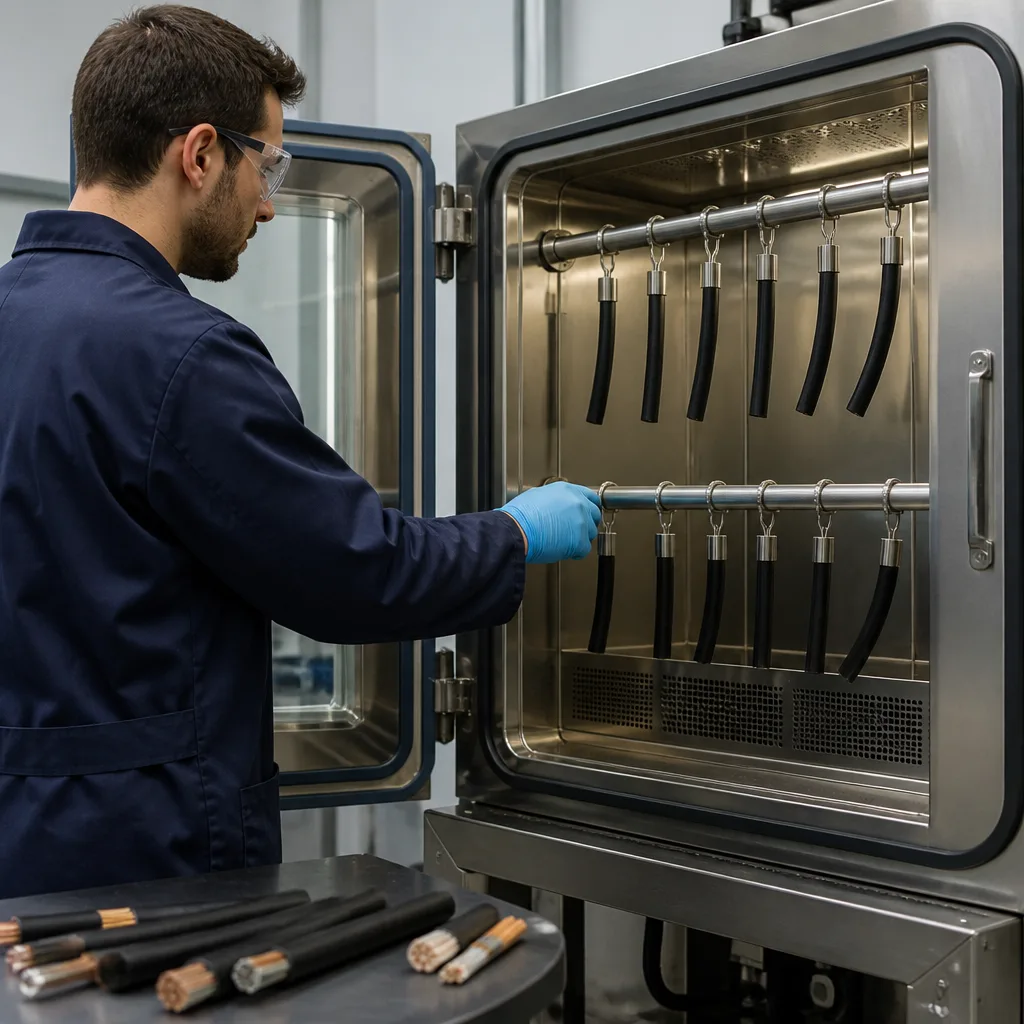
The relevant cable standard specifies the tests that must be performed on that particular cable type. It also specifies whether the particular test is a type test, a sample test, or a routine test for that specific cable type.
The requirements that must be met during or after testing are specified in the relevant cable standard for that particular cable type. However, some test requirements are clear and universal, such as the fact that no cracks should form during ozone testing, and these are specified in the particular test method.
The EN 50396 standard is important because a cable's mechanical, thermal, environmental, and material properties can significantly affect its service life and safety. This standard provides standardized methods for cable manufacturers, laboratories, and certification bodies to evaluate these properties, enabling them to obtain comparable and repeatable results.
The primary purpose of the EN 50396 standard is to provide standardized non-electrical test procedures for compliant low-voltage power cables. Instead of each manufacturer using different procedures, this standard establishes common methods that can be referenced by individual cable product standards.
The relevant cable standard specifies which tests should be performed and whether a particular test is classified as such:
The requirements a cable must meet during or after testing are generally specified in the relevant cable product standard, rather than universally by the EN 50396 standard itself.
The EN 50396 standard is particularly applicable to compatible low-voltage power cables up to 450/750 Volts. It provides test methods that can be referenced by relevant cable standards.
This standard is not designed to cover all types of electrical cables. Specifically, test methods for mains power cables are addressed by the HD 605 standard, while test methods for communication cables are covered under the EN 50289 series of standards.
Although the EN 50396 standard relates to non-electrical testing, the properties evaluated are crucial for the overall performance of the electrical cable. Depending on the applicable cable structure and product standard, the tests may address the following characteristics:
The EN 50396 standard is considered important because it provides more than just electrical characteristics such as cable performance, voltage rating, and insulation resistance. Even if a cable has acceptable electrical characteristics, its insulation or sheath may fail in service under the following conditions:
The EN 50396 standard provides common non-electrical test methods, helping manufacturers and laboratories evaluate these properties using consistent procedures. This contributes to product quality, reliability, safety, and conformity assessment.
The EN 50396 standard should not normally be viewed as a standalone cable product specification. Instead, it functions as a test method standard. The relevant cable product standard specifies the following:
Therefore, when testing a particular cable, the laboratory should first determine the applicable product standard and then specify which test methods it refers to.
The EN 50396 standard brings together non-electrical test methods previously found in standards relating to low-voltage cables.
The use of the EN 50396 standard offers several practical advantages for cable manufacturers:
An important point is that the EN 50396 standard alone does not specify all performance requirements for a particular cable. The relevant cable standard should be consulted to determine the exact test program and acceptance criteria.
In conclusion, the importance of the EN 50396 standard lies in establishing consistent test methods for properties that are not directly electrical but are nevertheless essential for cable safety, durability, and service performance. The applicable cable product standard specifies which EN 50396 tests are required and which criteria must be met.
Therefore, the EN 50396 standard serves as an important reference standard for non-electrical cable testing for manufacturers and testing laboratories, and helps establish reliable and repeatable evaluation procedures for European cable products.
For many years, our organization, with its competent and experienced staff, has been understanding the needs of its clients, providing the advanced testing services they require, and assisting them in the establishment, implementation, and improvement of management systems. Within this framework, we also provide testing services in accordance with the EN 50396 standard.
To get an appointment, to get more detailed information or to request an evaluation, you can ask us to fill in our form and reach you.

