EN IEC 60092 Electrical Installations on Ships
The “EN IEC 60092 Electrical installations on ships” series of standards, developed by the International Electrotechnical Commission (IEC) and later published as a European standard as part of harmonization efforts, are international standards for electrical installations on ships (and mobile/fixed offshore units). This series provides requirements for design, equipment, cabling, installation, and specific features to ensure safety, reliability, and compliance with conventions such as SOLAS.
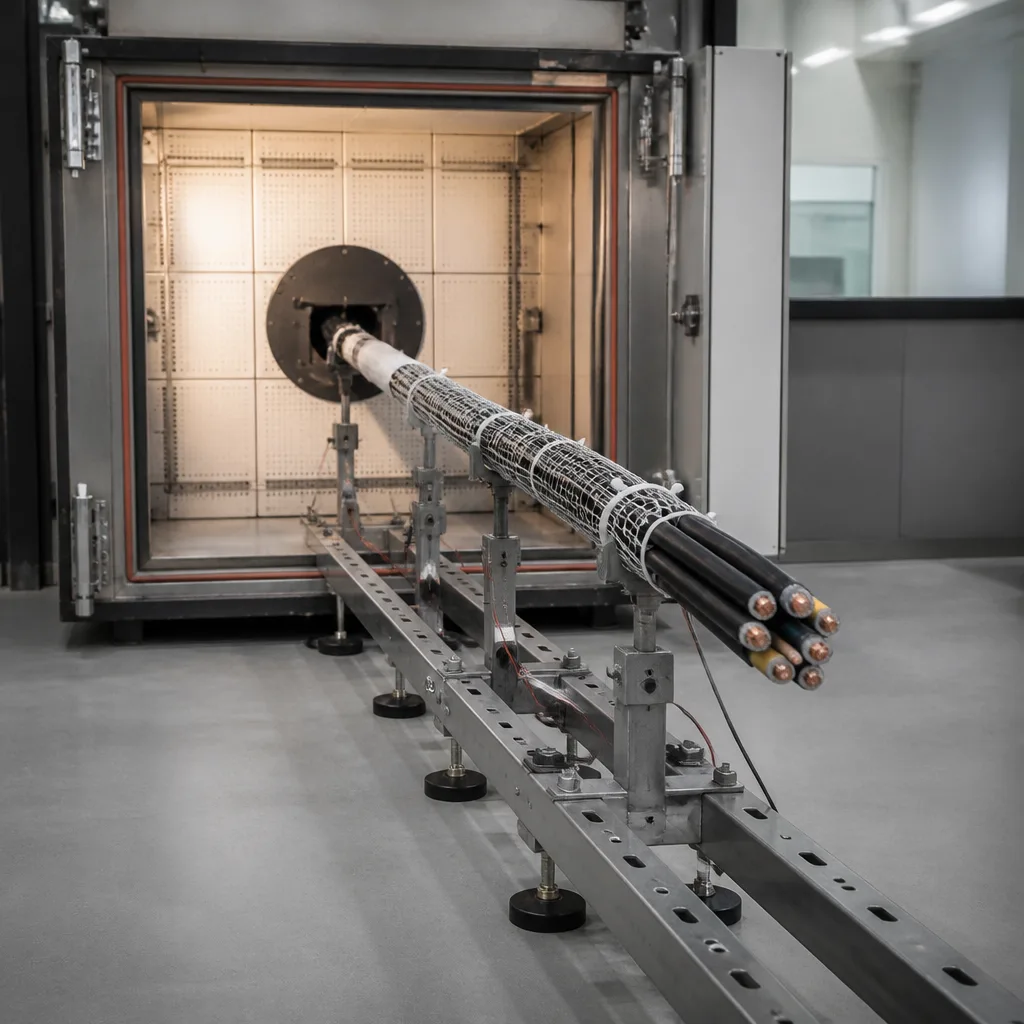
The EN IEC 60092 standards are the European-accepted (harmonized by CENELEC) version of the IEC 60092 series of standards. This standard consists of the following sub-sections published under the same title:
- The standard “IEC 60092-101 Part 101: Definitions and general requirements” applies to electrical installations used on ships. Unless otherwise specified, the definitions and general requirements given in this part also apply to other parts of the IEC 60092 series.
- The standard “IEC 60092-201 Part 201: System design - General” is applicable to the basic specifications of system design for electrical installations to be used on ships. It covers general system design, including power distribution and system architecture.
- The standard “IEC 60092-202 Part 202: System design - Protection” is applicable to the basic characteristics of electrical protection systems to be used in electrical installations on ships. It specifies protection against overloads, short circuits and faults.
- The standard “IEC 60092-203 Part 203: System design - Acoustic and optical signals” deals with acoustic and optical signals and indications used in relation to the safety of passengers, crew, ship and its facilities. These acoustic and optical signals and indications must be selected and installed to provide clear interpretation under all conditions. This standard is not intended for use with acoustic and optical signals for ship-to-ship or ship-to-shore navigation purposes. It briefly addresses control systems, monitoring and instrumentation requirements.
- The standard “IEC 60092-204 Part 204: System design - Electric and electrohydraulic steering systems” is applicable to the basic characteristics of electric and electrohydraulic steering systems used in ships. It focuses on the electrical requirements for steering systems.
- The standard “IEC 60092-205 Part 205: System design - Power supply systems” covers main and emergency power supply arrangements.
- The standard “IEC 60092-301 Part 301: Equipment - Generators and motors” applies to all rotary electric machinery operating at a power of 750 W or higher for use on ships. It also applies to excitation machinery and includes the relevant requirements for the main drive motors operating the generators.
- The standard “IEC 60092-302 Part 302-2: Low-voltage switchgear - Marine power” defines the specific requirements for low-voltage marine power switchgear as follows:
- Enclosed, fixed devices with a nominal voltage not exceeding 1000 Volts AC or 1500 Volts DC.
- Devices designed for the generation, distribution, and conversion of electrical energy, as well as for controlling equipment that consumes electrical energy.
Due to the risks associated with marine applications and power loss, additional safety factors have been implemented to minimize the risk of failure. For example, an additional safety factor has been applied to clearance distances.
This standard applies to all types of equipment, whether they were designed, manufactured, and verified as a one-off event, or whether they are fully standardized and mass-produced.
The manufacture or assembly, or both, of marine power switchgear and control devices may be carried out by parties other than the original manufacturer.
This standard does not apply to individual devices and standalone components such as motor starters, fuse switches, and electronic equipment that comply with relevant product standards.
Individual devices and components include those devices and components within the scope of the IEC 60947 standard series.
- The standard “IEC 60092-303 Part 303: Equipment - Power transformers and reactors” applies to all transformers used for power and lighting, and where appropriate, to static converters, starting transformers, static equalizers, grounding transformers, saturable reactors and transducers used on ships, including single-phase transformers with a nominal voltage higher than 1 kVA and three-phase transformers with a nominal voltage higher than 5 kVA (unless special requirements are specified).
This standard applies to transformers with a nominal voltage up to 36 kV. It does not apply to measuring transformers.
- The standard “IEC 60092-304 Part 304: Equipment - Semiconductor Converters” specifies particular provisions for power electronic converters and systems using semiconductor elements for use on ships. Conversion can be AC to DC, DC to AC, DC to DC, or AC to AC with a nominal output power greater than 1 kW.
This standard does not apply to semiconductor converters used in electric drive systems. The IEC 60092-501 standard applies to semiconductor converters used in electric drive systems.
- The standard “IEC 60092-305 Part 305: Equipment - Accumulator (storage) batteries” applies to permanently mounted accumulator (storage) batteries for use on ships. This standard does not apply to portable batteries.
- The standard “IEC 60092-306 Part 306: Equipment - Lighting fixtures and lighting accessories” applies to lighting fixtures and lighting accessories used on ships. It primarily applies to fixtures intended for lighting purposes.
This standard also applies to lighting accessories associated with the wiring and current-consuming devices of an installation. However, it does not apply to signal lights, including portable luminaires, navigation lights, floodlights, daytime running lights, and associated control and monitoring equipment, and other lights used for navigation in canals and ports. The annex to this standard contains EMC considerations for system integrators (Annex A).
- The standard “IEC 60092-307 Part 307: Equipment - Heating and cooking appliances” applies to heating and cooking appliances to be used on ships.
- The standard “IEC 60092-350 Part 350: General construction and test methods for power, control and instrumentation cables for ship and offshore applications” provides general structural requirements and test methods to be used in the manufacture of copper conductor electrical power, control and instrumentation cables designed for fixed electrical systems in ships and offshore (mobile and fixed) units at voltages up to 18/30(36) kV.
The reference to fixed systems includes systems subject to vibration (due to the movement of the vessel or facility) or motion (due to the movement of the vessel or facility), and does not include systems subject to frequent bending. Cables suitable for frequent or continuous bending are described in detail in other IEC standards, such as IEC 60227 (all parts) and IEC 60245 (all parts), and their use is limited to situations that do not involve direct exposure to the marine environment (e.g., portable tools and household appliances).
The following cable types are not included:
- Optical fiber
- Submarine and umbilical cords
- Data and communication cables
- Coaxial cables
The standard “IEC 60092-351 Part 351: Insulation materials for power, control, instrumentation, telecommunications and data cables for ships and offshore units” specifies the requirements for the electrical, mechanical and special properties of insulation materials designed for use in power, control, instrumentation, telecommunications and data cables used in ships and fixed and mobile offshore units. In short, this standard specifies the types of insulation and their performance.
- The standard “IEC 60092-352 Part 352: Selection, installation and operating conditions of cables” provides the basic requirements for the selection, installation and operating conditions of symmetric category cables and fiber optic cables used in fixed electrical systems on ships, at voltages up to 18/30 (36) kV.
The reference to fixed systems includes systems subjected to vibration or movement resulting from the ship's motion, but does not include systems frequently subjected to bending.
Cables that can withstand mechanical stress and the environment to which they are exposed, including frequent or continuous bending, are described in detail in other IEC specifications such as IEC 60227 and IEC 60245. Flexible cables are frequently used on ships for retractable pushers, elevators, movable decks, cranes, shore connections, and other mobile applications.
The following cable types and applications are not included:
- Submarine and umbilical cords
- Telecommunications and radio frequency cables
- Selection and installation of cables for use on offshore platforms.
In short, this standard provides guidance on cable selection and installation on board a ship.
- The standard “IEC 60092-353 Part 353: Power cables for 1 kV and 3 kV nominal voltages” applies to extruded solid insulated, non-radial field power cables for ship and offshore applications with a voltage rating of 0,6/1 (1,2) kV or 1,8/3 (3,6) kV, designed for fixed installations. Cables designed to maintain circuit integrity in case of fire are included.
Various power cable types are specified in this standard. Structural requirements and test methods are consistent with those specified in IEC 60092-350, unless otherwise stated in this standard.
The purpose of this standard is:
- To standardize cables whose safety and reliability are ensured when installed in accordance with the requirements of IEC 60092-352 or IEC 61892-4 standards.
- To define the standard production requirements and specifications for such cables that are directly or indirectly related to safety.
- To specify the test methods for checking compliance with these requirements.
In short, this standard covers specialized cable designs used in marine environments.
- The standard “IEC 60092-354 Part 354: Extruded solid insulated single and three-core power cables for nominal voltages between 6 kV (Um = 7,2 kV) and 30 kV (Um = 36 kV)” applies to marine and offshore power cables with extruded solid insulation, conductor and core shielding, having one of the specified voltage ratings.
The cables are designed for fixed installations. Various power cable types are given in this standard. Structural requirements and test methods are consistent with those specified in IEC 60092-350, unless otherwise specified in this standard.
The purpose of this standard is:
- To standardize cables whose safety and reliability are ensured when installed in accordance with the requirements of IEC 60092-352 or IEC 61892-4 standards.
- To define the standard production requirements and specifications for such cables that directly or indirectly affect safety.
- To define test methods for checking compliance with these requirements.
This standard covers only radial field cables.
- The standard “IEC 60092-359 Part 359: Sheathing materials for power and telecommunications cables on board ships” specifies the test requirements for the mechanical and special properties of outer sheathing materials for power and telecommunications cables used on ships.
- The standard “IEC 60092-360 Part 360: Insulation and sheathing materials for power, control, instrumentation and telecommunication cables for ships and offshore units” specifies the requirements for the electrical, mechanical and special properties of insulation and sheathing materials for power, control, instrumentation and telecommunication cables used on ships and in fixed and mobile offshore units.
Different insulation and sheathing materials are divided into three categories, as listed in the table titled “Material categories and types”: cross-linked insulation compounds, cross-linked coating compounds, and thermoplastic coating compounds.
- The standard “IEC 60092-370 Part 370: Guidance on the selection of cables for telecommunications and data transmission, including radio frequency cables” provides essential recommendations for the selection and installation of cables designed for electrical systems used in ships and offshore units, and includes types suitable for high-frequency signals (i.e., signals higher than 105 Hz). These cables are not suitable for direct connection to low-impedance supplies. For such cables, the IEC 60092-353 standard applies.
Cables intended to have limited circuit integrity (fire resistance) when exposed to fire are outside the scope of this standard. Fiber optic cables and submarine or umbilical cord cables are also outside the scope of this standard.
- The standard “IEC 60092-373 Part 373: Electrical installations on ships - Telecommunication cables and radio frequency cables on ships - Flexible coaxial cables on ships” defines the standard definition and requirements for flexible coaxial cables used on ships.
Flexible coaxial cables used on ships are primarily designed for use with equipment suitable for high-frequency signals (i.e., signals higher than 10⁵ Hz), in situations where high-frequency signals are asymmetric with respect to ground. Their main application is connecting radio and radar equipment.
- The standard “IEC 60092-374 Part 374: Electrical installations on ships - Telecommunication cables and radio frequency cables on board ships - Telephone cables for non-essential communication services” applies to telephone cables used on ships for non-essential communication services. It defines the standard definition and requirements for such cables.
- The standard “IEC 60092-375 Part 375: Electrical installations on ships. Telecommunication cables and radio frequency cables on ships. General instrumentation, control and communication cables” applies to general instrumentation, control and communication cables on ships and is designed for the interconnection of all types of instrumentation and communication equipment, including telephone equipment, whose proper functioning is deemed necessary for the safety of the ship.
These cables are designed for use in systems operating up to 60 Volts AC or DC, but will also function satisfactorily at voltages up to 250 Volts AC or DC under fault conditions.
- The “IEC 60092-376 Part 376: Cables for control and instrumentation circuits 150/250 V (300 V)” standard applies to shielded and unshielded cables for control and instrumentation circuits in ships and offshore units. The cables have extruded solid insulation with a voltage rating of 150/250 Volts (300 Volts) and are designed for fixed installations.
Various cable types are specified in this standard. Unless otherwise stated in this standard, the manufacturing requirements and test methods are consistent with those specified in IEC 60092-350.
This standard
- They standardize cables when installed in accordance with the requirements specified in the IEC 60092-352 standard.
- It specifies the standard construction requirements and specifications for such cables that directly or indirectly affect safety.
- It specifies the test methods for checking compliance with these requirements.
The “IEC 60092-378 Part 378: Optical fiber cables” standard applies to marine and offshore optical fiber cables designed for fixed installations. This includes cables designed to maintain their functional integrity during a fire and to be installed in the specified explosive environments.
Various types of optical fiber cables are given in this standard. Structural requirements and test methods are consistent with those specified in IEC 60092-350, unless otherwise specified in this standard.
The purpose of this standard is:
- To standardize cables whose safety and reliability are ensured when installed in accordance with the requirements of IEC 60092-352, IEC 60092-401, or IEC 61892-4 standards.
- To define the standard production requirements and specifications for such cables that directly or indirectly affect safety.
- To specify the test methods for checking compliance with these requirements.
All cables meeting this standard are halogen-free.
- The standard “IEC 60092-390 Part 390: Cable penetrations - Fire type test procedures” is a technical report applied to fire type test procedures for cable penetrations to be installed in Class A partitions. The recommendations given in the report may also be used by comparison, where appropriate, in the testing of cable penetrations integrated into Class B partitions.
- The standard “IEC 60092-401 Part 401: Assembly and testing of completed installation” applies to the assembly and testing of complete installations of electrical equipment to be used on ships.
- The standard “IEC 60092-501 Part 501: Special features - Electric drive system” applies to electric drive systems and specifies the system design, installation and testing of the following equipment:
-
- Generators and main drive motors or other power sources (such as fuel cells, batteries)
- Switchboards
- Transformers / reactors
- Semiconductor converters
- Drive motors
- Warning systems
- Control, monitoring and security systems
- Wires, cables, busbars or conduit systems
- Pod-mounted propulsion systems including azimuth
Thrusters and booster equipment designed as auxiliary steering or auxiliary propulsion devices, or both, are excluded.
In short, it covers the electrical aspects of drive systems.
- The standard “IEC 60092-502 Part 502: Tankers - Special requirements” deals with electrical installations in tankers carrying liquids or flammable liquefied gases that are flammable by nature or as a result of reactions with other substances. Unless otherwise specified in this standard, the requirements in other parts of the IEC 60092 standard also apply to tankers. In short, it addresses additional safety requirements for tankers (e.g., hazardous areas).
- The standard “IEC 60092-503 Part 503: Special features - AC supply systems in the voltage range above 1 kV and up to 36 kV” applies to alternating current supply systems from 1 kV to 36 kV. Requirements in other parts of the IEC 60092 standard series apply where applicable, subject to the exceptions specified in the clauses of this standard. In short, it focuses on high-voltage installations.
- The “IEC 60092-504 Part 504: Automation, control and instrumentation” standard specifies electrical, electronic and programmable equipment designed for automation, control, monitoring, warning and safety and protection systems for use on ships. In short, it includes additional requirements for advanced control systems.
- The “IEC 60092-505 Part 505: Special specifications - Mobile offshore drilling units” standard applies to and specifies general requirements for all types of mobile offshore platforms and vessels used in oil or gas exploration, unless otherwise specified.
- The standard “IEC 60092-506 Part 506: Special specifications - Ships carrying certain hazardous materials and materials hazardous only in bulk” applies to electrical installations in the following ship and cargo areas:
- Ships and cargo holds designed for the carriage of dangerous goods in packaged form, including goods in cargo containers and portable tanks, but not specifically designed for the carriage of cargo containers.
- Container ships and cargo holds specifically constructed for the transport of hazardous materials in cargo containers and portable tanks.
- Ro/ro vessels and ro/ro cargo yards designed for the transport of hazardous materials.
- Ships and cargo holds designed for the carriage of solid hazardous materials in bulk and materials that are hazardous only in bulk.
- Ships and cargo areas designed for the carriage of hazardous materials, other than liquids and gases in bulk, on barges carried on board the ship.
- The standard “IEC 60092-507 Part 507: Small vessels” specifies the requirements for the design, construction and installation of electrical systems in small vessels up to 50 m in length or with a gross tonnage not exceeding 500 gross tons, intended for use in inland waterways or at sea. It is not intended to apply to:
- Small boats equipped with a battery that powers only the circuits for engine starting and navigation lighting, and is charged by an inboard or outboard motor-driven alternator.
- Recreational boats with a hull length shorter than 24 m and which must comply with the electrical systems specified in the annex to the recreational boat directive 94/25/EC, excluding three-phase alternating current installations with a nominal voltage not exceeding AC 500 Volts. In short, this standard contains specific requirements for smaller vessels.
- The standard “IEC 60092-509 Part 509: Operation of electrical installations” applies to all operation and working activities of electrical generation, conversion and distribution systems and electrical equipment on ships. This includes all alternating current and direct current voltages.
This standard specifies the requirements for safe work and operation on, with, or near electrical installations. These requirements apply to operation, working, and maintenance activities. They are applicable to all electrical work activities, as well as non-electrical work activities such as structural work near electrical equipment and cabling.
This standard does not apply to ordinary persons using installations and equipment, provided that the installations and equipment are designed and installed for use by ordinary persons and comply with the relevant requirements of the IEC 60092 series of standards.
In short, this standard covers modern ship automation and integration.
For many years, our organization, with its competent and experienced staff, has been understanding the needs of its clients, providing the advanced testing services they require, and assisting them in the establishment, implementation, and improvement of management systems. Within this framework, we also provide testing services compliant with the EN IEC 60092 standard.



