

The antimicrobial finish test was developed primarily to determine the percentage or log reduction of the target organism when exposed to an antimicrobial agent placed in or on a textile. The method can also be modified to include different materials, time points and test organisms.
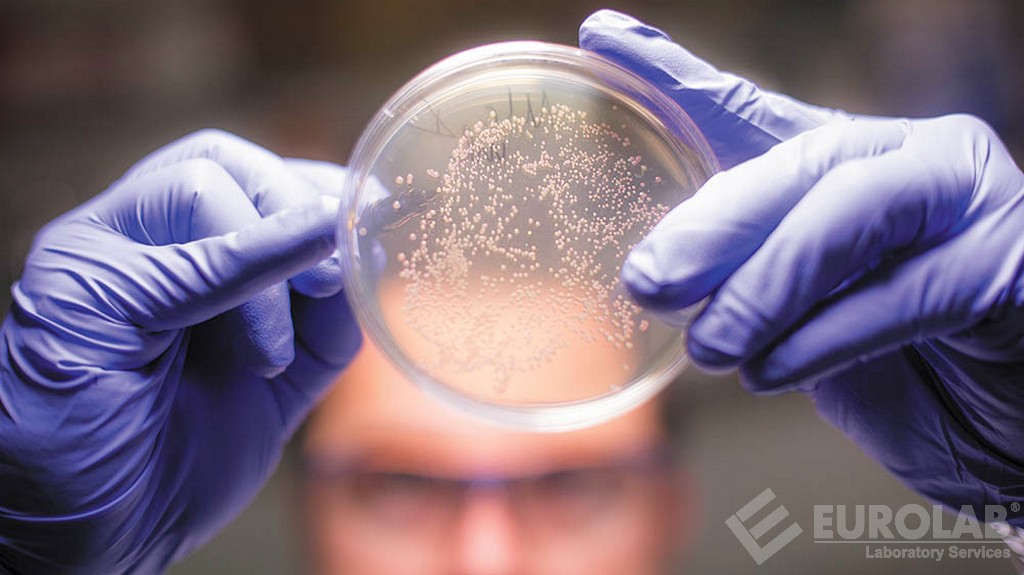
For the antimicrobial finish test procedure, test intervals are selected during use to characterize the time (usually 0, 24, and sometimes 48 hours) that the test material will be effective in reducing microbial counts significantly. The test is performed with processed and unprocessed color samples of the test material. Unprocessed color samples serve as a positive control for the test.
A test sample is placed in a sterile dish or petri dish and inoculated with 106 mL of the appropriate test organism suspension at approximately 1.0 colony-forming units (CFU) / mL. The sample is allowed to sit for the selected period of time and then extracted into a neutralizing medium diluted and coated accordingly. This is repeated for all test ranges using both processed and raw material.
The organism recovery from the processed and unprocessed material is then compared to determine the log reduction and percent reduction over time.
Finally, a neutralization study was completed for each of the test organisms and antimicrobial samples to demonstrate that the media, methods, and dilutions used can effectively neutralize the effective antimicrobials to promote acceptable organism recovery.
EUROLAB, with its highly expert team and internationally accredited laboratories, Antimicrobial Efficacy Test It performs all test, analysis, measurement, evaluation and report generation services completely and reliably.
To get an appointment, to get more detailed information or to request an evaluation, you can ask us to fill in our form and reach you.

