
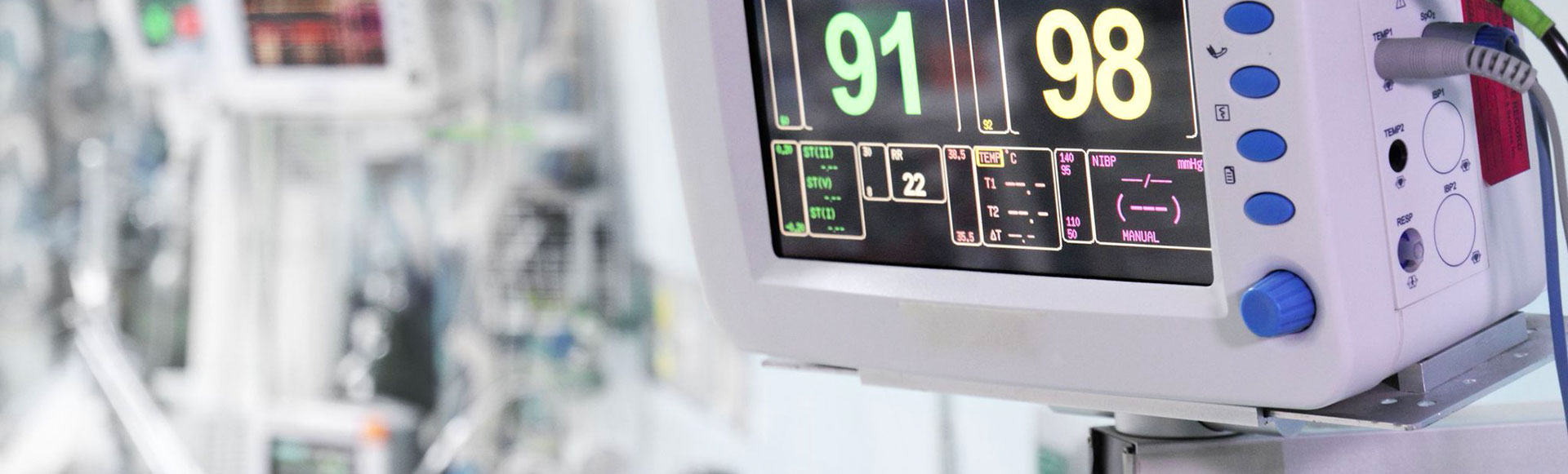
The European standard “EN 13718 Medical vehicles and equipment - Air ambulances” consists of the following subsections published under the same title:

For the purposes of this standard, the following terms and definitions apply:
Manufacturers of all medical devices intended for use in air ambulances must ensure that the requirements of this standard are met.
Risks associated with medical devices to patient and staff safety must be minimized using a risk management process in accordance with EN ISO 14971, taking into account the intended application of the devices and known and foreseeable hazards under both normal and fault conditions. When risk analyses are performed, they should reflect storage, installation, operation under normal use, and maintenance in accordance with the manufacturer's instructions and the air ambulance's environmental conditions.
The user interface of a medical device must be easy to use in an air ambulance. Detailed information on how to design an easy-to-use medical device is provided in EN 62366-1 and EN 60601–1–6. A medical device designated as portable must be transportable both inside and outside the aircraft and must be portable by a single person.
The manufacturer of the medical device must conduct a risk assessment regarding the manual handling of the medical device inside and outside the air ambulance. Several accepted risk assessment methods can be used, including the key element method, manual handling assessment tables, and the EN 1005-2 standard. Buttons, switches, displays, controls, and similar equipment must be accessible and legible under the intended operating conditions. Intended operating conditions are described in the EN 13718-2 standard. Medical devices with alarms and signals must provide a clear visual signal under the intended operating conditions.
This standard applies to air ambulances capable of transporting at least one person on a stretcher. Requirements are specified for different categories of air ambulances based on their intended use: helicopter emergency medical service, helicopter intensive care medical service, and fixed-wing air ambulance.
In general, air ambulances should be designed to provide rapid and safe transportation of medical personnel to individuals requiring medical care outside of hospitals, between hospitals, and between hospitals. Transporting intensive care patients requires specially trained personnel. Air ambulances should be designed to accommodate personnel and provide a safe and healthy work environment. Air ambulances should provide treatment for at least one patient on a stretcher.
Air ambulances must be equipped with medical devices complying with Annex A and other life-support equipment complying with Annex B to provide continuous patient care. Equipment and systems must be selected and designed to ensure interchangeability and interoperability. The installation of medical devices and equipment must comply with applicable airworthiness requirements.
The EN 13718 standards are considered essential because they define critical safety and performance requirements for medical devices and equipment. These standards are considered particularly important for the following reasons:
Our organization, which has been supporting businesses across all sectors for years through a wide range of testing, measurement, analysis, and evaluation activities, has a strong team of employees who closely follow global developments in science and technology and are constantly improving themselves. In this context, we also provide testing services in accordance with the "EN 13718 Medical vehicles and equipment - Air ambulances" standard.
To get an appointment, to get more detailed information or to request an evaluation, you can ask us to fill in our form and reach you.

