

ISO 7491 Dental Materials - Determination of Color Stability

ISO 7491 Dental Materials - Determination of Color Stability

The ISO 7491 Dental materials - Determination of color stability standard, published by the International Organization for Standardization (ISO), describes a method for determining the color stability of dental materials after exposure to light and water. This standard defines a laboratory test method for evaluating the color stability of dental materials when exposed to light and water. Color stability is a critical property for aesthetic dental restorations (such as composite resins, ceramics, prosthetic materials, and artificial gingiva), as color change over time can affect patient satisfaction and the lifespan of the restoration.
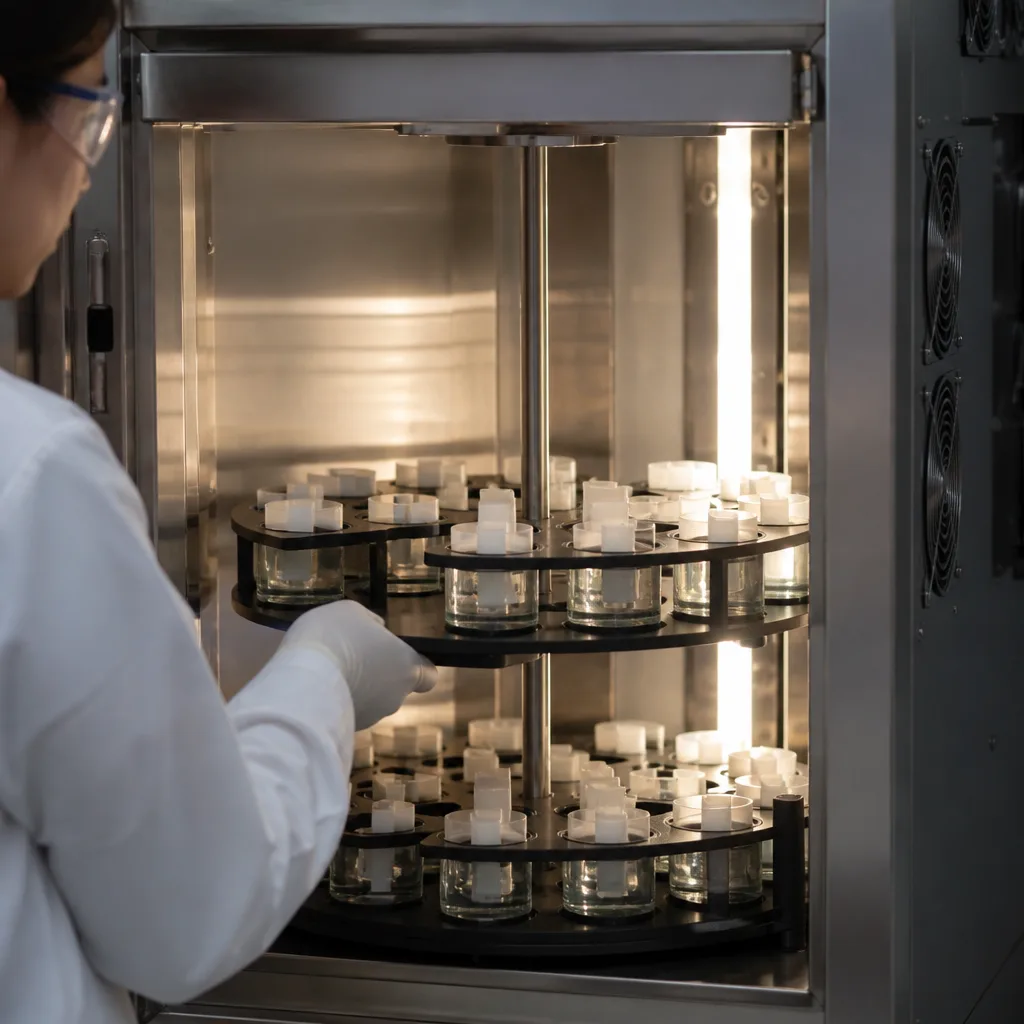
ISO 7491 Dental Materials - Determination of Color Stability

This method is often referenced in other dental material standards (e.g., for polymer-based fillings or restorative materials) to ensure that products maintain their appearance under conditions that simulate intraoral use.

In principle, this method accelerates aging by exposing samples to intense light while submerged in water, mimicking years of oral exposure in a short period (typically 24 or 48 hours).

The equipment used in the tests is as follows:

  • Radiation source: Xenon medium-pressure lamp (color temperature 5.000-10.000 K) providing approximately 150.000 lx (lux) of illumination to the sample surface. Illumination homogeneity should be within plus/minus 10 percent.
  • UV filter: Borosilicate glass that blocks most radiation below 300 nm while allowing over 90 percent of radiation above 370 nm to pass through.
  • Test chamber: A circulating water bath maintained at 37 degrees Celsius (body temperature) using Grade 2 water (according to ISO 3696 standard). Samples are held parallel to the floor of the chamber.
  • Alternative equivalent light sources may be used, provided they meet the performance criteria.

In general, this method follows these steps:

  • Sample preparation: Size, curing, conditioning, and reference samples are prepared according to material-specific standards.
  • Exposure: An exposed and unexposed contrast zone is created by protecting one half of each sample (e.g., with opaque foil or a compression plate). The samples are exposed to filtered xenon light in a water bath for the specified time (usually 24 hours).
  • Assessment: Three observers with normal color vision (medically verified) visually compare the exposed and unexposed halves under standardized lighting (bright diffused daylight or a D65 illuminator at 1.000–2.000 lx). Comparisons are brief (maximum 2 seconds) against appropriate backgrounds (white for discs, gray for teeth). The majority view is recorded.

Color differences are generally assessed qualitatively through visual inspection combined with quantitative colorimetry.

The ISO 7491 standard is important in dentistry for the following reasons:

  • Composites provide long-term aesthetic performance for materials such as denture bases and denture gums.
  • It helps manufacturers validate their products against regulatory and clinical expectations in terms of biocompatibility and durability.
  • The accelerated test corresponds to several years of real-world intraoral exposure.

The relevant standards are as follows:

  • ISO 4892-2 Plastics - Methods of exposure to laboratory light sources - Xenon arc lamps).
  • Various material-specific standards referencing the ISO 7491 standard for color stability requirements (e.g., ISO 4049 standard for polymer-based restoratives).

The ISO 7491 standard contributes to the "UN Sustainable Development Goal 3: Good health and well-being" by promoting safe and high-quality dental materials.

According to the ISO 7491 standard, determining color stability is important in dentistry for various clinical, aesthetic, economic, and regulatory reasons.

  • Aesthetic performance and patient satisfaction: The primary goal of many dental restorations (especially in visible front teeth) is to look natural and blend seamlessly with the surrounding teeth. Over time, discoloration can lead to noticeable discrepancies, causing restorations to appear aged, stained, or unnatural. This directly affects:
    • The patient's self-confidence increases when they smile.
    • Overall facial aesthetics and emotional expression.
    • Satisfaction with treatment

Color change is one of the most common reasons patients request replacement of composite restorations. Poor color stability can lead to dissatisfaction even if the restoration is functionally excellent.

  • Longevity and clinical success of restorations: Color stability is a key indicator of a material's overall durability. Significant color change is usually indicative of:
    • Material degradation
    • water absorption
    • Incomplete polymerization
    • Surface degradation

These changes can compromise the integrity of the restoration and increase the risk of secondary problems (e.g., edge staining or the need for replacement). The ISO 7491 standard helps predict how materials will perform over years of exposure to light, saliva, food, and beverages.

  • Standardized quality control for manufacturers: This standard provides a repeatable, accelerated laboratory test that simulates several years of intraoral aging in just 24-48 hours. This enables:
    • To enable manufacturers to develop and verify more stable materials.
    • This allows regulatory bodies and dentists to objectively compare different products.
    • Material standards (e.g., ISO 4049 for composites) define minimum performance requirements.

Without this standardized method, it would be difficult to ensure consistent quality across brands and batches.

  • Realistic simulation of oral conditions: The test combines intense visible light (filtered xenon arc), immersion in body-temperature water, and controlled exposure. This mimics real-world factors such as:
    • Sunlight and artificial lighting
    • Saliva and drinks
    • Thermal conditions in the mouth

It is particularly important for composites, resin cements, prosthetic base materials, artificial gingiva, and temporary restorations.

A restoration that rapidly changes color cannot fulfill the fundamental goal of modern aesthetic dentistry (providing long-term, natural-looking results). The ISO 7491 standard ensures that dental materials are not only compatible with the teeth initially but also continue to look good for years. Color stability testing according to this standard combines laboratory science with real-world clinical performance, directly contributing to successful, long-lasting, and aesthetically pleasing dental treatments.

For many years, our organization, with its competent and experienced staff, has been understanding the needs of its clients, providing the advanced testing services they require, and assisting them in the establishment, implementation, and improvement of management systems. Within this framework, we also provide testing services compliant with the ISO 7491 standard.

WhatsApp

