
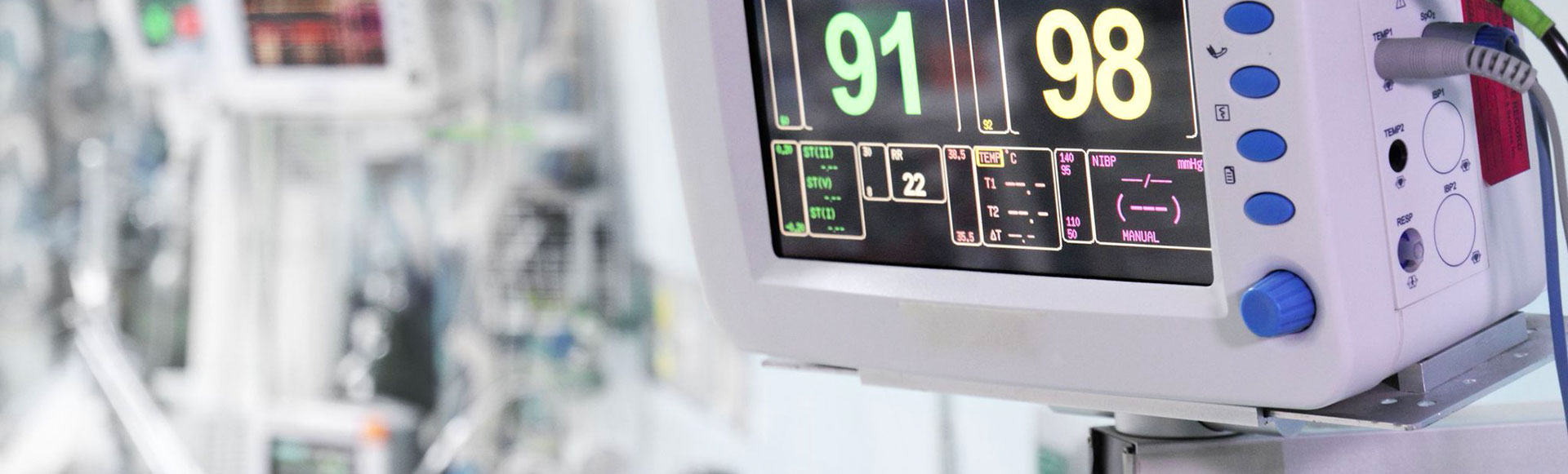
IEC 60601-1 Medical safety testing is the service of testing, certification and evaluation to demonstrate the basic safety and performance of the device and to determine whether it complies with product safety requirements.
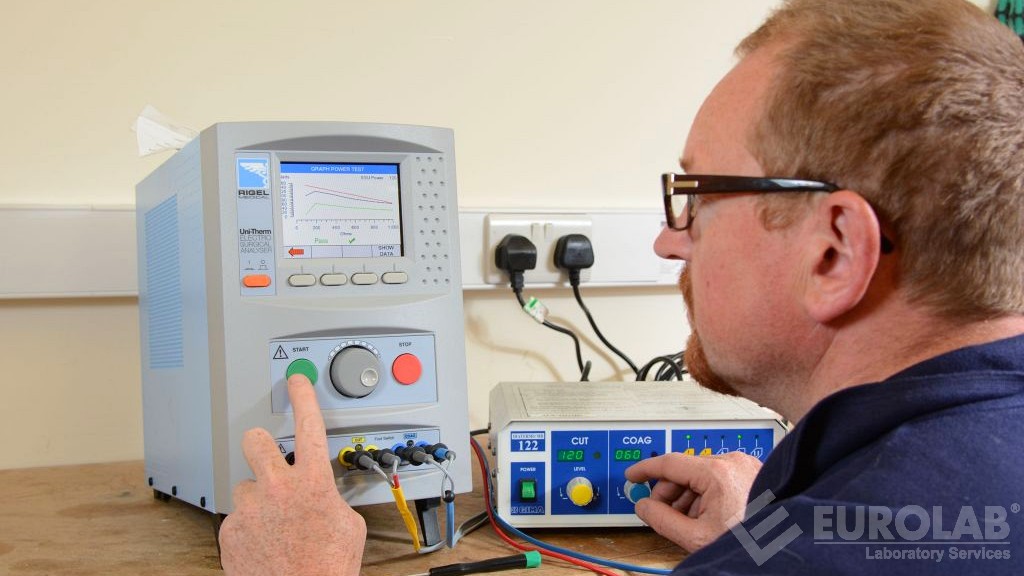
Medical devices around the world are typically controlled by stringent regional approval procedures that require testing by approved laboratories. With regard to active medical devices, these requirements are documented and internationally harmonized under the IEC 60601 family of standards.
Currently, IEC 60601-1 3rd edition forms the basis of the approval procedure for medical electrical equipment in most legal frameworks around the world. Due to the same requirements of the European Union's EN 60601 family of standards, the IEC defines the assumption of conformity to the Medical Device Directive (MDD) 93/42 / EEC.
European and International standards provide a set of widely accepted test methods, test limits and test levels for the evaluation of medical electrical equipment. EUROLABprovides all product safety testing for the 1-2 series of standards, including collateral (Part 60601) and specific (Part 1) standards. We also offer complete testing for active implantable devices (ISO 14708). Officially recognized by OSHA EUROLAB The NRTL mark indicates compliance with required standards for workplace safety, which includes hospitals, clinics, therapy centers and similar facilities.
As a National Certification Body (NCB) and CB Testing Laboratory (CBTL) in the IECEE CB Program EUROLABcan test in accordance with all versions of the IEC/EN 60601 safety standards for medical electrical equipment and issue test certificates to IEC International Standards, the results of which can be used in test reports and to obtain product safety certification in participating member countries for electro-medical devices.
ISO 14971 is an international standard for risk management of medical devices and is recognized as the "de facto" standard for risk management by the US Food and Drug Administration (FDA), European authorities, Health Canada, the Australian Therapeutic Products Administration and other regulators. The risk management process for medical devices is to identify, measure and mitigate risks that may be present in all settings of the intended use, reasonably foreseeable misuse and conditions of a product or system. Manufacturers are solely responsible for the planning, execution and documentation of the risk management process. Criteria for identifying potential risks and determining acceptable risk levels are set and evaluated by manufacturers to prove acceptable levels of risk.
Compliance with ISO 14971 is essential for medical device manufacturers seeking regulatory approval in the US, European Union (EU), and other major international markets. Medical device companies must have established risk management processes in accordance with ISO 60601 in order to fulfill the risk management application requirement according to IEC 1-2005: 14971. The IEC 60601-1-X assurance standards, which are mandatory for compliance with the general standard 60601-1, also directly or implicitly call upon the requirements of ISO 14971. The risk management process is not audited onsite to prove compliance. Instead, compliance with the risk management section of 60601-1 is assessed by a certification body using the risk management process review documents included in the risk management file.
Amendment 1 now requires manufacturers to set specific performance limits and evaluate key performance characteristics in abnormal or fault conditions. In addition to these changes, baseline performance is now a test criterion used to assess whether a hazard is present after a particular test. In addition, manufacturers must declare certain key performance criteria in the technical description of the product.
Moisture testing requirements have been reinstated from IEC 60601-1 Version 2.0.
A number of documentation requirements have been added for user manuals and instructions for use (IFU). In addition, electronic versions of all accompanying documents should apply the usability engineering process under the assurance standard IEC 60601-1-6, Availability when determining what information should be provided.
Equipment and accessory labeling must include a unique serial number or lot lot identifier, manufacturer date or “expiration date” and manufacturer contact information.
There are a number of requirements regarding protection from potential electrical hazards, including defibrillation protection, protective earth, and leakage and clearance distances. There are new limits for residual current testing for functional ground connections. Protective earth test with a power supply cable is required for devices with device inputs. Permanently installed equipment should include a power lock device if reconnection poses a potential hazard to the user.
Tests for imbalance and mechanical hazards associated with mobile equipment have been modified to include functional tests.
Temperature limits for applied parts have been clarified. Equipment for flooding must be designed to ensure that basic safety and basic performance are maintained at all times.
Medical Device Software Lifecycle Processes that can be applied to equipment and systems whose operation depends on software or any programmable item (also known as PEMS). In addition, Amendment 1 includes validation requirements for equipment connected to a network.
EUROLAB, with its highly expert team and internationally accredited laboratories, IEC 60601-1 Medical Safety Test It performs all test, analysis, measurement, evaluation and report generation services completely and reliably.
To get an appointment, to get more detailed information or to request an evaluation, you can ask us to fill in our form and reach you.

