

The standard “ISO 14242-3 Surgical implants - Wear of total hip joint prostheses - Part 3: Loading and displacement parameters for orbital bearing type wear testers and relevant environmental conditions for testing” developed by the International Organization for Standardization (ISO) describes the relative angular motion between the articulated components to be used in orbital bearing type wear testing of total hip joint prostheses, the shape of the applied force, test speed and duration, specimen configuration and test environment.
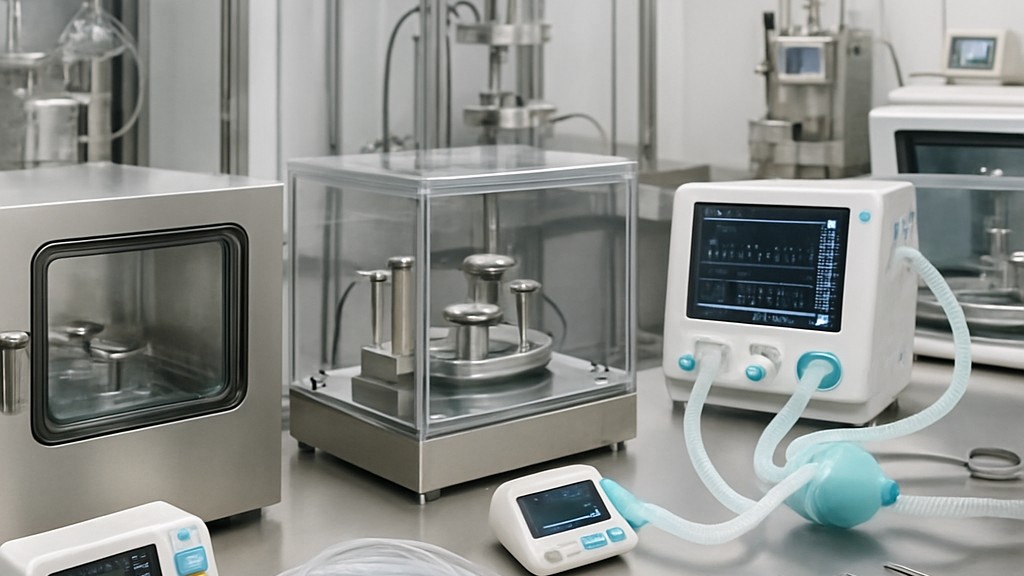
The orbital bearing hip wear simulator is widely used and has been successful in evaluating the wear characteristics of total hip arthroplasty joint surfaces. These test results have been shown to correlate well with clinical experience. Because this type of testing device is widely used, it is important to standardize the parameters to ensure consistent and comparable results across laboratories.
This test method differs from the joint motion described in the ISO 14242-1 standard. While the motion of the orbital bearing hip wear simulator is simpler and less anatomical than the motion described in the ISO 14242-1 standard, orbital bearing hip wear simulators have been used for over 25 years to evaluate wear of total hip arthroplasty joint components. This equipment is used worldwide for wear testing of total hip arthroplasty components and has been quite successful in reproducing the types and amounts of wear occurring in vivo with a wide variety of bearing materials, including polyethylene, metals, and ceramics. Therefore, tests performed on orbital bearing hip wear simulator machines have provided fairly accurate predictions of the subsequent clinical performance of newly developed materials. This is particularly true for the newer cross-linked polyethylenes. Several recent reports with follow-up periods exceeding five years have shown that wear percentage reductions compared to older polyethylene are very similar to those predicted a decade ago in tests performed on orbital bearing hip wear simulators.
For the purposes of this standard, the following terms and definitions apply:
The ISO 14242-3 standard provides for the evaluation of the durability and performance of hip prostheses under standard conditions. This is essential for patient safety and long implant lifespan. Focusing on orbital bed-type wear testing machines, this standard defines test parameters for evaluating the wear of hip joint prostheses. These machines simulate the biomechanical conditions to which hip implants are subjected during human movement. The standard outlines the following:
This standard is part of a series (ISO) that collectively addresses wear testing of hip prostheses. ISO 14242-1 focuses on general wear test parameters, while ISO 14242-2 covers measurement methods. ISO 14242-3 specifically addresses orbital bearing-type machines, which are commonly used in wear testing due to their ability to simulate multi-axial hip joint motion.
The key components of this standard are:
These intervals allow the tester to simulate complex, multidirectional movements of the hip joint during activities such as walking. This standard requires that angular displacements be synchronized to an accuracy of plus/minus 0,1 percent (1 Hz) of the time elapsed for a standard cycle.
Because temperature and lubrication significantly affect material wear rates, these environmental conditions are critical to obtaining reliable wear data.
The ISO 14242-3 standard plays a vital role in the development, qualification, and regulatory approval of total hip joint prostheses. This standard is considered important for the following reasons:
Consequently, the ISO 14242-3 standard is a cornerstone of orthopedic implant testing, providing a standardized framework for evaluating the wear performance of total hip joint prostheses. By specifying precise loading, displacement, and environmental parameters, this standard enables the rigorous testing of hip implants for durability and safety. This standard has been widely adopted by manufacturers, testing laboratories, and regulatory agencies.
Our organization, which has been operating for many years and meticulously follows global developments in science and technology, employs a team of experienced professionals and a broad infrastructure to conduct testing, measurement, and analysis in a wide range of areas for businesses across all sectors. In this context, we also provide testing services in accordance with the standard "ISO 14242-3 Surgical implants - Wear of total hip joint prostheses - Part 3: Loading and displacement parameters and relevant environmental conditions for testing for orbital bearing-type wear testers."
To get an appointment, to get more detailed information or to request an evaluation, you can ask us to fill in our form and reach you.

