

ISO 11197 Medical Equipment Supply Units

ISO 11197 Medical Equipment Supply Units

The “ISO 11197 Medical Supply Units” standard, published by the International Organization for Standardization (ISO), is an international standard that specifies requirements for the basic safety and essential performance of medical supply units. These units are wall-mounted, ceiling-mounted, or suspension systems commonly found in hospitals, operating rooms, intensive care units, and emergency departments.
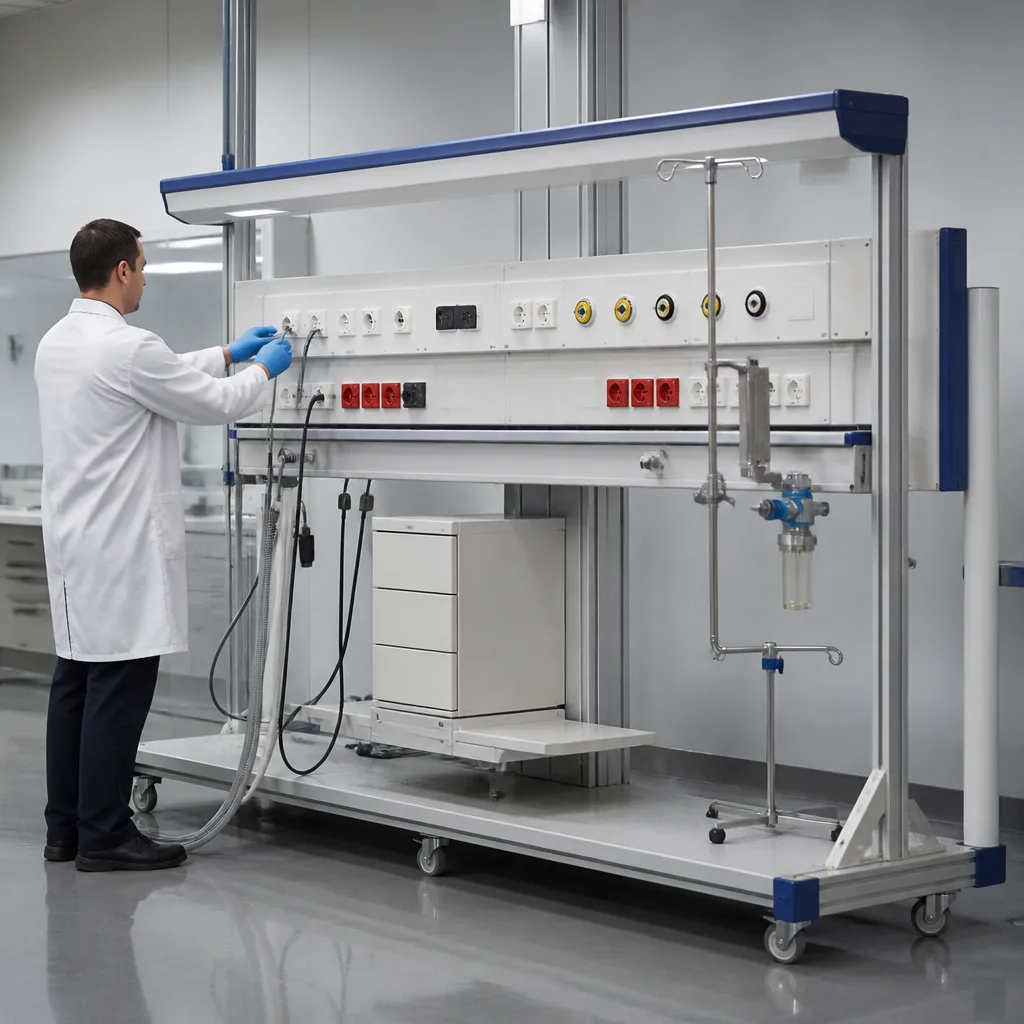
ISO 11197 Medical Equipment Supply Units

This standard ensures that the following are provided from a central point:

  • Medical gases (such as oxygen, compressed air, vacuum, nitrous oxide)
  • Electrical sockets
  • Data and communication sockets
  • Lighting (sometimes)
  • Other medical services

This standard applies to the following medical equipment units:

  • Produced in the factory
  • Assembled on-site from components

This standard covers both stationary and mobile units, including those containing cabinets and enclosures. However, it does not apply to independent medical gas outlets or individual electrical outlets; it only applies to integrated material units.

The primary objective of the ISO 11197 standard is to ensure that medical supply units provide the following:

  • To protect patients, operators, and service personnel from electrical, mechanical, and gas-related hazards.
  • To deliver reliable performance in critical maintenance environments.
  • Withstand the demanding conditions of healthcare facilities (cleaning, disinfection, mechanical stress).

The main requirements described in this standard include:

  • Electrical safety: Protection against electric shock, grounding, leakage currents, insulation.
  • Gas systems: Gas-specific outlets, color coding, non-modifiability, pressure testing, leak testing.
  • Mechanical strength: Load-bearing capacity, stability, impact resistance.
  • Marking and labeling: Clear identification of gases, maximum loads, manufacturer information.
  • Structure: Materials must be accessible for maintenance and prevent liquid ingress.
  • Basic performance: Reliable power and gas transmission under normal and single fault conditions.
  • Environmental: Resistance to cleaning agents, disinfectants, and hospital conditions.

The primary users of this standard are:

  • Medical Device Manufacturers
  • Hospital architects and planners
  • Biomedical engineers
  • Approved bodies and certification bodies
  • Healthcare facility managers

In general, compliance with the IEC 60601-1 standard, along with the ISO 11197 standard, is considered necessary for CE marking in Europe and regulatory approval in many other countries.

Medical supply units are vital infrastructure. A failure in gas supply or electrical safety in an intensive care unit or operating room can have immediate and serious consequences. The ISO 11197 standard helps ensure that these systems are designed, manufactured, and installed to the highest safety standards.

In short, ISO 11197 is an international standard that specifies the basic safety and performance requirements for medical equipment units used in healthcare facilities. These units are critical components in hospitals, intensive care units, operating rooms, recovery rooms, and patient wards because they provide essential services such as:

  • Electrical energy
  • Medical gases
  • Vacuum systems
  • Data and communication links
  • Lighting and equipment support systems

This standard ensures that these systems operate safely and reliably in environments where patient safety is critical. This standard applies to:

  • Medical equipment units produced in factories.
  • On-site installed systems in hospitals.
  • Wall-mounted systems
  • Ceiling hangers
  • Bedside units
  • Equipment bridges
  • Integrated patient service panels

The ISO 11197 standard covers units containing patient care services within cabinets, ducts, or enclosures. It also defines that companies installing the systems on-site are considered manufacturers and are therefore responsible for compliance.

The primary objectives of this standard are:

  • To protect patients and healthcare personnel.
  • To ensure the uninterrupted delivery of critical services.
  • To reduce the risks of electric shock and fire.
  • To prevent gas leaks and contamination.
  • To ensure the mechanical stability of the mounted equipment.
  • Standardizing testing and performance verification.

Hospitals are heavily reliant on medical equipment units during surgeries, anesthesia, intensive care, and emergency treatment. Failures in these systems can directly endanger patients' lives.

The main medical supply units are as follows:

  • Bedside units: Mounted on the back or top of hospital beds, they provide the following:
    • Electrical sockets
    • Nurse call systems
    • Oxygen and vacuum outlets
    • Lighting
  • Ceiling hangers: These are suspension systems commonly used in the following areas:
    • Operating rooms
    • Intensive care units
    • emergency services

These units support monitors, ventilators, infusion pumps, and surgical equipment.

  • Equipment bridges: Large structural systems that pass over patient beds or operating tables.
  • Recessed or surface-mounted service panels: Integrated wall systems containing auxiliary installations and communication systems.

According to the ISO 11197 standard, the basic technical requirements are as follows:

  • Electrical safety: This standard requires protection against the following:
    • Electric shock
    • Short circuits
    • Overheating
    • Insulation failures

This standard refers to the IEC 60601-1 safety principles for medical electrical equipment.

  • Medical gas safety: Medical gas systems must provide the following:
    • We must prevent leaks.
    • Incorrect gas connections should be avoided.
    • It must be resistant to contamination.
    • It must maintain pressure integrity.

Gas outlets must remain mechanically safe, even with repeated use.

  • Mechanical durability: Medical equipment units typically support the following heavy equipment:
    • monitors
    • ventilators
    • Infusion pumps
    • Surgical instruments

This standard includes:

    • Load test
    • Impact resistance
    • Yapısal bütünlük
    • Secure mounting systems
  • Fire protection: This standard assesses the following:
      • Flammability of materials
      • heat resistance
      • Fire control features

    This is especially important in oxygen-rich hospital environments.

    • Hygiene and cleanability: Surfaces must provide the following:
      • It must be resistant to disinfectants.
      • It should be easy to clean.
      • It should minimize bacterial accumulation.

    Smooth surfaces and durable coatings help reduce the risk of infection.

    The ISO 11197 standard defines numerous verification procedures, including:

    • Electrical continuity test
    • Leakage current test
    • Mechanical load test
    • Impact resistance tests
    • Gas leak tests
    • Stability verification
    • Functional performance checks

    Manufacturers must document test results to demonstrate compatibility.

    The ISO 11197 standard is considered a specialized standard that replaces and supplements the IEC 60601-1 standard, particularly for medical equipment units. This relationship means the following:

    • The IEC 60601-1 standard provides general medical electrical safety requirements.
    • The ISO 11197 standard adds application-specific requirements for patient service systems.

    Manufacturers typically assess compliance with both standards simultaneously.

    For many years, our organization, with its competent and experienced staff, has been understanding the needs of its clients, providing the advanced testing services they require, and assisting them in the establishment, implementation, and improvement of management systems. Within this framework, we also provide testing services compliant with the ISO 11197 standard.

    WhatsApp

