ISO 20072 Aerosol Drug Delivery Device Design Verification - Requirements and Test Methods
The ISO 20072 Aerosol drug delivery device design verification - Requirements and test methods standard, developed by the International Organization for Standardization (ISO) , describes the design, labeling, usage instructions, and testing requirements for handheld, single-use and reusable aerosol drug delivery devices designed to deliver measured or pre-measured aerosolized drugs to or through the human respiratory tract (including the nose, mouth, trachea, bronchial and alveolar regions).
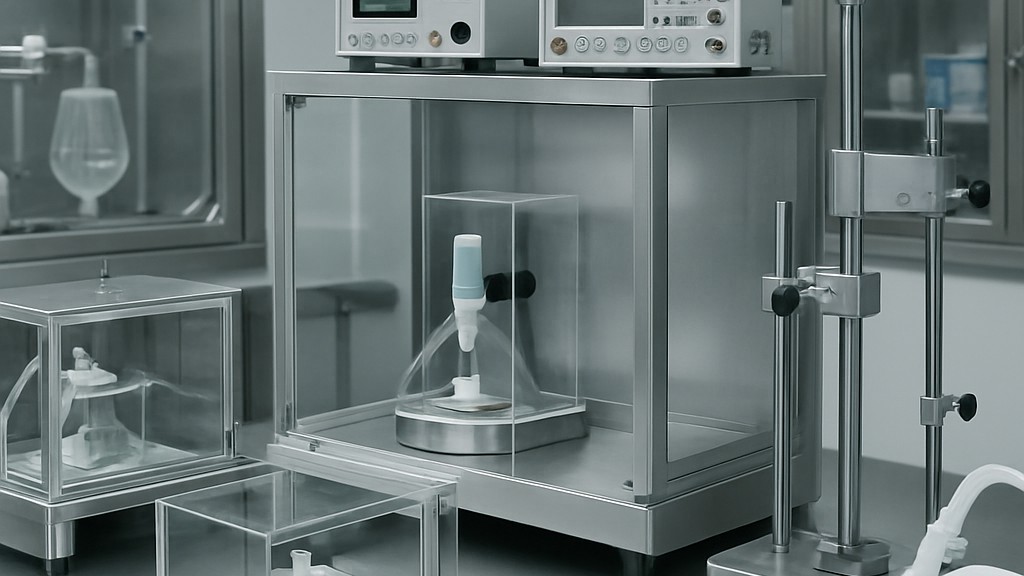
This standard applies to both refillable and single-use devices intended for personal use. This standard is intended for device design verification and not for drug product quality assessment. The purpose of this standard is to verify, through laboratory (in vitro) testing, that the design of aerosol drug delivery devices consistently meets the manufacturer's design specification by meeting a device functionality profile and system validation testing, both determined from a risk assessment and evaluated in accordance with the instructions for use.
This standard excludes continuous or semi-continuous aerosolization devices, aerosolization devices that do not emit an active pharmaceutical ingredient (API), general-purpose aerosolization devices (for use with ventilators), and atomizers, which are covered by ISO 27427. This standard does not apply to manufacturers of individual parts or components of aerosol drug delivery devices (e.g., spray pumps, valves, containers).
There may be times when a device falls within the scope of this standard and ISO 27427. The Committee anticipates that the intended use of the product and the device's risk assessment will determine which international standard a manufacturer selects for design validation of aerosol drug delivery devices. This international standard outlines the process by which design validation of aerosol drug delivery devices is to be conducted with a drug, placebo, or a representative drug in conjunction with a risk-based device functionality profile. ISO 27427 outlines the process by which the aerodynamic aerosol performance of a nebulization system for use with an unspecified class of active pharmaceutical ingredient is characterized.
For the purposes of this standard, the following terms and definitions apply:
- Active pharmaceutical ingredient refers to the API molecules responsible for producing the intended therapeutic effect.
- Actuation refers to the action of the aerosol drug delivery device to release the medication to be aerosolized. Actuation may consist of loading and releasing the medication or simply releasing the medication.
- An actuation counter is a piece of equipment that numerically counts down the number of actuations of the dose counter mechanism. The actuation counter may be an accessory or integrated with the aerosol drug delivery device.
- The aerosol drug delivery device system is an integrated system consisting of the patient interface and the drug (i.e., a combination product).
Unless justified by a risk assessment, the following general requirements apply:
- The aerosol medication delivery device must be designed to deliver the mass or dose emitted as specified and verified by the manufacturer of the device, when operated in accordance with the instructions for use.
- The aerosol medication delivery device must be designed to ensure that the operator is aware that the device is being operated.
- The aerosol medication delivery device should be designed to minimise the risk of accidental activation.
- The performance of a combination of an aerosol medication delivery device and any accessory specified by the manufacturer of that device must conform to the device functionality profile and system validation testing applicable to that combination. The manufacturer must identify the specific accessories suitable for use as part of the aerosol medication delivery device or system.
- The aerosol medication delivery device should be designed so that the operator can determine when the medication intended to be delivered is near completion and when it is near or has reached exhaustion.
- A prefilled aerosol delivery device with an actuation counter or contents indicator should not be reset when the end of life is reached. A refillable aerosol delivery device with an integral counter should allow resetting when the device is filled with medication.
- The manufacturer must provide information to the operator to indicate when the aerosol medication delivery device needs to be replaced or has reached the end of its useful life. This requirement also applies to any accessories required to meet the device functionality profile requirements.
- The design process should include a provision for justification for material selection. The primary consideration in selecting materials for device manufacture should be fitness for purpose in terms of properties and characteristics, including chemical, toxicological, physical, electrical, morphological, and mechanical characteristics. To provide assurance that the end product will perform as intended and be safe for human use, the program includes a biological assessment in accordance with ISO 10993-1. ISO 10993-1 provides guidance on which parts of the ISO 10993 series must be complied with.
- Aerosol medication delivery devices should be designed to minimise:
- Entry of foreign particles
- Particle formation from the aerosol drug delivery device itself (e.g., abrasion)
- Microbiological contamination.
Aerosol drug delivery devices and components that must be sterile by design or purpose shall be designed to be capable of being subjected to sterilization processes in accordance with ISO 17665-1, ISO 11135-1 or ISO 11137 standards or other validated sterilization processes.
- The software must be designed according to a life cycle model that complies with IEC 62304. The aerosol medication delivery device must meet the applicable requirements of IEC 62304.
- Aerosol drug delivery devices and components that, by their design or purpose, require the operator to clean, disinfect, or sterilize must be provided with adequate instructions to enable the operator to perform the cleaning, disinfecting, or sterilization process. These methods must be verified to achieve their intended purpose as specified by the manufacturer.
- Aerosol medication delivery devices with electrical components must comply with IEC 60601-1, IEC 60601-1-2 and IEC 62366 standards.
- If the aerosol medication delivery device includes an electronic alarm system, it must comply with IEC 60601-1-8 and IEC 62366 standards.
- For prefilled and fixed-dose aerosol medication delivery devices, the dose and number of actuations must be clearly marked on the device.
- In the case of selected dose aerosol drug delivery devices, the following should be clearly stated:
- Size and units for selected dose
- Selected dose ready to be administered
- A selected dose aerosol medication delivery device must be designed so that one of the following applies:
- A dose cannot be adjusted to a value greater than the remaining drug
- The aerosol medication delivery device will not allow delivery if the set dose is greater than the remaining medication
- Aerosol medication delivery device displays the amount of medication delivered (a fraction of the set dose)
- The aerosol medication delivery device displays the amount of medication left undelivered (the amount of dose not yet delivered).
- The aerosol medication delivery device should be designed so that the identity of the medication in pre-filled devices can be determined by the operator or, with non-pre-filled aerosol medication delivery devices, the medication to be used is clearly indicated.
The manufacturer must also perform a risk assessment in accordance with the ISO 14971 standard, which will determine the parameters to be included in the device functionality profile.
Our organization, which has been supporting businesses across all sectors for years through a wide range of testing, measurement, analysis, and evaluation activities, has a strong team of employees who closely follow global developments in science and technology and are constantly improving themselves. In this context, we also provide testing services in accordance with the "ISO 20072 Aerosol drug delivery device design verification - Requirements and test methods" standard.



