EN 12184 Electric Wheelchairs, Scooters and Chargers - Requirements and Test Methods
The European standard "EN 12184 Electrically powered wheelchairs, scooters and chargers - Requirements and test methods" describes the requirements and test methods for electrically powered wheelchairs designed to carry a person with a mass of at least 25 kg and not more than 300 kg, with a maximum speed not exceeding 20 km/h. These include:
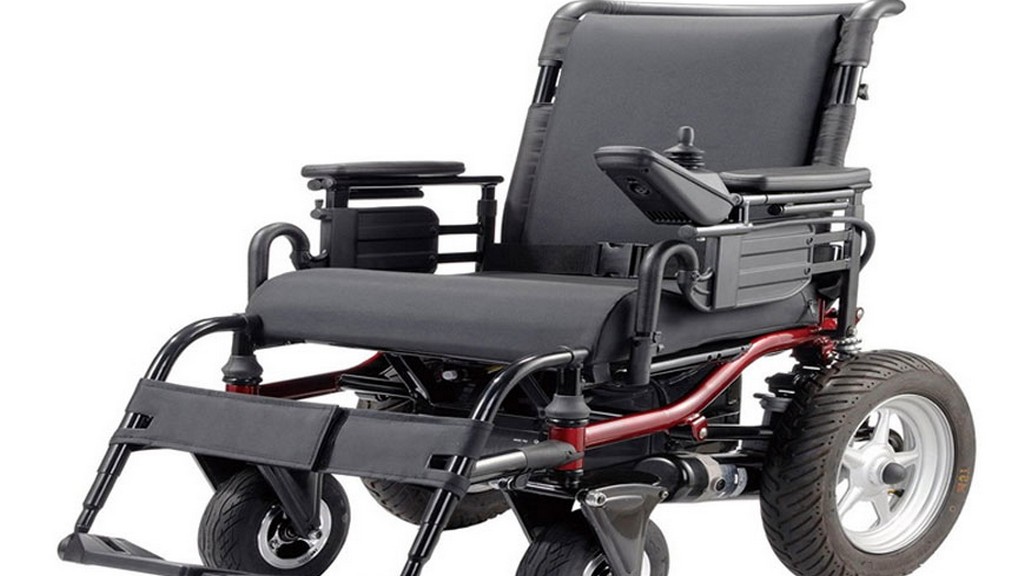
- Electric scooters with three or more wheels
- Manual wheelchairs with additional electrically operated drive system
- Electric wheelchairs activated by hand rim
- Electric standing wheelchairs
- Wheelchairs with pivot drive wheel unit
- Push-assisted wheelchairs.
This standard does not apply to balance wheelchairs, custom-made power wheelchairs, or power wheelchairs for sports. This standard also includes requirements and test methods for manual wheelchairs with power-assisted assistive equipment.
For the purposes of this standard, the terms and definitions given in ISO 7176-26 and ISO 7176-14, as well as the following definitions, apply:
- A freewheel device is a means of disabling the parking brake or drive of a wheelchair so that it can be maneuvered by hand.
- A loaded wheelchair is a wheelchair loaded with a test dummy or a human test passenger.
- A non-spillable battery refers to a battery in which the electrolyte cannot escape regardless of its location.
- The rated incline is the maximum incline specified by the manufacturer at which the wheelchair meets the requirements for dynamic balance, static balance, braking performance, and hill climbing, traversing, and descent.
- A wheelchair (powered wheelchair) is a wheeled mobility device designed to transport a seated person with limited mobility, propelled by one or more electric motors controlled by the seated person or an assistant. A power wheelchair may have electronic speed control and electronic or manual steering control. This definition also includes scooters.
- Pre-sale information is publicly available information about the wheelchair provided by the manufacturer.
- A push-assisted wheelchair is a wheelchair that is intended to be propelled, braked, or steered in part by the manual effort of an assistant, such as a wheelchair propelled by an electric motor and steered by forces applied to the push handles.
- The pivot drive wheel unit is an integrated drive system consisting of a pivot drive wheel, a battery and a controller.
- A custom-built electric wheelchair is a power wheelchair that is designed and manufactured for use by a specific individual occupant and is not an adaptation of a mass-produced design.
Wheelchairs are classified into one or more of the following three classes, depending on their intended use:
- Class A: Wheelchairs designed for riding on flat horizontal surfaces and gentle slopes.
- Class B: Wheelchairs designed for riding on moderately uneven surfaces and moderate slopes, in addition to the uses described for Class A.
- Class C: Wheelchairs designed for use on rough terrain and on steeper slopes, in addition to the uses described for Classes A and B.
The specific requirements for each class are given in the table provided in the standard.
The risk management process is implemented in accordance with EN ISO 14971. To comply with this standard, all elements of the risk management process specified in EN ISO 14971 are implemented except:
- Planning and execution of production and post-production monitoring
- Periodic review of the suitability of the risk management process
In short, EN 12184 specifies the safety and performance requirements for electric wheelchairs, scooters, and their battery chargers. It is an important standard that ensures mobility devices provide safe and reliable transportation for users with reduced mobility. This standard primarily applies to products designed for indoor or outdoor use by people with physical disabilities.
This standard applies to:
- Powered wheelchairs (including those with passenger-operated controls)
- Electric scooters for users with limited mobility
- Battery chargers for these mobility devices
Manually operated wheelchairs, strollers and other non-motorized mobility aids are excluded.
The main requirements of this standard are:
- General safety: Devices must be designed to prevent hazards such as tipping, unintended movement, and electrical faults. Components must be securely connected and not pose a risk of injury to users or caregivers.
- Static and dynamic stability: The wheelchair or scooter should remain stable during normal and predictable use, including when going up or down hills or traveling over uneven terrain.
- Braking performance: Both the service brakes (operated by the user) and the parking brakes must meet reliability criteria, especially on slopes.
- Electrical safety: Chargers and in-car electronic devices must comply with relevant electrical standards, minimize electromagnetic interference, and prevent the risk of electric shock.
- Environmental resistance: Products must be resistant (within reasonable limits) to environmental conditions such as humidity, temperature changes, and exposure to dust or water splashes.
- Control systems: Joysticks, throttles, and other user interfaces should be intuitive, operable with limited dexterity, and designed to prevent accidental activation.
- Ergonomics and comfort: Seating, supports, and adjustments must accommodate a variety of body types and impairments, providing user comfort and postural support.
- Test procedures: Includes rigorous mechanical and functional tests such as obstacle climbing, curb climbing, range testing, and battery endurance evaluation.
Our organization, which has been supporting businesses across all sectors for years through a wide range of testing, measurement, analysis, and evaluation activities, has a strong team of employees who closely follow global developments in science and technology and are constantly improving themselves. In this context, we also provide testing services in accordance with the EN 12184 Electric wheelchairs, scooters, and chargers - Requirements and test methods standard.



