ISO 21649 Needle-free Syringes for Medical Use - Requirements and Test Methods
The standard “ISO 21649 Needle-free syringes for medical use - Requirements and test methods” developed by the International Organization for Standardization (ISO) describes the safety, performance and test requirements for single-use and reusable needle-free injection systems intended for human use and personal use by patients in clinics and other medical environments.
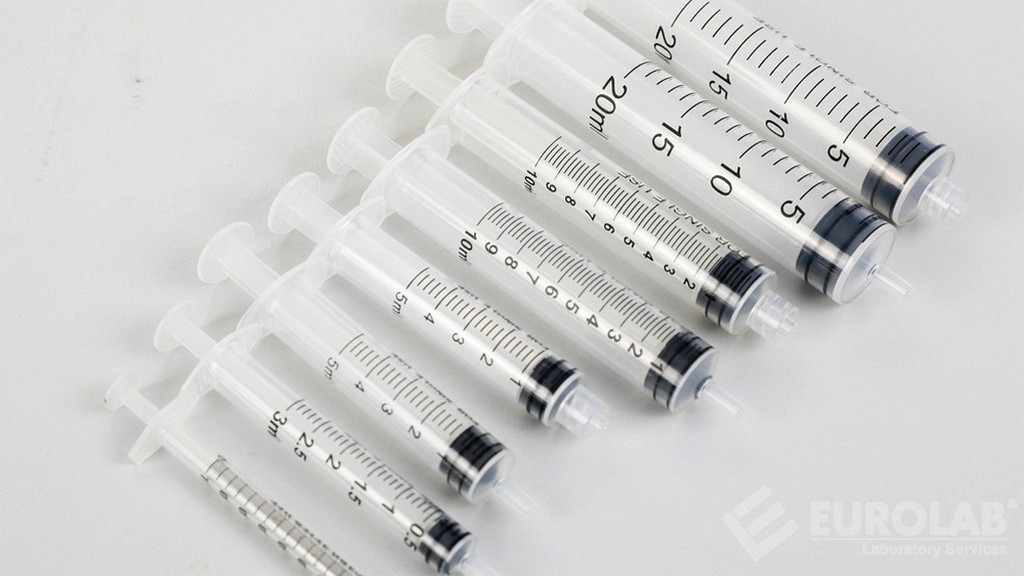
The dose chamber of such injection systems is usually disposable and intended to be replaced after a single use or a limited number of uses. It is sometimes detachable from the injection mechanism and is often referred to as a cartridge, ampoule, syringe, capsule or disk. In contrast, the dose chamber may also contain a permanent internal chamber designed to last the claimed life of the device and an additional member or members that eliminate the risk of cross-contamination.
Products not covered by this standard include:
- Devices that involve penetration of a portion of the device through or into the skin or mucous membranes (such as needles, prongs, microneedles, implantable slow-release drug devices)
- Devices (such as sprays, inhalers, foggers) used to produce aerosols, droplets, powders or other formulations for inhalation, insufflation, intranasal or oral deposition.
- Devices (such as transdermal patches, liquid drops) used to deliver liquids, powders, or other substances to the skin surface or mucosal surfaces for passive diffusion or ingestion into the body.
- Devices used to apply sonic or electromagnetic energy (such as ultrasonic or iontophoretic devices).
- Infusion systems used to add or measure medications into artificial tube, catheter or needle systems (these enter the body).
In line with the objectives of this standard,
- The claimed life is the total number of injection strokes that the needleless injection system is expected to deliver within the performance profile specified by the manufacturer, under normal use with recommended user maintenance and before parts need to be overhauled or replaced by the manufacturer. This number may also be expressed as a time period (e.g. number of days, weeks, months or years) at the corresponding frequency of expected use (e.g. number of injections per day, week, month or year).
- The dose chamber is the container that contains the drug product and is in direct contact with the drug product and through which the drug product is administered to the patient by the needleless injection system.
- Dosage accuracy refers to the difference between the intended dose and the dose delivered.
- The injection mechanism is the component of the needleless injection system designed to transfer, store, regulate, control and impart the energy required for the injection to the dose chamber or the medicinal product contained therein, and the means to prevent the release of such energy (e.g. safety catch). The term is not used to refer to separate accessories that transfer energy to the needleless injection system but are separated from the needleless injection systems during injection (e.g. a separate spring-loaded mechanism, a gas pressurization tank, a foot pump or other separate device that uses electricity, muscle power or another energy source).
- The intended dose is the amount of medicinal product intended to be administered at one time.
- The maximum dose is the largest amount that the manufacturer states the needle-free injection system can deliver in one injection.
- The minimum dose is the smallest amount that the manufacturer states the needle-free injection system can deliver in one injection.
- A needle-free injection system is a system that uses a syringe and its components and accessories to impart kinetic energy to the medicinal product by using mechanical action (e.g. the movement of a piston or a gas flow, but not excluding other means) to administer a medicinal product to a patient without any part of the system penetrating the skin or mucous membranes.
- A nozzle is the component of a syringe through which the medical product is expelled. Depending on the device design, the nozzle may or may not make physical contact with the patient's skin or other membranes.
- The orifice is the hole at the end of the nozzle through which the medicinal product is expelled.
- A performance profile is a set of measurable and quantitative values and tolerance ranges determined by the manufacturer that define the proper functioning of the needle-free injection system to accurately deliver the medicinal product.
- The reservoir is the intermediate container that holds and comes into contact with the medicinal product immediately before it is transferred to the dose chamber. This container is usually the vial or other container filled with the medicinal product by the pharmaceutical manufacturer.
- A unit container is a packaging in which a single component or needle-free injection system is provided to a user.
Among the numerous testing, measurement, analysis and evaluation studies that our organization has carried out for businesses in various sectors, it also provides testing services defined in the “ISO 21649 Needle-free syringes for medical use - Requirements and test methods” standard with its trained and expert staff and advanced technological equipment.



