

The standard “ISO 80369-20 Small diameter connectors for liquids and gases in healthcare applications - Part 20: Common test methods” developed by the International Organization for Standardization (ISO) describes the general test methods used to evaluate the performance requirements of small diameter connectors specified in the IEC 80369 series and ISO 18250 series.
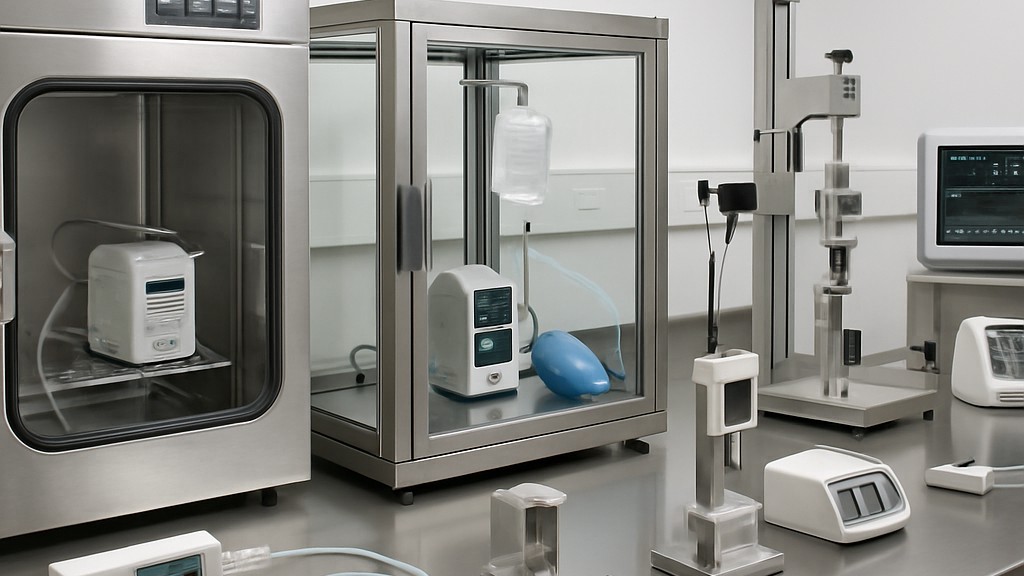
For the purposes of this standard, type testing means testing on a representative sample of equipment to determine whether the equipment, as designed and manufactured, meets the requirements of this standard.
Small-bore connectors are essential in healthcare, facilitating the safe and effective delivery of liquids, gases, and medications. The ISO 80369 series of standards defines the types and functions of these connectors, covering applications from intravenous to enteral and neuraxial.
In the healthcare industry, where precision and safety are paramount, the risk of incorrect connections between medical devices can lead to disastrous outcomes. Confusions, such as when a tube designed for intravenous fluids is accidentally connected to an enteral nutrition system, have historically led to patient harm, including medication errors and infections. To combat this, a series of standards have been developed to address incompatible connectors for various medical applications. At the heart of this effort is the ISO 80369 set of standards, which contains general requirements for small-bore connectors used in liquids and gases in healthcare environments.
In the high-risk environment of healthcare, where even minor connection errors can lead to life-threatening complications, standardized testing is vital to ensuring the reliability of medical devices. ISO 80369-20 is a foundational standard focusing on common test methods for small-bore connectors used in liquids and gases. These connectors, typically smaller than 8,5 mm in diameter, are integral components of systems such as intravenous lines, enteral feeding tubes, and respiratory devices. This standard includes rigorous and reproducible test protocols to assess performance and non-compliance.
Small-bore connectors facilitate fluid, gas, and medication delivery in patient care, but historical uniformity, such as the widespread use of Luer-type fittings, has contributed to incorrect connections. A single mismatch, such as connecting an enteral tube to an IV line, can lead to serious consequences such as infections or air embolism.
The ISO 80369-20 standard provides the basis for validation by outlining test methods applicable across the entire range. It does not specify device-specific requirements, but provides manufacturers and regulators with tools to verify that connectors withstand clinical stresses such as pressure, torque, and shear forces. Accredited testing laboratories use these methods to simulate real-world scenarios and ensure connector performance under various conditions.
The ISO 80369-20 standard details a series of attachment-based tests to evaluate dimensions, mechanical integrity, fluid dynamics, and environmental durability. These methods are referenced on application-specific parts (e.g., the ISO 80369-7 standard for intravascular use) and use calibrated reference connectors for consistency.
The main test categories are:
The annexes of this standard are arranged as follows:
These tests use precision equipment, such as torsion drives for Luer locks or compression fixtures for seals. Acceptance criteria, as validated by industry research, result in a greater than 90 percent reduction in the risk of faulty connections.
The ISO 80369-20 standard is critical to patient safety and medical device reliability in healthcare environments. It provides standard test methods to ensure the proper operation of small-diameter connectors—small components used in medical systems such as IV lines, feeding tubes, and ventilators—and to prevent hazardous misconnections. This standard is considered important for the following reasons:
In short, the ISO 80369-20 standard is vital because it protects patients, standardizes quality, and supports safer, more reliable medical devices.
As a result, the ISO 80369-20 standard is a vital part of the ISO 80369 series, which provides robust test methods that protect patients by ensuring small-diameter connectors are reliable and compatible across applications. This latest update reflects a commitment to continuous improvement that addresses current challenges while maintaining practicality. By enabling rigorous validation, the ISO 80369-20 standard not only prevents errors but also increases confidence in medical devices, paving the way for a safer and more innovative future in healthcare.
Our organization, which has been operating for many years and meticulously follows global developments in science and technology, employs a team of experienced professionals and a broad infrastructure to conduct testing, measurement, and analysis in a wide range of areas for businesses across all sectors. In this context, we also provide testing services in accordance with the ISO 80369-20 "Small-diameter connectors for liquids and gases in healthcare applications - Part 20: Common test methods."
To get an appointment, to get more detailed information or to request an evaluation, you can ask us to fill in our form and reach you.

