

EN ISO 5359, Low-pressure flexible connecting assemblies (hose assemblies) for use with medical gas systems, which originated as a European standard and was subsequently published by the International Organization for Standardization (ISO), specifies the specific requirements for high-pressure assemblies for use with conventional gas supply systems for medical applications. This standard includes purchasing instructions for the design, manufacture, specification, and testing of hose assemblies used to deliver the medical gases listed in the table provided in the standard.
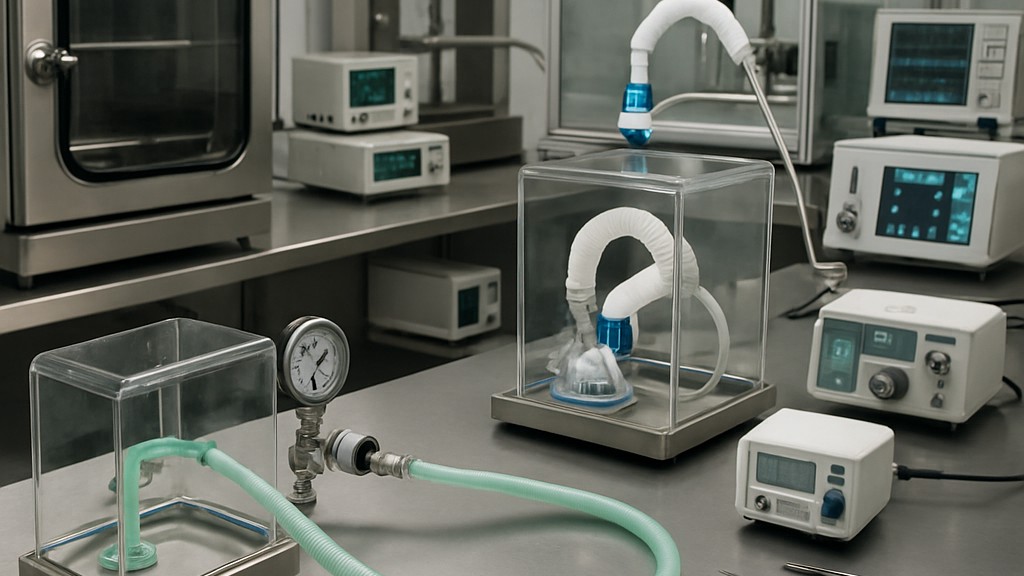
The hose assemblies with connectors defined in this standard and shown in the figure are intended for use in the following situations:
Some types of equipment include internally mounted hose assemblies that cannot be removed by the user or serviced without disassembling the equipment. For example, overhead rails and some hinged arm booms. These are outside the scope of this standard. Additionally, this standard does not include electrical conductivity requirements.
For the purposes of this standard, the following definitions apply:
All components and hose assemblies must be supplied clean and free of oil, grease and particulate matter. Precautions must be taken to maintain cleanliness during transport and storage.
Any cleaning and degreasing method that automatically removes all surface dirt and hydrocarbons and leaves no residue of its own can be used. Chemical cleaning methods typically require a bottom wash and drying process to remove residue.
Recommendations for materials used in the construction of general assemblies are included in the annex of the standard.
When testing hoses and hose assemblies to assess compliance with the requirements of this standard, the following rules should be used when performing tests:
The requirements specified in this standard for hoses must be met for each batch of hose supplied, using at least one different sample for each test. When used or stored in rooms with varying temperatures, care must be taken to ensure that the hose has sufficient time to reach the required ambient temperature. Hose assembly users should be aware that certain materials soften at temperatures exceeding 25°C, increasing the likelihood of the hose kinking, deformation, and clogging.
The inner diameter of the hoses must comply with ISO 1307. The nominal inner diameter of the hose must be adjusted to meet national requirements for pressure drop and medical gas flow. Vacuum hoses must have a minimum inner diameter of 6,3 mm.
When tested in accordance with this standard, the minimum burst pressure of hose used in all services other than vacuum, in accordance with ISO 1402, shall be 5000 kPa (50 bar) or four times the design working pressure, whichever is greater.
When tested in accordance with this standard, the hose shall comply with the following requirement: when the pressure is increased from 50 kPa to 1400 kPa, the increase in outside diameter shall not exceed 5 percent of the original diameter.
Unsupported and unpressurized hose must be capable of being shaped to an inside radius of ten times the inside diameter of the hose without visible kinks.
When tested for flexibility in accordance with this standard, the reduction in flow shall not exceed 10 percent and the hose shall not show visible deformation.
When tested as described in the ISO 8033 standard, the adhesion strength should be at least 1,6 kN/m.
When tested using a test pressure of 1400 kPa, as described in the ISO 1402 standard, the change in length at the test pressure should not exceed plus/minus 5 percent.
Our organization, which has been supporting businesses across all sectors for years through a wide range of testing, measurement, analysis, and evaluation activities, has a strong team of employees who closely follow global developments in science and technology and are constantly improving themselves. In this context, we also provide testing services in accordance with the EN ISO 5359 standard for "Low-pressure flexible connection assemblies (hose assemblies) for use with medical gas systems."
To get an appointment, to get more detailed information or to request an evaluation, you can ask us to fill in our form and reach you.

