

EUROLAB now offers competitive turnaround time for pure cultures shipped in general growth media. As defined in USP <1113>, a pure culture is usually achieved by “sequentially streaking the colony of interest in a quadrant pattern.” This test bypasses the time required to grow and isolate the organism and allows the sponsor to choose a 1, 3, or 5-day turnaround time for genetic identification, offering flexibility in price and delivery time.
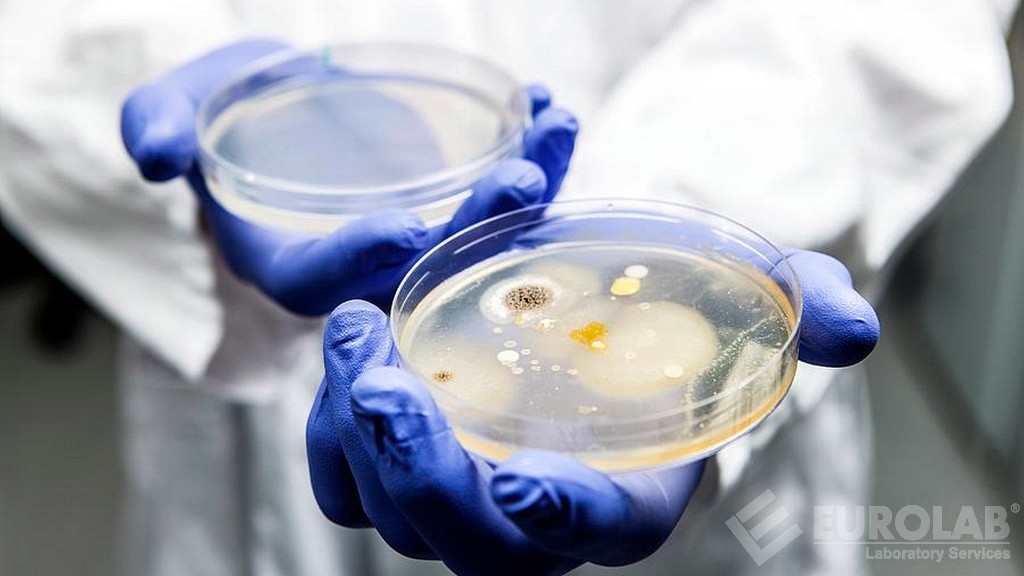
Organism Identification tests are performed by monitoring biological burden, environmental monitoring, tissue testing, microbial limits and sterility or BI positives.
Gram staining: Isolated colonies are examined for colony morphology, Gram reaction, and cell morphology.
Genetic identification: This uses DNA instead of traditional biochemical reactions. It involves collecting DNA from a microorganism (16S ribosomal DNA for bacteria and D2 region ribosomal DNA for fungi), creating multiple copies of the target region, and then comparing the unknown sequence with the MicroSeq library. If no match is found in the MicroSeq library, a general database can be searched.
A Gram stain is typically performed with all genetic identification. This is done to ensure a pure culture and determine whether unknown organisms are bacteria or yeast. It also provides a phenotypic component that makes identification more complete.
EUROLAB, with its highly expert team and internationally accredited laboratories, Microbial Definition Test It performs all test, analysis, measurement, evaluation and report generation services completely and reliably.
To get an appointment, to get more detailed information or to request an evaluation, you can ask us to fill in our form and reach you.

