

Filter testing evaluates a filter's ability to filter out microbial organisms of various sizes. This test allows manufacturers to determine membrane pore sizes and is an excellent lot release test. Test data can also be used as an effective marketing tool. EUROLABhas significant experience using a wide variety of microorganisms, working with multiple industries, and performing testing in accordance with both ASTM F838-05 and HIMA guidance documents.
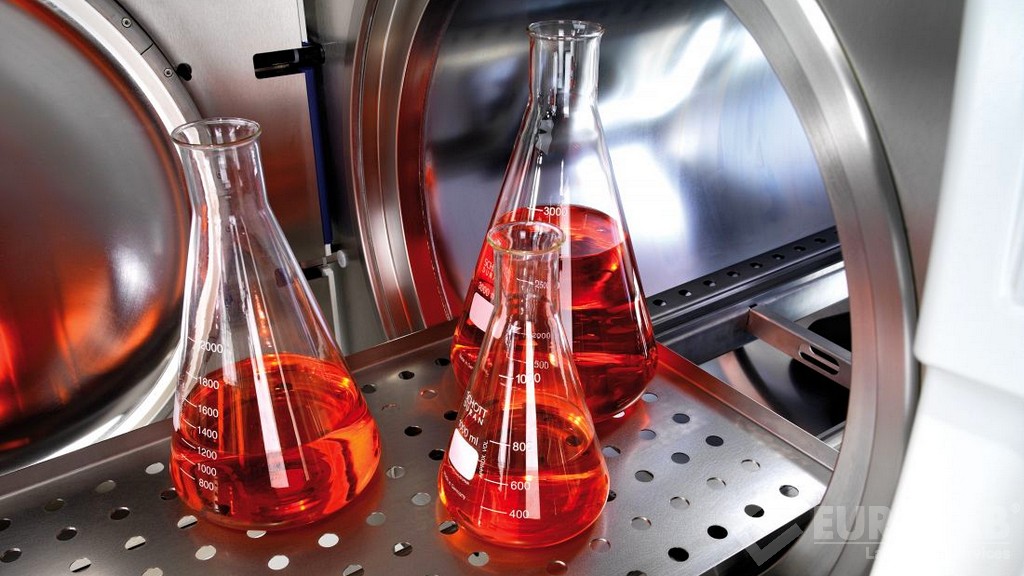
For the Filter Test run, the organism is grown in a minimal medium or other suitable medium depending on the required growth conditions, required size ranges, challenge organism and concentration. The test objective of the most severe bacterial strain against the filter is met by strain conditions that include high pressure, high flow rates, and a high concentration of bacteria per cm2 of EFA (effective filtration area). Growth parameters, temperatures and environments are adapted from ASTM and HIMA methods.
To each test filter, usually B. diminuta for a 0.2 micron membrane, S. marcescens for a 0.45 micron membrane, or Mycoplasma for a 0.1 micron membrane cultured to maximize the percentage of passable organisms are tackled with a suspension of the specified challenge organism. pass through the selected positive control filter (typically a 0.45 µm filter is used for B. diminuta and other membrane sizes for other sized organisms).
Sufficient volume of this challenge suspension is used to ensure the correct organism concentration for each filter's effective filtration area (EFA) (typically equivalent to at least 2 x 1 107 colony forming units (CFU) per cmXNUMX for B.diminuta; this may vary with other control organisms. ).
The challenge will be realized at a high flow rate and a maximum differential pressure (typically 30 psig). Wastewater will be collected and quantitatively analyzed. Integrity testing is done before and after the bacterial test procedure.
EUROLAB, with its highly expert team and internationally accredited laboratories, Filter Sterilization Tests It performs all test, analysis, measurement, evaluation and report generation services completely and reliably.
To get an appointment, to get more detailed information or to request an evaluation, you can ask us to fill in our form and reach you.

