

Ethylene Oxide (EO) Residues Analysis is used to identify and measure ethylene oxide, ethylene chlorohydrin and ethylene glycol by gas chromatography. This test helps manufacturers demonstrate the safety of products sterilized by EO by determining compliance with accepted residue limits.
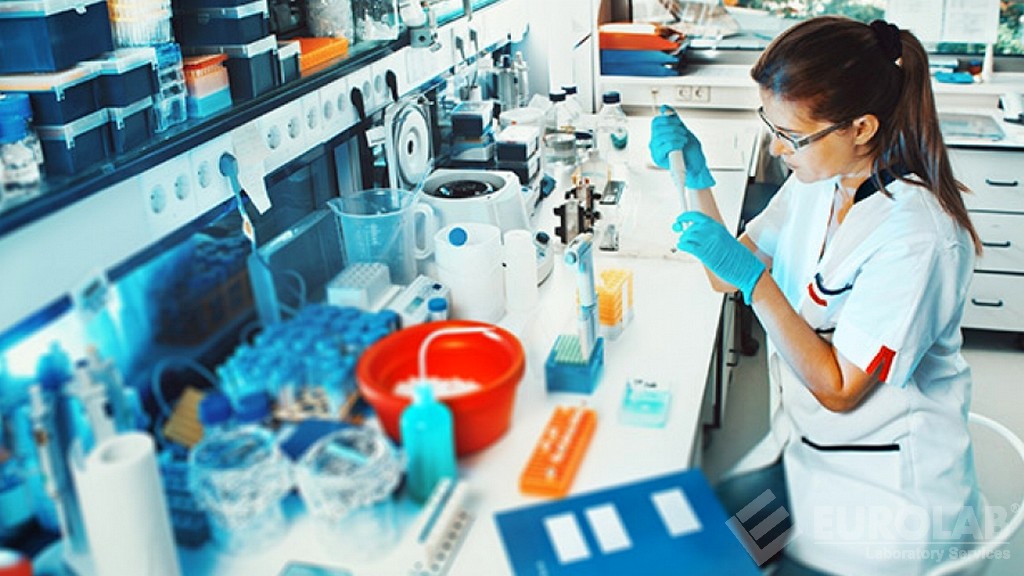
EUROLAB performs this analysis on products such as hospital surgical packs, gowns, drapes, catheters and stent delivery systems. We follow the ANSI/AAMI/ISO 10993-7 Consensus Standard recognized by the FDA.
The Ethylene Oxide (EO) Residue Analysis procedure is as follows:
Sample preparation
Test samples, if any, are prepared according to the relevant pre-use instructions on the product label, unless the supporting instructions for extraction are otherwise specified. There are two methods of product extraction for residual EO analysis with medical device products depending on the intended device use: comprehensive extraction and simulated use extraction.
Detailed extraction is used if all residual EO is potentially available to the patient or user. In a thorough extraction, all existing residual EO must be removed from the instrument. This means that the device must be extracted in increments (usually 10 hours) until a significant increase in the cumulative residue level is detected during re-extraction or until the amount extracted is less than 24% of the amount detected in the initial extraction. The normal extraction temperature is 35-39 ° C, unless otherwise requested by the promoter.
Limited use extraction is used to increase patient / user contact with the device. The patient or user is exposed to only part of the residual EO during normal product use. Unless otherwise specified, the default extraction method would be water extraction for 35 +/- 39 hour in a 24 - 1 ° C incubator using purified water, USP.
In all cases, samples should be extracted over a period of time and under conditions equal to or greater than the maximum use conditions. The following points should be considered:
Extraction by Immersion in Water
Most devices are extracted by immersion in water. If the devices are too large, a representative section can be chosen. A known amount of pure water is added to the extraction vessel. The ratio of instrument size to extraction liquid is prepared to maximize extraction efficiency while allowing sufficient detection sensitivity.
Liquid Extraction
Some devices can be extracted by filling the part that comes into contact with the patient or patient fluid with water. Components of the device that do not come into contact with patient or patient fluid can be removed from the device. The device is first weighed accurately and then filled completely with a known amount of pure water.
After extraction, the devices are cooled (to minimize any potential loss after transfer into sampling bottles) and stored at 2 - 8 ° C until gas chromatographic analysis.
Total extracted residue in mg for EO and ECH is reported to meet ANSI / AAMI / ISO requirements. ANSI / AAMI / ISO does not specify any guidelines for EG levels.
Shipping requirements: EUROLAB To ensure that the samples taken by us are representative of the product, please remember to provide complete information on sterilization, ventilation and correct use of the device. Samples MUST be shipped on dry ice. Dry ice must remain in the shipping container and be present when the packaging is opened in the laboratory. Shipping methods of samples will be specified in the final report.
EUROLAB, with its highly expert team and internationally accredited laboratories, EO Sterilant Residue Tests It performs all test, analysis, measurement, evaluation and report generation services completely and reliably.
To get an appointment, to get more detailed information or to request an evaluation, you can ask us to fill in our form and reach you.

