

The European standard “EN 1789 Medical vehicles and equipment - Road ambulances” describes the requirements for the design, testing, performance, and equipping of road ambulances used for the transport, monitoring, treatment, and care of patients. This standard includes requirements for the patient compartment in terms of the working environment, ergonomic design, and the safety of both crew and patients. This standard does not cover personnel training, which is the responsibility of the competent authority(ies) in the country where the ambulance will be registered.
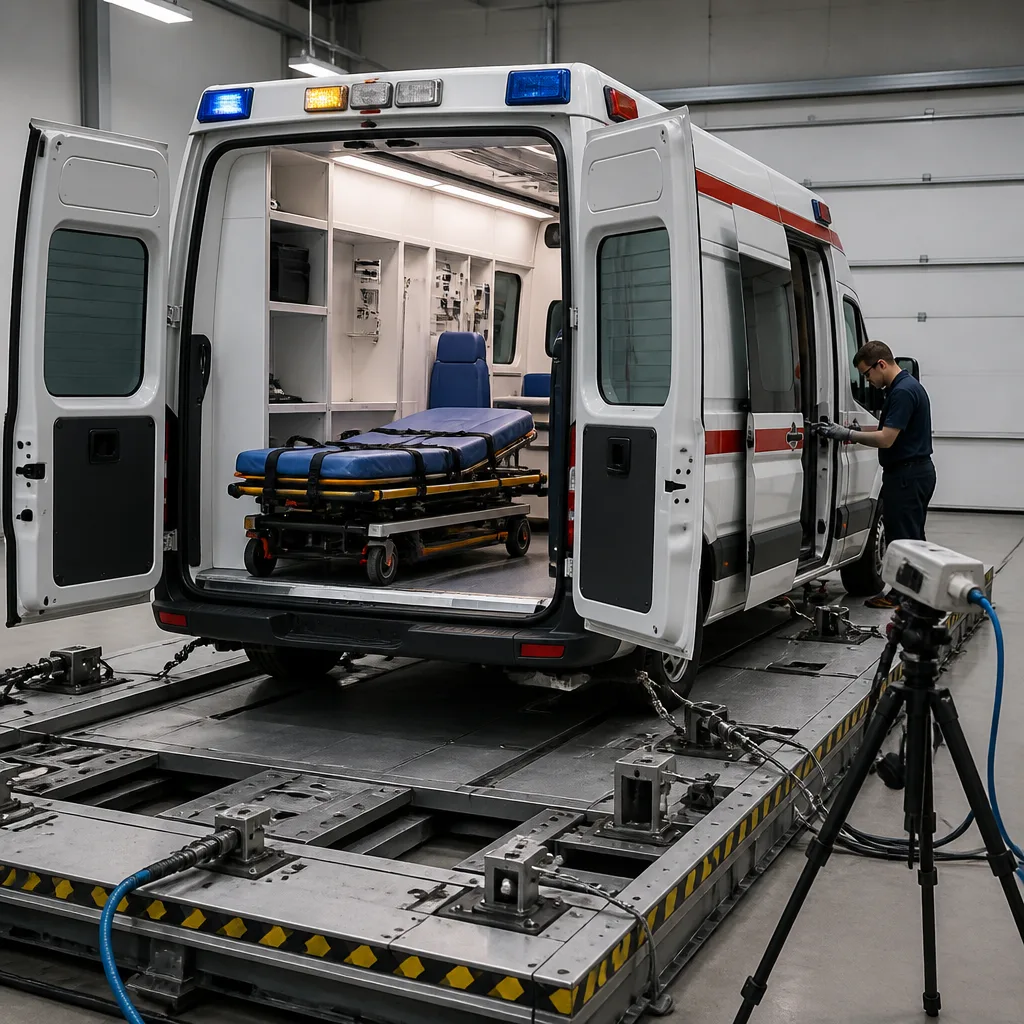
This standard applies to road ambulances capable of carrying at least one person on a stretcher and does not cover the transport of hospital beds. This standard also includes requirements for ambulances intended to transport transport incubator systems.
This standard covers the specific requirements for each type of road ambulance (e.g., patient transport road ambulance types A1, A2, B, and C), determined by the patient's condition. It also provides general requirements for medical equipment transported in road ambulances and used inside and outside hospitals and clinics, in situations where environmental conditions may differ from normal indoor conditions.
The latest revision of the EN 1789 standard has two main objectives:
Road ambulances and their equipment, when used normally and maintained in accordance with the manufacturer's instructions, should not present any safety hazards that can be reasonably foreseen using risk management procedures in accordance with EN ISO 14971 and are connected with their intended use. These hazards are valid under normal conditions and in the event of a single malfunction.
EN 1789 is the main European standard regulating the design, performance, safety, testing, and equipment requirements for road ambulances. It was developed to harmonize ambulance safety and functionality across Europe.
This standard exists to ensure that ambulances are not merely vehicles for transport, but fully engineered mobile medical environments capable of safely supporting emergency treatment during transport. This standard focuses on:
This standard acknowledges that medical personnel frequently perform advanced procedures while vehicles are in motion under emergency driving conditions.
The EN 1789 standard applies to:
However, this does not include the following:
The EN 1789 standard defines four ambulance categories based on patient condition and treatment capacity:
Type C ambulances represent the highest level of onboard treatment capacity.
The main technical requirements have been defined as follows:
The design places great emphasis on ergonomics and operational efficiency in emergency situations.
A key engineering principle is the 10g dynamic impact requirement, meaning equipment and components must withstand deceleration loads at the collision level. This is typically verified using dynamic skid testing.
Electrical reliability is crucial because life support systems must operate continuously during transport.
These checks help ensure appropriate medical treatment and patient comfort.
Improperly secured oxygen systems can pose significant dangers during collisions.
EN 1789 requires numerous validation tests, including the following:
These tests aim to simulate real working conditions.
The latest revision of this standard has introduced requirements for electrically powered ambulances. The updated versions include guidance for:
This reflects the increasing use of electric commercial vehicle platforms in emergency medical service fleets.
The EN 1789 standard is important for the following reasons:
The EN 1789 standard is commonly used by:
The EN 1789 standard is commonly used in conjunction with the following:
In conclusion, the EN 1789 standard is one of the most influential ambulance engineering standards in Europe. It transforms ambulances from simple transport vehicles into highly controlled medical environments designed for emergency care under challenging conditions.
Our organization, with its competent and experienced staff, has been understanding the needs of its clients for many years, providing the advanced testing services they require, and assisting in the establishment, implementation, and improvement of management systems. Within this framework, we also provide testing services in accordance with the EN 1789 standard.
To get an appointment, to get more detailed information or to request an evaluation, you can ask us to fill in our form and reach you.

