

The bioburden test determines the total number of viable microorganisms in or on a medical device, container, or component. It is usually performed on any product that requires control and / or monitoring of biological load counts as part of a sterilization program. This test acts as an early warning system for potential manufacturing problems that could lead to inadequate sterilization. It is also used to calculate the required dose for effective radiation sterilization and to monitor the product routinely as part of quarterly dose inspections.
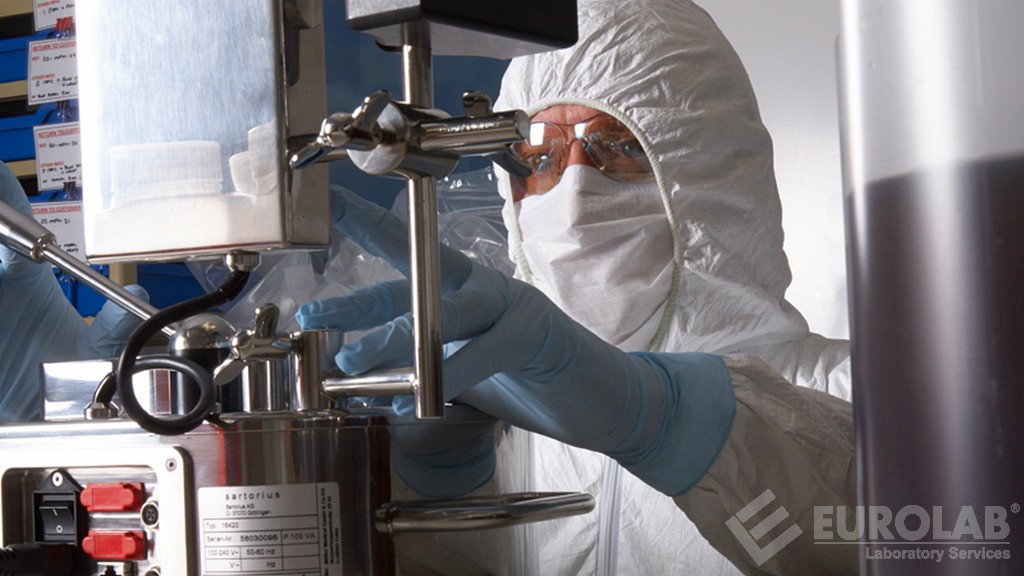
EUROLAB performs this testing in accordance with ANSI/AAMI/ISO 11737-1 and also complies with Radiation Sterilization standards (ANSI/AAMI/ISO 11137-1 & 2) and EO Sterilization standards.
Routine testing of medical devices should be carried out to show that the manufacturing process is under control. The appropriate frequency and number of samples depend on the sterility assurance level (SAL), product type, type of sterilization used, environmental control and manufacturer's process controls.
A recovery efficiency must be performed to validate the bioburden test. There are essentially two approaches: repeated therapy (also called extensive recovery) or product infusion. Ideally, a recovery efficiency should be established before any bioburden test can begin. It should be done on at least three samples. The recovery efficiency is then verified and can be applied to all future testing of that product.
The AAMI Radiation Sterilization guideline (ANSI / AAMI / ISO 11137) mandates that 10 samples are tested for biological burden with a dose audit every three months. Depending on the validated sterilization dose, monthly bioburden testing may be required.
For products validated using the Industrial Ethylene Oxide Sterilization Guidelines (AAMI / ANSI / ISO 11135), the type and frequency of bioburden tests performed will also vary depending on the method used in the initial validation. Most products are validated using the overfill method, where it is sufficient to carry out biological load testing of 3 - 10 samples every three months. Products validated using the absolute bioburden method require frequent and significant bioburden testing. Even products approved with the BI / bioburden method should be tested periodically (at least once every three months) for bioburden.
Biological load tests can include aerobic bacteria, spores, aerobic fungi (yeasts and molds) and anaerobes. There are many factors in choosing the most suitable test type for your product. Generally, it is necessary to test aerobic bacteria and fungi.
For products that cannot be tested using the extraction method, such as liquids, powders, or products with low biological burden, the Most Probable Number (MPN) test can be used. This test involves immersing the product directly in the nutrient medium and following a seven-day incubation, scoring the medium for growth or growth.
The method of obtaining samples for biological burden affects the test results. The preferred method for evaluating products or transactions is to obtain random samples. These samples can be selected from routine production, which should contain products produced at different times during the production of a single lot. The production batch selected must represent typical processing and conditions and include all production stages except sterilization. Samples can be obtained from materials rejected during processing if they are subjected to the same processing conditions as used for the remainder of the batch. Please be as clean as possible when taking samples.
EUROLAB, with its highly expert team and internationally accredited laboratories, Bioburden Test It performs all test, analysis, measurement, evaluation and report generation services completely and reliably.
To get an appointment, to get more detailed information or to request an evaluation, you can ask us to fill in our form and reach you.

