

Product Sterility - Isolator testing protects test items from contamination by eliminating direct contact between the analyst and test products. This test is required in medical devices, pharmaceutical products, preparations, tissue materials and other materials claiming to be free of sterile or viable microorganisms.
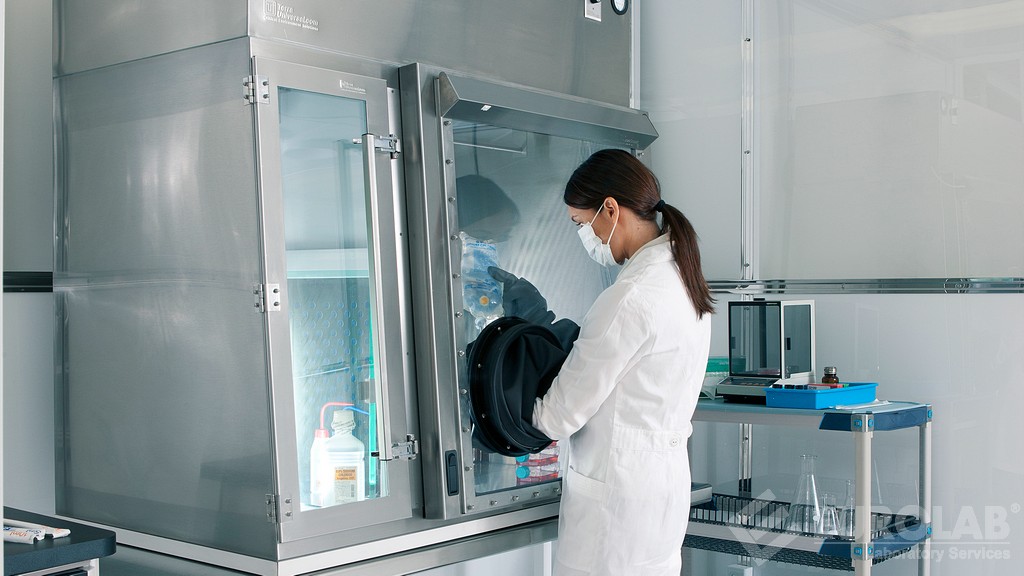
Testing is carried out in accordance with the criteria of USP General Part 71, ANSI / AAMI / ISO 11737-2, EP 2.6.1, JP and 21 CFR 610.12. Sterility testing is performed in a state-of-the-art isolator to optimize the aseptic transfer of samples to the test material. Evaporated hydrogen peroxide is used to sterilize the contents of the insulator and the inside of the enclosure before testing. Isolator sterility tests should be validated by applying a Method Compliance study (Bacteriosis / Fungistasis (B / F), Sterility and MPN Method Compliance) test. Isolator package verification test should also be performed in isolator sterility tests.
Product Sterility - Isolator testing evaluates samples for sterility by placing them in growth medium, incubating for at least 14 days, and then checking for evidence of microbial contamination. This sterility test is performed in an isolator sterilized with vaporized hydrogen peroxide.
Samples can be tested using direct transfer or membrane filtration and using soybean casein digestion juice (soy) or liquid thioglycollate (thio) medium:
USP Method: Samples tested by direct transfer are aseptically immersed in the test medium. Samples tested by membrane filtration (liquids, filterable solids, soluble ointments [oils], and sterile-path devices only) are passed through a 0.45 µm filter, and the filter is immersed in the test medium. A soybean casein water (soy) medium is used for aerobic and fungal growth at incubation temperatures of 20–25°C. A liquid thioglycolate (thio) medium is used for anaerobic growth at an incubation temperature of 30–35°C. Sample size is determined by both batch size and individual vessel fill volumes.
AAMI Method: Samples tested via direct transfer are aseptically immersed in the test medium. Soybeans are used for aerobic and fungal growth at incubation temperatures of 28–32°C. Sample size depends on lot size, method used, and bioload levels.
After a 14-day incubation, samples are evaluated for the presence of turbidity and / or growth. Media transfer and / or approval test can be done. Error investigation is done when necessary. Organisms rescued are identified and compared with organisms recovered on monitors performed by the Test Analyst during applicable testing sessions. On the day of the test, it is determined whether there is any abnormality during sterilization, sample processing and / or transportation.
EUROLAB, with its highly expert team and internationally accredited laboratories, Product Sterility - Insulator Tests It performs all test, analysis, measurement, evaluation and report generation services completely and reliably.
To get an appointment, to get more detailed information or to request an evaluation, you can ask us to fill in our form and reach you.

