

EN ISO 15001 Anaesthetic and respiratory equipment - Oxygen compatibility, based on a European standard and subsequently published by the International Organization for Standardization (ISO), specifies the requirements for oxygen compatibility of materials, components, and devices for anaesthetic and respiratory applications that may come into contact with oxygen under normal conditions or under single-fault conditions at gas pressures greater than 50 kPa. The standard also provides general guidelines for selecting materials and components based on available oxygen compatibility data and for performing a risk analysis, including consideration of the toxicity of combustion or decomposition products.
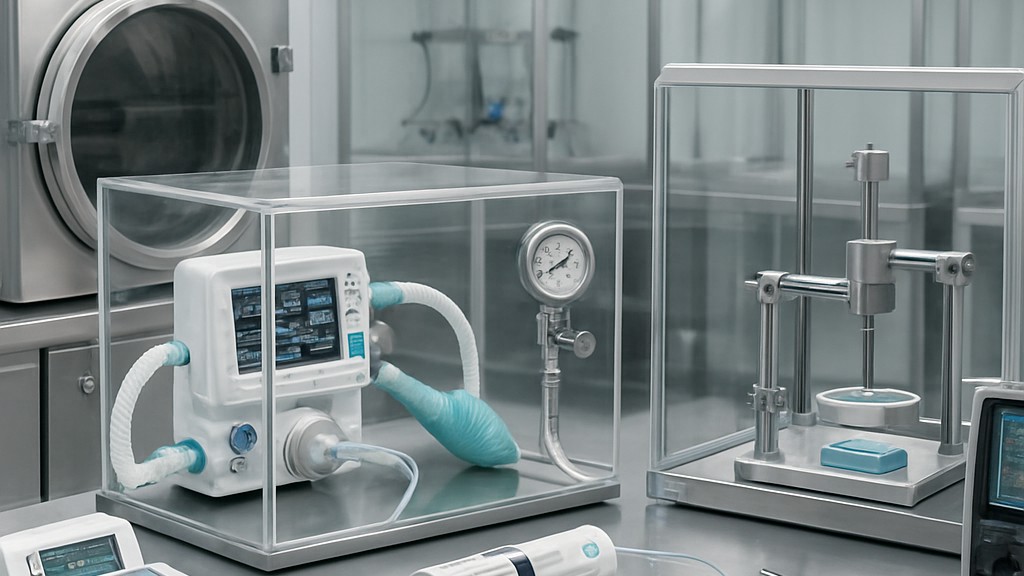
Aspects of compatibility addressed by this international standard include cleanliness, resistance to ignition, and toxicity of combustion or decomposition products during design, manufacturing, maintenance, and disposal. However, this standard does not apply to biocompatibility.
This standard is applicable to anaesthetic and respiratory equipment within the scope of ISO/TC 121, such as medical gas pipeline systems, pressure regulators, terminal units, medical supply units, flexible couplings, flow measurement devices, anaesthetic workstations and lung ventilators.
Unless otherwise specified in specific device standards, surfaces of components that come into contact with oxygen during normal operation or a single fault condition:
These requirements must be met by using an appropriate manufacturing method or a suitable cleaning procedure. Compliance must be checked by verifying the cleanliness of the components or by verifying the validity of the cleaning procedure or manufacturing process.
This standard does not specify cleaning procedures measurable against the above values or methods for verifying them. However, Annex A gives examples of known cleaning procedures, and Annex B gives examples of methods for verifying cleaning procedures.
For hydrocarbon contamination, the values of 550 mg/m2 and 220 mg/m2 were taken from the ASTM G93-03 standard, and the value of 3000 kPa was taken from the EIGA IGC 33/06/E standard.
A means of identifying components and devices cleaned for oxygen service in accordance with this standard shall be provided. Cleaning compounds and methods shall be compatible with the materials, components, and devices to be cleaned. Proof of compliance shall be provided by the manufacturer upon request. Regional or national regulations may require that proof be provided to a notified organization or competent authority upon request.
Means (e.g. packaging and information provided by the manufacturer) shall be provided to maintain the cleanliness of components and devices cleaned for oxygen service in accordance with this standard.
Resistance to ignition: Devices designed for pressures greater than 3000 kPa shall not ignite when subjected to a pneumatic impulse test at a test pressure of 1,2 times the nominal inlet pressure in accordance with procedures described in the relevant product standards. If lubricants are used, the lubricated device shall be tested.
The medical device manufacturer must implement a risk management process that complies with ISO 14971. This should include oxygen fire hazards, ignition resistance and toxicity, cleaning procedures, design considerations, and material selection.
The EN ISO 15001 standard is essential because it ensures the safety and compatibility of medical devices used with anesthesia and respiratory equipment, particularly in oxygen-rich environments. This standard is considered important for the following reasons:
Our organization, which has been supporting businesses across all sectors for years through a wide range of testing, measurement, analysis, and evaluation activities, has a strong team of employees who closely follow global developments in science and technology and are constantly improving themselves. In this context, we also provide testing services in accordance with the EN ISO 15001 Anesthetic and Respiratory Equipment - Compatibility with Oxygen standard.
To get an appointment, to get more detailed information or to request an evaluation, you can ask us to fill in our form and reach you.

