

Cytotoxicity testing is designed to assess the general toxicity of medical devices and materials. The test involves extracting the devices in a cell culture medium and then exposing the extracted fluid to mouse fibroblast cells (L929).
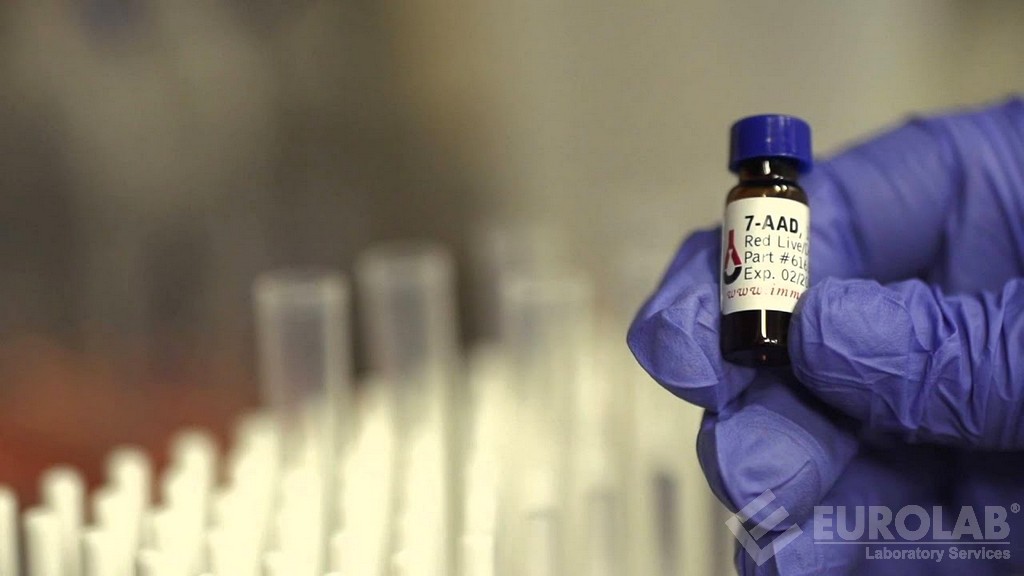
The cells are allowed to grow in the extracted fluid for a certain period of time before the cells are evaluated using qualitative or quantitative methods. The test is carried out on all medical devices, raw materials and devices with cleaning validation or residue production that come into contact with the patient.
MEM Elution
Devices / materials are usually extracted at 37 ± 1ºC in serum-supplemented mammalian cell culture medium (MEM). After extraction, the extracts are contacted with a monolayer of L-929 cells (mouse fibroblasts). The cells are then allowed to grow in the extraction fluid for a specified period of time before being evaluated using qualitative or quantitative methods.
Qualitative
Qualitative evaluation involves observing cells under a microscope and assigning a cytotoxic grade (0-4). The grade is based on an estimated percent lysis (death) and morphology (appearance) of cells. If the cytotoxic score ≤ 2 (50 %% lysis), the test materials pass the test.
Quantitative
Quantitative evaluation uses a tetrazolium stain, which is used to evaluate the metabolic activity of cells. Results are reported as percent viability (percent of living cells). Test materials pass the test if the viability percentage is 70 XNUMX%. Multiple dilutions of test substance extract are usually included in each test.
Agar shared
materials are generally tested with a surface area of at least 100 mm. It can also be used for liquids, gels or powders using the weight of at least 100 mg per well. The material is placed on an agarose sheet that is placed on top of a monolayer of L-929 cells and incubated at 24 ± 26 ° C in 37 ± 1% CO5 for 1 - 2 hours. After incubation, the cell destruction zone is measured and scored according to the 10993-5 scale listed in AAMI / ANSI / ISO 0-4. If the cytotoxic response is not greater than grade 2 (mildly reactive), the material meets ISO requirements. Although Agar Overlay is a historically accepted testing method, it may be appropriate when shipping to some regulatory agencies.
Cytotoxicity Errors
Occasionally, a device or material will exhibit a higher level of cytotoxic reactivity than the ANSI / AAMI / ISO 10993-5 standard allows and will result in a failed test. Even if your product has failed the cytotoxicity test, it does not mean that your device or item is unsafe for clinical use. This simply means that you have to identify the source of the error and assess any toxicological risks.
Our Experts Can Help
There are several possible causes of cytotoxicity failure and EUROLABprovides services to help you identify and evaluate the error. From there, our experts can evaluate potential toxicological risks for patient safety.
We evaluate the materials and processes associated with the device. Based on this information, our experts will usually recommend targeted analytical chemistry to determine the cause of the failure. We can then work with customers to justify the error through testing and evaluation.
A discussion with our experts to determine the cause of cytotoxicity failure and develop an action plan leads manufacturers to successfully submit their devices for regulatory approval without further action.
EUROLAB, with its highly expert team and internationally accredited laboratories, Cytotoxicity Tests It performs all test, analysis, measurement, evaluation and report generation services completely and reliably.
To get an appointment, to get more detailed information or to request an evaluation, you can ask us to fill in our form and reach you.

