

Particulate Matter testing includes procedures for removing, counting, and sizing particle contaminants in injections, parental infusions, ophthalmic solutions, and various medical devices.
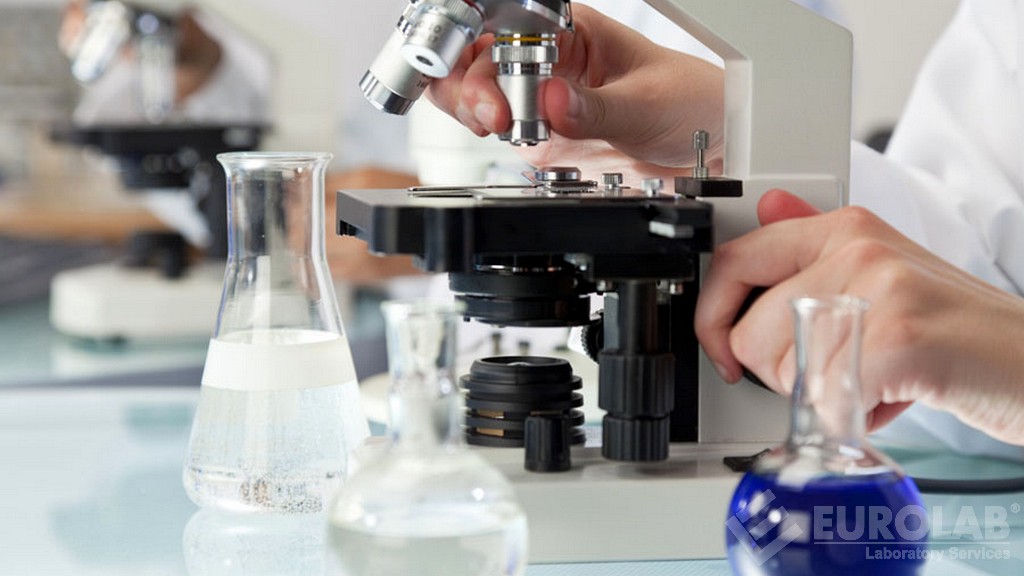
This test is useful for determining the amount of particulate matter specific to a product or for detecting the amount of particles from the manufacturing process. The simulated usage test can also show the amount of particulate matter resulting from the use of a device. Particulate matter testing can be useful to determine the potential source of particles and to determine the risk of a product to the patient.
EUROLAB It implements both USP recommended methods: Light Obscuration (via HIAC Royco particle counter) and Light Microscopy. Other standards such as USP <789>, EN 45502, ISO 14708, ISO 8536-4, AAMI AT6 and customized tests are also EUROLABIt is offered in .
Auto HIAC Royco method USP <788> (Method 1)
This Particle Analysis procedure is derived from the United States Pharmacopoeia Method <788>, which sets criteria for injectable solutions.
The solutions are mixed by inverting 20 times, the solutions are degassed, then analyzed on a liquid particle counter.
The devices are extracted with a suitable solvent such as low particle water by washing, rinsing, orbital rinsing or simulated use testing. The extracts are degassed and tested on the liquid particle counter.
The particle counter will not withdraw at least three portions, less than 5 mL. The liquid particle counter can calculate average cumulative counts, average differential counts, average cumulative counts per mL, and average differential counts per mL. According to the USP, it automatically extracts data from the first run.
The size ranges used for the USP test are 10 and ≥25 μm. The liquid particle counter can size and count particles ranging from 2 μm to 100 μm. Sponsors can choose any particle size range from 2 to 100 μm suitable for the test sample.
Light Microscopy method USP <8888 (Method 2)
Some injections cannot be tested with darkening for various reasons (Method 1). Examples of such products are products that generate air or gas bubbles such as emulsions, colloids, liposomal preparations, and bicarbonate-buffered formulations when drawn to the sensor. Only microscopic testing can be used for these products.
The procedure is taken from the United States Pharmacopoeia Method <888> which gives criteria for injectable solutions.
The devices are extracted with a suitable solvent such as low particle water by washing, rinsing, orbital rinsing or simulated use testing. Solutions, whether liquid waste material or liquid samples, are passed through a pre-cleaned membrane filter with a pore size of 1.0 µm or less.
After filtration, membrane filters are placed on petri slides and dried. Microscope slides are analyzed under the microscope using a calibrated graticule at 100X magnification. Using oblique illumination at an angle of 10˚ to 20˚, particles located on the membrane surface are sized and counted using a graticule micrometer.
The size ranges used for the USP test are 10 and ≥25 μm. Additional sizes ranging from 10 µm to 1,000 µm can be counted. Sponsors can choose any particle size range from 10 to 1,000 μm as appropriate for the test sample.
In addition to sizing and counting particulate matter, photos of particulate matter can be provided upon sponsor request.
EN 45502 and ISO 14708
The test is an automated particle analysis (light darkening) specific to active implantable medical devices such as pacemakers, leads, and other accessories that can be partially or fully implanted. Multiple variations of these standards can be selected for testing and should be evaluated before submission. The device and accessories are immersed in physiological saline or low particle water (LPW) using a surface / volume ratio. The device is then incubated for 8-18 hours or 8-24 hours on an orbital shaker. Particles are numbered in size ranges of either µ5 µm and ≥25 µm or 10 µm and ≥25 µm.
NOTE: The surface area or volume of the device and accessories is required for calculations.
USP <789>
The test is automated or microscopic particle analysis for ophthalmic solutions. This standard is similar to USP <788> but contains features and instructions specific to solutions with ophthalmic applications. Particle sizes of 50 μm are considered in addition to sizes of ≥10 μm and ≥25 μm. USP <771> must be monitored before the sample is sent for the USP <771> test.
ISO 8536-4 and ISO 1135-4
The test is a microscopic particle analysis specific to gravity fed infusers and accessories used in gravity fed infusion. The specification is provided as an 'N' value (also known as contamination index) calculated using numbered and sized particles ranging from 25-50 µm, 51-100 µm, and ˃100 µm.
ANSI/AAMI AT6
This test is microscopic particle analysis for autologous transfusion devices. The device is filled with low particle water up to volume. The water is then filtered, collected and filtered through a membrane filter, followed by the microscopic particle count of the fibers as well as the particle sizes of 10 μm and the fibers.
ANSI / AAMI TIR42 and FDA Guidance Document for Certain Percutaneous Transluminal Coronary Angioplasty Catheters (PTCA)
EUROLAB he also has extensive experience in new regulatory guidance documents regarding particulate matter testing of vascular medical devices. Services include assistance in developing specific test procedures to simulate device use, procedure validation, full service extraction, comprehensive rinsing and analysis, and assistance in compositional analysis of particulate matter. Model variations are an additional testing service recommended when anatomical models are used for testing.
Sample size/recommended replicates: USP requirements state that “the number of test samples must be sufficient to provide a statistically robust assessment of whether a series or other large group or units represented by test samples meet or exceed the limits. For small-volume injections where the individual unit volume is 25 mL or more, fewer than 10 units may be tested based on the definition of an appropriate sampling plan.”
For large volume injections, individual units are tested.
EUROLAB, with its highly expert team and internationally accredited laboratories, Particulate Matter Test It performs all test, analysis, measurement, evaluation and report generation services completely and reliably.
To get an appointment, to get more detailed information or to request an evaluation, you can ask us to fill in our form and reach you.

