CARC Chemical Resistant Coating Tests
Chemical-resistant coatings (CARC) are specialized coatings designed to provide resistance to chemical, biological, and radioactive warfare agents, commonly applied to military vehicles and equipment. In advanced laboratories, the coating's resistance to various chemical warfare agents is being tested.
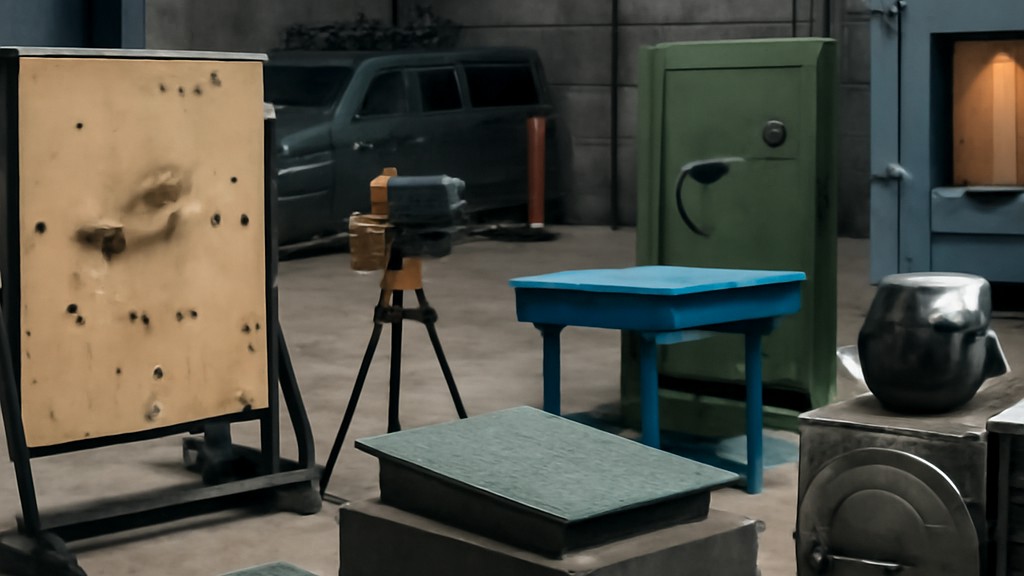
Chemical agent-resistant coating (CARC) is a specialized polyurethane-based paint system primarily used on military vehicles, aircraft, equipment, and munitions to protect against chemical warfare agents, biological agents, and radioactive contaminants. Developed by the US Army in the 1980s, this system creates a non-porous surface that prevents the absorption of these agents, allowing for easier decontamination (removal of contaminants) with solutions such as bleach or specialized cleaners without damaging the underlying material. The system is also resistant to corrosion, abrasion, weathering, and stealth infrared detection. The US Army has mandated chemical agent-resistant coatings on all tactical equipment.
CARC systems typically consist of:
- Pretreatment: Surface preparation (e.g. chemical conversion for aluminium or zinc phosphate for steel).
- Primer: Epoxy polyamide for adhesion and corrosion protection.
- Topcoat: Aliphatic polyurethane, usually in matt camouflage colours, for the final resistance layer.
Modern formulations include water-based versions that are low VOC, lead-free, and free of hazardous air pollutants to comply with environmental regulations, replacing older solvent-based types.
CARC coatings undergo rigorous testing to ensure they meet military specifications for durability and decontamination effectiveness. These tests simulate battlefield conditions, including exposure to and decontamination from mustard gas and nerve agents. Key standards used in these tests include:
- MIL-DTL-53072H Chemical resistant coating (CARC) system application procedures and quality control inspection
- MIL-DTL-53022D Detailed specifications: primer, epoxy coating, corrosion inhibitor, lead and chromate free
- MIL-DTL-64159 Detailed specification: coating, water-dispersible aliphatic polyurethane, chemical resistant
- NATO AEP-65 Performance requirements and test method for chemical warfare agent resistant paint systems
Tests evaluate residual contamination levels (direct or post-decontamination), adhesion, thickness uniformity, and environmental durability. Robotic application is often used to ensure consistent thickness in production (a common failure point in manual methods).
The following table summarizes common tests for CARC coatings based on military and international standards:
- Chemical agent resistance: Exposes the coating to liquid chemical warfare agents for specified periods, measuring penetration, absorption, and pilling (non-absorption). Relevant standards: MIL-DTL-53072H and NATO AEP-65. Purpose: Ensures that agents do not penetrate the substrate, the coating must be repellent, and allow for wipe-off.
- Decontamination resistance: Apply decontaminants (e.g., DS2 solution, hypochlorite) after exposure, evaluate coating integrity, color retention, and removal rate. Relevant standards: MIL-DTL-64159, NBCCS (nuclear biological chemical resistance). Purpose: Verifies no damage from cleaning; residual substance levels should be below threshold values.
- Adhesion and abrasion: Scratch, impact, or tape tests simulate wind-blown sand/dust or mechanical abrasion. Relevant standards: MIL-STD-810 (environmental engineering). Purpose: Verifies durability under field conditions; must be resistant to abrasion/scratch.
- Corrosion and weather resistance: Salt fog, humidity, UV exposure, rust or deterioration tests. Related standards: ASTM B117 and MIL-DTL-53022. Purpose: Prevents underlying metal corrosion, water-based CARC exhibits excellent performance in humidity/salt water.
- Infrared signature: Measures thermal/near infrared reflectance, provides low detectability. Applicable standards: MIL-DTL-53072H. Purpose: Reduces visibility to enemy sensors, pigments adjusted for camouflage.
- Toxicity and environmental: VOC emissions, hazardous air pollutant content, TCLP (toxicity characteristic leach procedure) for waste. Relevant standards: EPA regulations and MIL-DTL-64159. Purpose: Ensures safe use, water-based versions reduce hazards such as toluene diisocyanate.
In general, the testing process steps are as follows:
- Sample preparation: CARC is applied to test panels (e.g. steel/aluminum surfaces) according to specification.
- Exposure: Simulants for 24-72 hours / dipped or sprayed with chemical warfare agents.
- Decontamination: Rinse with agents, residue is measured by spectrometry.
- Evaluation: Visual inspection, microscopy and quantitative analysis of pass/fail results.
Advanced laboratories provide manufacturers with specialized protocols that perform tests according to NATO/MIL standards.
CARC dye contains isocyanates and solvents that may cause long-term problems such as respiratory irritation, skin sensitization, or kidney/liver damage with prolonged exposure. Symptoms include delayed respiratory effects. Personal protective equipment should be worn at all times, and adequate ventilation should be provided.
In short, CARC (chemical agent resistant coating) testing is critical to ensuring the safety of military equipment and personnel in harsh environments for several reasons:
- Protection against chemical threats: CARC tests confirm that coatings resist the penetration of chemical warfare agents (e.g., mustard gas, nerve gas) and prevent their absorption into equipment surfaces. This ensures that vehicles, aircraft, and equipment can be safely handled after exposure and effectively decontaminated without degradation.
- Effective decontamination: Tests confirm that CARC-coated surfaces withstand harsh decontamination treatments (e.g., DS2 solution, bleach-based agents) without losing their integrity, color, or functionality. This is vital for reusing equipment in chemical, biological, or radiological environments.
- Durability in harsh conditions: Tests evaluate resistance to corrosion, abrasion, weathering, and UV light (according to standards such as MIL-STD-810 and ASTM B117). This allows CARC coatings to protect underlying materials, such as steel or aluminum, and extend equipment life in harsh climates or combat zones.
- Stealth and camouflage: CARC tests measure infrared reflectance to minimize detection by enemy sensors and enhance stealth. Camouflage pigments are tested for consistency and low visibility, which are critical for operational security.
- Standards compliance: Testing ensures compliance with military specifications (e.g., MIL-DTL-53072H, MIL-DTL-64159, NATO AEP-65) to ensure reliability across NATO forces and United States Department of Defense equipment. Improper coatings can fail in the field and compromise mission success.
- Environmental and health safety: Testing confirms that modern CARC formulations (e.g., water-based, low-VOC) comply with EPA regulations and reduce health risks from toxic ingredients such as isocyanates. This protects applicators and ensures environmentally sound disposal.
- Operational readiness: Tests verify that coatings can withstand battlefield stressors (sand, salt fog, impact), maintaining equipment functionality and reducing maintenance costs and downtime.
In short, chemical resistant coating (CARC) testing is essential to ensure equipment is durable, safe and mission ready in chemical, biological or radiological and combat scenarios to protect both personnel and assets.
Our organization, which has been providing services for many years and meticulously follows developments in science and technology worldwide, carries out testing, measurement, and analysis studies in many different fields for businesses from every sector, with a mature staff and extensive infrastructure. Within this framework, we also provide " CARC chemical-resistant coating testing " services to businesses.



