

MIL-STD (Military Standards) is a military standard created by the US Department of Defense and established by the US Army Developmental Test Command. Usually this standard applies primarily to military equipment, but can also be applied to a variety of general commercial products.
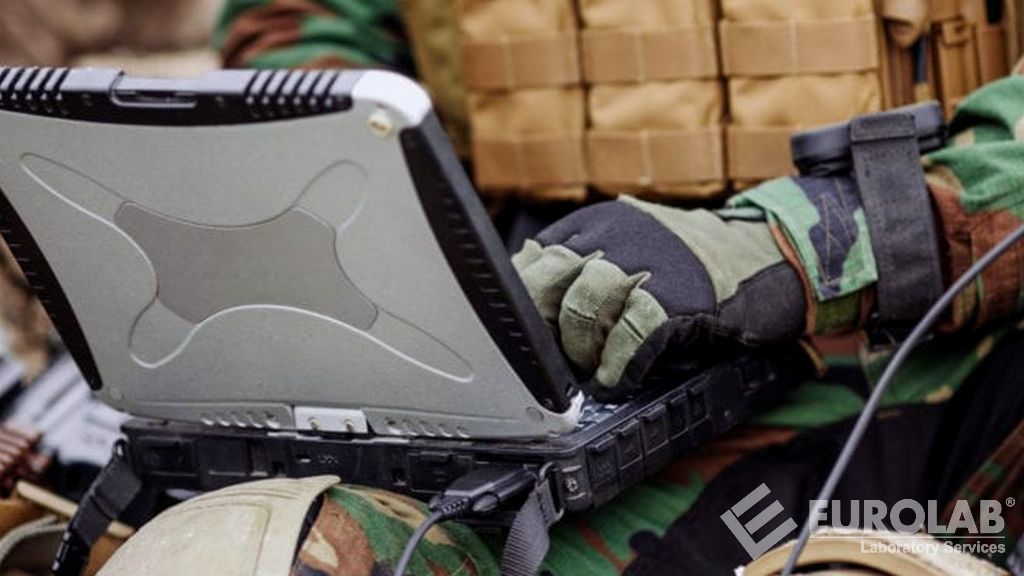
MIL-STD (Military Standards) is a military standard created by the US Department of Defense and established by the US Army Developmental Test Command. Usually this standard applies primarily to military equipment, but can also be applied to a variety of general commercial products.
It consists of three parts: Part One explains the management, engineering, and technical roles in the environmental design and test customization process, Part Two shows the general/specific test methods to be applied accordingly, and Part Three explains the general guidelines. A realistic assessment for the research, development, testing and evaluation of munitions and materials used in various climatic zones.
Detailed test methods specified in each method follow the technical content of each item. However, in many test methods, reviews of environmental disturbances, etc. Due to the testing method (Tailoring is essential.) and the requirements described in this standard (adaptation process described in Chapter) to meet these requirements, there may be adjustments. One, paragraph 4.2. 2 and Annex C), technical advice from testers is required, and an Environmental Engineering Management Plan (EEMP) needs to be established and prepared to fulfill the purpose of the standard.
In addition, the activity documents required during the preparation stage for the exam include the following.
– See MIL-STD-810G Part One, paragraph 4.2.2, and Appendix C.
(1) Objective: To address the planning and engineering aspects of the ammunition supply program by considering the impact of environmental barriers on ammunition supply throughout its service life. It defines an environmental customization process that will determine realistic designs and test methods based on system operating requirements rather than design or product specifications.
(2) Application: All are for military or commercial applications, including the procurement of foreign and undeveloped materials, coalition systems and munitions modifications, and opportunities for mutual development with one or more allied forces to meet user and data processing interoperability needs throughout the procurement cycle.
(3) Limitations: Assays and laboratory tests have inherent limitations in simulating combinations of disorders that exhibit synergistic or counter-effects in natural settings, dynamic disorder applications, aging, and other potentially significant combinations of diseases.
(1) Government documents: International Standards Agreement (QSTAG 360, STANAG 4242, STANAG 4370, STANAG 4370, AECTP 100, AECTP 200, AECTP 300, AECTP 400), US Department of Defense Specification (MIL-S-901), US Department of Defense Standards (MIL-STD-167-1, MIL-STD-331, MIL-STD-882, MIL-STD-2105), US Department of Defense Manual (MIL-HDBK-310)
(2) Other official documents, drawings, and publications: US Department of Defense Directives, Manuals, and Specifications (DoDD 5000.1, DODI 5000.2, AR 70-38)
(3) Non-Governmental publications: ANSI/NCSL Z540.1 of the American National Standards Institute (ANSI), ISO 10012-1 of the National Standards and Laboratories Society (NCSL) and the International Organization for Standardization (ISO) .
(4) Unless otherwise stated herein or in the contract, in the event of any conflict between the contents of this document and the references cited herein, the contents of this document shall prevail.
(1) Terminology: Absolute humidity, Combat developer, Detailed Environmental Test Plan (DETP), Forcing function, Service life etc. Terminology examples and explanations.
(2) Abbreviations: COEA (Cost and Operational Efficiency Analysis), DETP (Detailed Environmental Test Plan), EMI (Electromagnetic Interference), MIL-STD (Military Standard), etc. abbreviation examples.
(1) Program Manager
A. Role: To ensure that environmental engineering considerations are systematic, thorough and efficient at appropriate times throughout the ammunition procurement process.
B. Guidance: The DoD 5000 series documents require a complete approach through systems engineering, taking into account everything necessary for the life cycle, including storage, transportation and operation, in their native environment and natural environmental conditions representative of the particular intended site. execution is tested.
– Related Abbreviations: Engagement Needs Statement (MNS), Operational Requirements Document (ORD), Systems Engineering Management Plan (SEMP), Test and Evaluation Master Plan (TEMP)
(2) Environmental Engineering Professionals (EES): EES are government or industry professionals who use their experience in procurement to assist program managers in Annex A-related tasks.
A. Role: Appointed by representatives responsible for performing their duties, the EES serves as a technical facilitator throughout the procurement process as a key source of environmental impact expertise early in the procurement process.
B. Environmental engineering customized work: A key structural strategy for transferring environmental considerations into procurement programs, preparing an environmental engineering management plan (EEMP), developing an environmental testing and evaluation master plan (ETEMP), and developing an environmental life cycle profile (LCEP) ), develop a working environmental document (OED) and an environmental issue/standards list (EICL), and prepare a detailed environmental test plan (DETP) and environmental test report (ETR).
(3) design/test technicians and plant operators;
A. Design engineer's role: Performing technical analysis to predict the munitions response to life-cycle failures, prepare resistance to environmental failures, and revise test specifications for factors that cannot be adequately explained in the laboratory.
B. Role of Test Technician/Facility Operator: Test Technician develops a test execution plan to be performed by another Technician or Plant Operator and Plant Operator, Test Technician/Scientist, test.
C. Design/test technicians and facility operators perform natural environment (outdoor) testing and laboratory testing.
(1) Test conditions
A. Standard Environment: Temperature – 25° ± 10°C (77 ± 18°F) / Relative Humidity – 20 to 80 percent / Atmospheric Pressure – Area Atmospheric Pressure
B. Controlled environment: temperature – 23° ± 2°C (73 ± 3,6°F) / relative humidity – 50 percent + 5% / barometric pressure – 28,5 +2,0 / -3.0 in Hg
(2) Acceptable range for test conditions
Specify the allowable ranges for test section temperature (ambient setting around test item), air pressure, humidity, vibration amplitude, vibration frequency, acceleration, duration, wind speed, and water purity.
(3) test equipment
A. Conformity assessment of sensors and devices to record environmental conditions and responses to intended environments
B. Set test limits or measure the accuracy of monitoring equipment before and after each test (Calibration)
(4) Test temperature stabilization to stabilize key test item items: Based on whether the temperature of the item piece with the longest thermal delay has changed, the test item is classified as working or non-working.
(5) Test Sequence: Establish a specific sequence based on the intended use, available program assets, and expected synergies in each test environment. See Section One, Appendix C.
(6) Derivation of test levels: Specific test levels, intervals, rates, durations, etc., from data obtained from the same or approximately similar ammunition under similar natural environmental conditions. (see Appendix A, Task 403).
(7) Preliminary testing for facility operators: test facility and equipment, required test procedures, critical factors, test time, test item configuration, test level/time/method of application, location of equipment/sensor, test item Installation details, cooling arrangements, etc provided.
(8) Test preparation: Connect the necessary equipment and install the test item in the test facility to simulate reality as much as possible and operate in the most representative mode.
(9) Pre-test of reference data: Before exposure to the environment, it is checked for proper operation and the test item is run in a standard environment to obtain reference data.
(10) Information about test time to attach report: application approval, test facility, test item response, test interruption, etc. information about.
(11) If the test is interrupted
A. Out of tolerance interruptions: Do not change the duration of the test.
B. Out of tolerance interruptions: In case of unsatisfactory test, the test is continued from the point where the test condition is out of tolerance; In case of overtesting, the test is stopped and a fresh start with the item.
(12) Combined Tests: represent environmental impacts more realistically than individual tests.
(13) Final test data: make, model, serial number etc. such as test item information, test equipment information including accessories, actual test sequence used, deviation from the planned test program, data accumulated at the same level and border pretest, ambient conditions recorded periodically during the test period, other data specified in individual methods and required documents, initial failure analysis , signatures and dates of engineers/technologists to verify data
(14) General conditions of environmental impact and failure criteria
A. Deviations from functional limits beyond the allowable limits specified in pre-test records or documents
B. Failure to meet security requirements or increased security risk
C. When certain ammunition requirements are not met
D. Test item material has changed so much that it cannot meet its intended life cycle or maintenance requirements.
E. Deviations from identified environmental influences
F. Additional failure criteria specified in the material specification
(15) Completion of environmental test report according to Part One Annex A
(16) Water quality purity: Instead of insisting on unrealistic purity, recommend water quality that is relatively free from impurities and chemicals and has a pH concentration index of about 25 to 6,5 at 7,2 °C.
(17) Results analysis: Comparison of the measured reaction medium and the test item's operation with the measured input medium, taking into account all synergies
(18) Monitoring: Make sure the cabinet settings are correct and stay within specified limits during the test period, and also observe the test item itself to record the effect of the cabinet on the item during testing.
(19) Total high temperature exposure time: The material's total exposure to temperature must be shorter than the life cycle of the parts, and the preconditioning time is calculated as the sum of the dwell time and the actual laboratory. test time.
A. Intended use: To organize and standardize the design, testing and procurement processes, taking into account how environmental disturbances affect the design, testing and evaluation of ammunition produced for operation in real combat conditions.
B. Prerequisites for procurement: The title, number and date of the specification must be specified.
C. Key Terms: Acidic Atmosphere, Environmental Life Cycle, Fungus, Immersion, Salt Mist, ETC
D. Implementation of the international standard agreement: STANAG 4242 (vibration test for ammunition transported in tracked vehicles), STANAG 4370 (AECTP 200, Category 230 environmental test)
E: Regulation MIL-STD-1F of January 2000, 810 replaced MIL-STD-31G on October 2008, 810, and there is a vertical line in the margin next to the replaced text.
1) Annex A: Task 401 – Environmental Engineering Management Plan (EEMP), Task 402 – Life Cycle Environmental Profile (LCEP), Task 403 – Operational Environmental Documentation (OED), Task 404 – Environmental Issues/Criteria List (EICL), Task 405 – Detailed Environmental Test Plans (DETP), Task 406 – Environmental Test Reports (ETR)
2) Appendix B: Detailed Program Management Guide
3) Appendix C: Environmental Regulation Guidelines for Environmental Engineering Professionals (EES)
4) Appendix D: Terminology for Dynamics (Mechanics)
To get an appointment, to get more detailed information or to request an evaluation, you can ask us to fill in our form and reach you.

