

MIL-S-7742 Screw Threads, Standard, Optimum Selected Series: General Specification
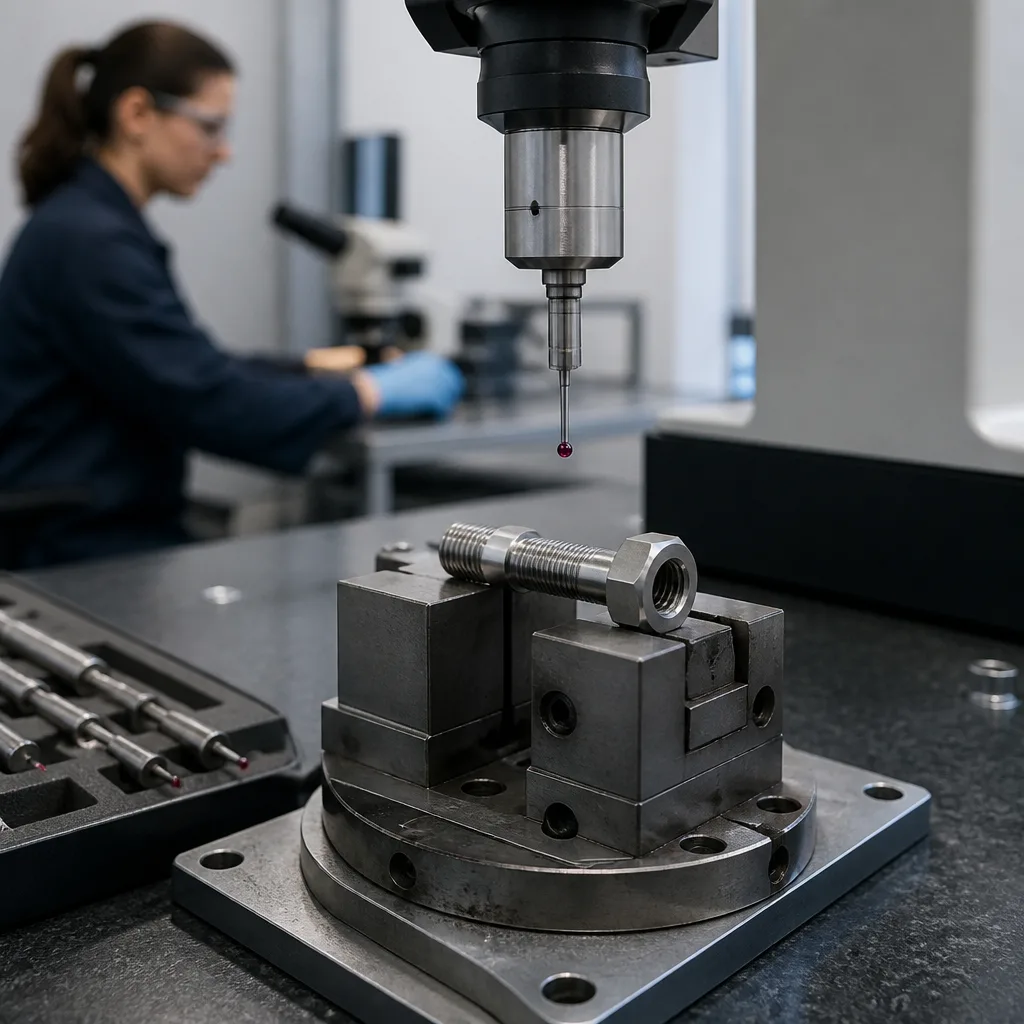
The MIL-S-7742 Military Specification: Screw Threads, Standard, Optimal Selected Series: General Specification, a military standard developed by the United States Department of Defense, covers the requirements for a selected series of standard combined and composite miniature screw threads belonging to classes 3A and 3B of the FED-STD-H28/2 and FED-STD-H28/5 standards for general aviation and similar high-technology applications.
The purposes of this specification are as follows:
The MIL-S-7742 standard defines requirements for a carefully selected set of standard combined and integrated miniature screw threads, specifically classes 3A (external) and 3B (internal). The specification targets general aerospace and other high-tech applications where the precision, reliability, and consistent performance of threaded fasteners are critical.
The optimum selected series refers to a carefully chosen subset of standard thread sizes and series selected for broad applicability while minimizing the variety of tools, measuring instruments, and inventory required in high-performance production. Key elements covered include:
This standard complements the MIL-S-8879 standard (which typically covers controlled radius roots and increased small diameter teeth for new designs), while the MIL-S-7742 standard focuses on standard teeth in existing or general applications.
Common applications of this standard include:
The MIL-S-7742 standard remains a key reference for ensuring consistent, high-quality screw thread production in challenging engineering environments.
In short, the MIL-S-7742 standard is a U.S. military specification that defines requirements for synthetic rubber compounds and molded rubber parts designed specifically for harsh military and aerospace environments. While older military standards are often superseded or replaced by newer documentation, the MIL-S-7742 standard retains its importance as a historical and technical reference in materials engineering, procurement, and qualification testing.
The MIL-S-7742 standard was developed to standardize performance and quality requirements for synthetic rubber products used in military systems. Rubber components such as gaskets, seals, diaphragms, O-rings, vibration dampers, and protective covers must operate reliably under harsh conditions, including:
This standard helps ensure that rubber materials used in mission-critical equipment do not unexpectedly fail.
MIL-S-7742 primarily covers the following technical specifications:
These properties confirm that the material possesses sufficient strength, flexibility, and durability.
This ensures dimensional stability and functional integrity after environmental exposure.
Consistency in molded parts is important, especially for sealing applications.
Military and aerospace systems cannot rely on generic commercial rubber parts because their operating environments are far more demanding and the consequences of failure are far more serious. In this respect, the MIL-S-7742 standard is considered necessary for the following reasons:
For example, a rubber seal in an aircraft hydraulic system must withstand both pressure and chemical attack. A small material defect can lead to leaks, system failures, or safety hazards.
Products conforming to the MIL-S-7742 standard are used in the following areas:
Common components include:
Although some military standards have shifted to performance-based or SAE/ASTM standards, the MIL-S-7742 standard is still referenced in the following situations:
In conclusion, the MIL-S-7742 standard plays a significant role in defining performance expectations for synthetic rubber materials used in critical defense applications. By specifying mechanical, chemical, and environmental durability requirements, the standard helps ensure that rubber components remain reliable in demanding operating conditions where failure is not an option.
For many years, our organization, with its competent and experienced staff, has been understanding the needs of its clients, providing the advanced testing services they require, and assisting them in the establishment, implementation, and improvement of management systems. Within this framework, we also provide testing services compliant with the MIL-S-7742 standard.
To get an appointment, to get more detailed information or to request an evaluation, you can ask us to fill in our form and reach you.

