

The “MIL-STD-167 Military standard: Mechanical vibrations of shipboard equipment” standard, developed by the United States Department of Defense, describes the requirements for marine equipment, including machinery, in terms of both internally induced vibrations and externally induced vibrations.
Deviations from this standard may be necessary for certain special machines, equipment or installations, such as antennas, large machine parts and certain unique designs. In these cases, special modifications are subject to approval by the appropriate command or agency. All other deviations or waivers from this standard are prohibited.
The objectives of this standard are to assist in the selection of vibration requirements for equipment and to ensure consistency. The relevant command or agency should require compliance only with those parts of this standard that are applicable to the equipment in a particular procurement document.
Mechanical vibrations of ship equipment fall into three general categories:
The first two types of vibrations are addressed in the MIL-STD-167-1 standard, while the other types of vibrations are addressed in the MIL-STD-167-2 standard.
Type I Environmental vibrations apply to all equipment designed for shipboard use or that can withstand environmental vibration conditions encountered on naval vessels. Environmental vibration testing simulates external vibration sources such as engines, propellers, sea conditions and machinery. It tests how the equipment responds to vibrations transmitted through the ship structure.
Type II Internally excited vibrations apply to all rotating machinery that must operate smoothly from a mechanical standpoint. This does not apply to noise suitability and does not apply to alternating motion machinery. Internally excited vibration testing focuses on equipment that generates its own vibration (motors, pumps, etc.). It measures the vibration transmitted to the ship's structure and ensures that it does not exceed acceptable limits.
In short, the MIL-STD-167 standard is important because it guarantees the reliability, safety and performance of ship machinery and equipment by addressing vibrations, especially mechanical vibrations that may occur in the dynamic environment of marine vessels.
The main reason this standard is important is for equipment longevity and reliability. Shipboard machinery experiences constant vibration from engines, propellers, wave action and similar effects. This standard ensures that equipment can withstand these vibrations without failure. It prevents premature wear, loose connections or failure due to resonance or fatigue. Uncontrolled vibrations can cause mechanical failures that can endanger the ship and crew. For example, failure of a critical pump, generator or control system can have disastrous consequences at sea.
On the other hand, this standard provides uniform testing procedures (Type I and Type II tests) for all ship machinery across contractors and manufacturers. It makes it easier for the Navy to verify that all equipment meets the same quality and performance criteria. It ensures that equipment is vibration tested prior to installation, reducing the risk of shipboard failures and costly downtime.
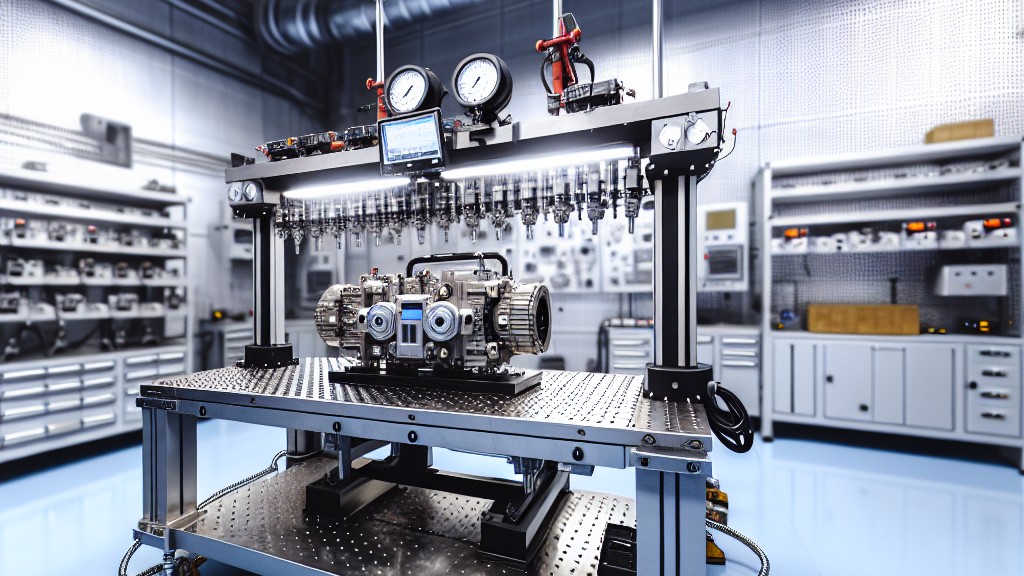
In Type I tests, the equipment is mounted on a vibration test platform in the same orientation as it will be mounted on the ship. This test is performed before and after the functional performance tests to ensure that the equipment is still functioning properly. The vibration is applied sinusoidally (sine wave) over a frequency range of 1-33 Hz. The test is performed in three orthogonal directions (X, Y, Z or forward-backward, vertical, lateral). The frequency is slowly scanned through the range to find the resonant frequencies; where the equipment vibrates most strongly. If resonances are found, the equipment is subjected to a dwell test at these frequencies. In the dwell test, vibration is applied for 5 minutes at the resonant frequency to test durability under peak response. This simulates long-term exposure to the problem frequencies. The vibration amplitude is usually 0,5 mm double amplitude unless otherwise specified. For very large or heavy equipment, the amplitude or test parameters may be modified. The equipment should show no physical damage at the end of the test. It should remain functional after the test. Any changes in vibration response should be documented and evaluated. It is not a Type I shock test, but deals with continuous, low frequency vibrations. The aim is to simulate real world vibration loads, particularly those occurring on ships with propeller driven propulsion systems.
Type II tests focus on internally induced vibrations, i.e. they are applied to shipboard equipment that generates vibration itself, such as engines, generators, pumps, fans and compressors. The aim of these tests is to measure and control the vibration levels transmitted by the equipment to the ship's structure during operation, to ensure that these do not cause structural or functional problems elsewhere on the ship. During the test, the equipment is operated at a range of speeds, sometimes at variable speed. This test is carried out in situ (on board). Vibration is measured not only in the equipment itself but also in the mounting structure (base plate or foundation). Measurements are usually made using accelerometers. The data collected includes: frequency (Hz), amplitude and direction. There are maximum acceptable vibration levels for different frequencies and directions. These limits are given in the standard in tabular or graphical form. If the equipment exceeds the permissible limits, it must be redesigned or isolated to reduce the vibration. These tests are only applicable if the equipment is a source of vibration. They are not required for passive systems or systems with no moving parts. If a pump is installed on a naval vessel and causes nearby equipment or structural members to vibrate above safe levels, Type II testing will catch it. The manufacturer may then need to add vibration isolation or balance rotating parts to bring the levels within limits.
Our organization, which has been trying to support businesses from every sector with its testing, measurement, analysis and evaluation studies carried out in a wide range for years, has a strong staff that closely follows the developments in the world in the field of science and technology and constantly improves itself. In this context, testing services in accordance with the "MIL-STD-167 Military standard: Mechanical vibrations of ship equipment" standard are also provided to businesses.
To get an appointment, to get more detailed information or to request an evaluation, you can ask us to fill in our form and reach you.

