

STANAG standards, which are NATO standardization agreements, determine the military standards of NATO member countries. The purpose of the STANAG 4015 standard, published in this framework, is to ensure that the area allocated to accommodate batteries in tactical land vehicles and the holding and electrical connection arrangements related to them comply with known parameters, thus allowing the placement of spare batteries from NATO member countries.
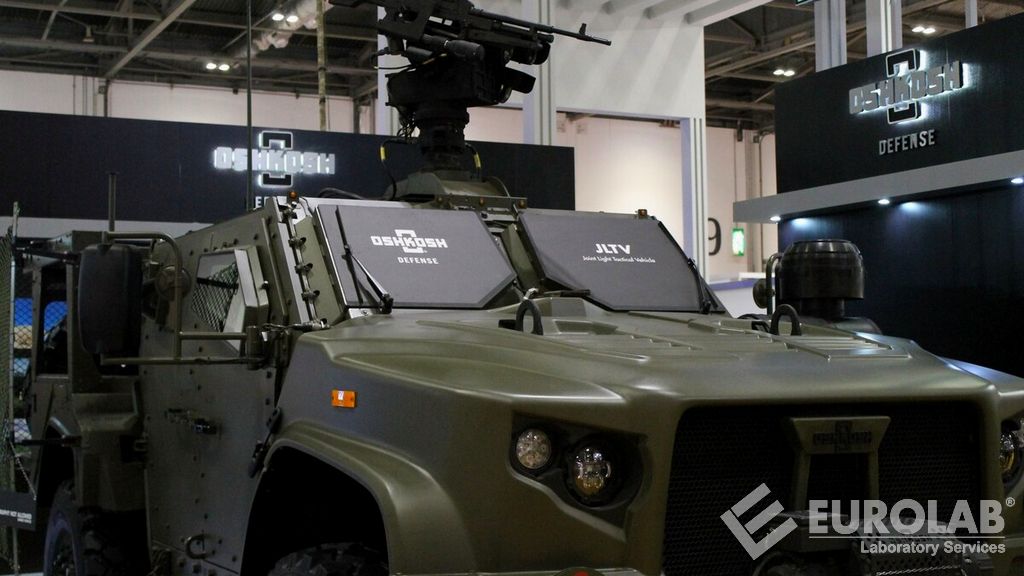
Batteries are 24 volt nominal batteries, which are generally used in starting, lighting and ignition applications in vehicles, whose covers cannot be removed and are maintenance-free.
Batteries are used as a power storage device in motor vehicles. Primary batteries contain all their usable energy when installed and discharge (discharge) as they are used. Secondary batteries, on the other hand, can be recharged from solar panels or some other energy source and provide power when energy is needed. As a result, batteries produce electric current from a chemical reaction.
The general requirements in this standard are determined as follows:
Among the numerous test, measurement, analysis and evaluation studies it provides for businesses in various sectors, our organization also provides starter battery gap testing services for tactical land vehicles within the scope of STANAG 4015 standard, with its trained and expert staff and advanced technological equipment.
To get an appointment, to get more detailed information or to request an evaluation, you can ask us to fill in our form and reach you.

