

Tests related to MIL-STD-202G are roughly divided into 1) environmental testing, 2) physical property testing, and 3) electrical property testing.
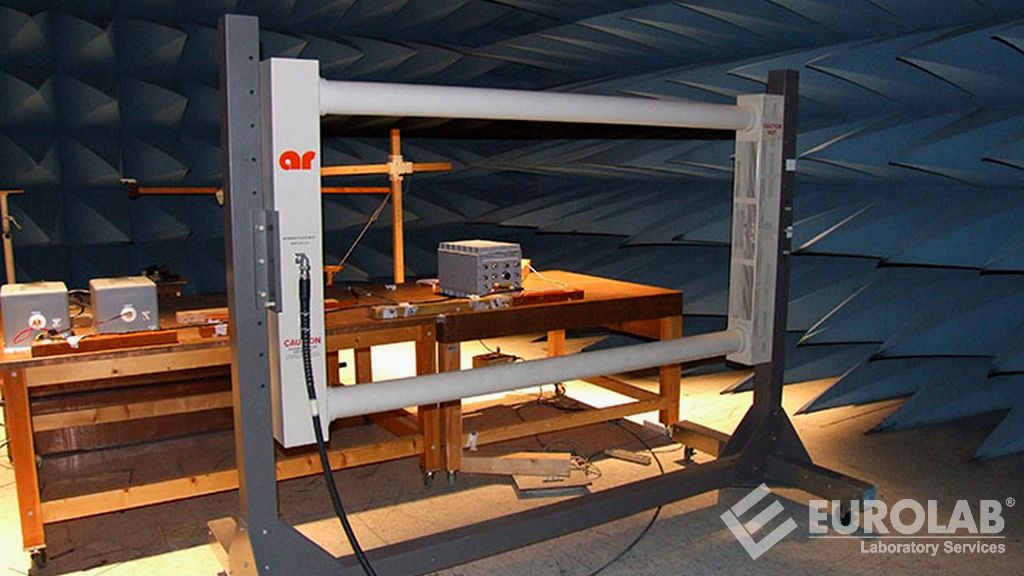
Test conditions: Unless otherwise stated, 15°C to 35°C and ambient pressure and relative humidity apply. However, for repeated test results,
| Test method | Hood | |
|---|---|---|
| 101E | Salt atmosphere (corrosion) | |
| 102A | Replaces Method 107 | |
| 103B | Humidity (steady state) | |
| 104A | dip | |
| 105C | Barometric pressure (low) | |
| 106G | moisture resistance | |
| 107G | Thermal shock | |
| 108A | Life (at high ambient temperature) | |
| 109C | Explosion | |
| 110A | sand and dust | |
| 111A | Flammability (external flame) | |
| 112E | Seal | |
| Environmental tests (100 classes) | ||
| Test method | Hood | |
|---|---|---|
| 201A | Vibration | |
| 202D | Replaces Method 213 | |
| 203C | random drop | |
| 204D | vibration, high frequency | |
| 205E | Replaces Method 213 | |
| 206 | life (rotation) | |
| 207B | high impact shock | |
| 208H | solderability | |
| 209 | radiographic examination | |
| 210F | Resistance to soldering heat | |
| 211A | terminal power | |
| 212A | Acceleration | |
| 213B | Shock (specified blow) | |
| 214A | random vibration | |
| 215K | resistance to solvents | |
| 216 | Replaced by Method 210 | |
| 217A | Particle impact noise detection (PIND) | |
| Physical property tests (200 class) | ||
| Test method | Hood | |
|---|---|---|
| 301 | Dielectric Strength Voltage | |
| 302 | Insulation resistance | |
| 303 | DC resistor | |
| 304 | Resistance temperature characteristic | |
| 305 | capacitance | |
| 306 | Quality factor (Q) | |
| 307 | Contact resistance | |
| 308 | Current-noise testing for fixed resistors | |
| 309 | Voltage coefficient of the resistance determination procedure | |
| 310 | Communication-chatter monitoring | |
| 311 | Life, low-level switching | |
| 312 | Intercurrent switching | |
| Electrical property tests (300 class) | ||
To get an appointment, to get more detailed information or to request an evaluation, you can ask us to fill in our form and reach you.

