MIL-PRF-81733 Performance Specification - Corrosion-Inhibitory Coating and Sealing Compound
MIL-PRF-81733 Performance Specification: Corrosion-Inhibiting Coating and Sealing Compound
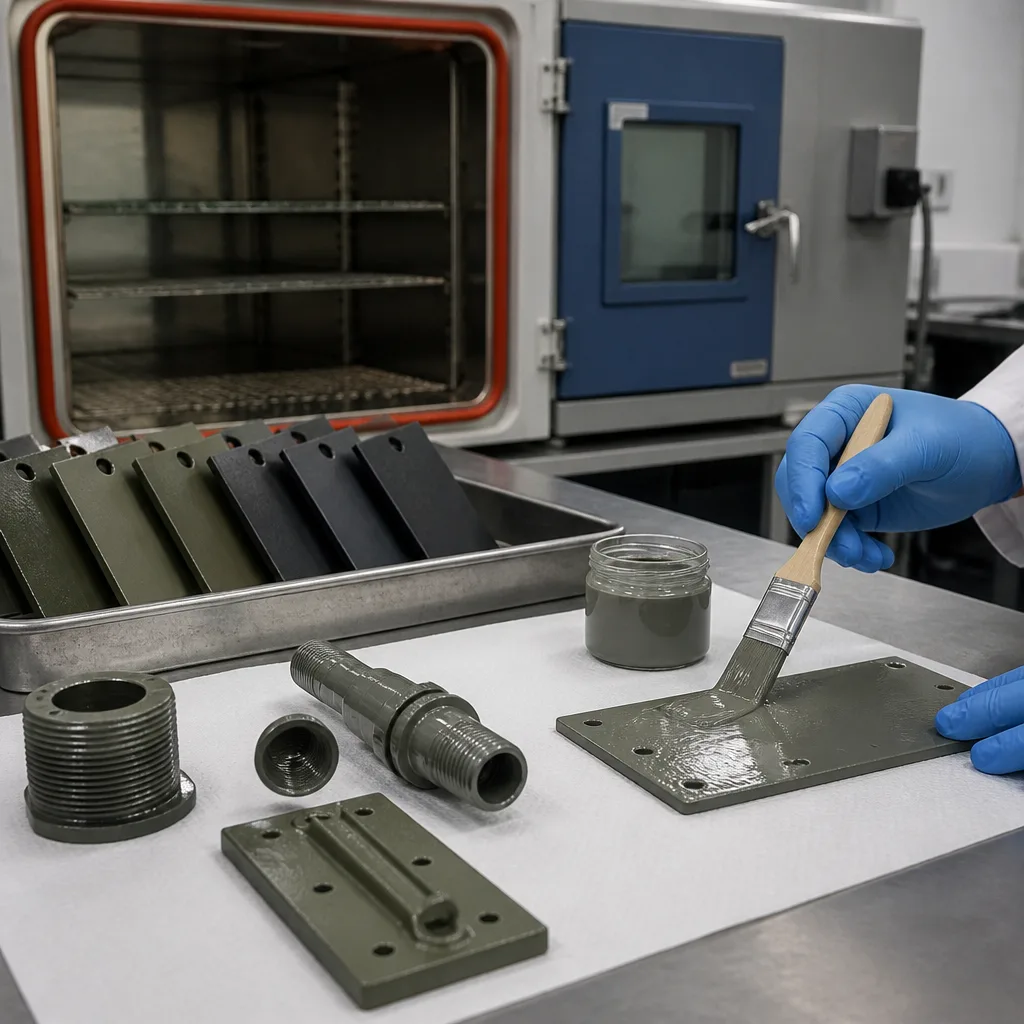
The MIL-PRF-81733 Performance Specification: Corrosion-Resistant Coating and Sealant Compound standard, a military standard developed by the United States Department of Defense, covers accelerated, room-temperature curing synthetic rubber compounds used to protect metal components in weapons and aircraft systems against corrosion. Class 1 sealants are effective in a continuous operating temperature range of -54 degrees to +121 degrees Celsius. Class 2 sealants are effective in a continuous operating temperature range of -62 degrees to +160 degrees Celsius.
Sealant is available in the following types, classes, qualities, and application times:
- Types: The types of sealing materials are as follows:
- Type I: For brush or dip application (generally thinner consistency for coatings).
- Type II: For extrusion application using a sealing gun or spatula (common for general sealing and filling).
- Type III: For spray gun application (sprayable formulations).
- Type IV: For surface sealing applied between joining surfaces using a gun or spatula.
- Classes: The classes of sealing compounds are as follows:
- Class 1: Polysulfide rubber-based material. Effective in a continuous operating temperature range of approximately -54 degrees to +121 degrees.
- Class 2: Polythioether rubber-based material. Effective over a wider range, approximately from -62 degrees to +160 degrees.
- Qualities: The qualities of sealing compounds are as follows:
- A-grade: Contains chromium-based corrosion inhibitors.
- Grade B: Contains chromium-free corrosion inhibitors.
- Application time: The minimum application time for each type and class is indicated in hours by a hyphenated number as follows:
- Type I, Class 1: Hyphenated numbers -1/2 and -2
- Type I, Class 2: Hyphenated numbers -1/4, -1/2 and -2
- Type II, Class 1: Hyphenated numbers -1/6, -1/4, -1/2, -2 and -4
- Type II, Class 2: Hyphenated numbers -1/4, -1/2, -2 and -4
- Type III, Class 1: Hyphenated number -1
- Type III, Class 2: Hyphenated number -1
- Type III, Class 1: Hyphenated number -1
- Type IV, Class 1: Numbers with hyphens -12, -24, -40, and -48
- Type IV, Class 2: Numbers with hyphens -4, -12, -24, -40, and -48
Example: Type I-1/2 indicates a brush-applied material with an application time of 1/2 hour. Type I-2 indicates an application time of 2 hours.
The MIL-PRF-81733 standard is a U.S. military performance specification for high-performance, corrosion-resistant sealing materials primarily used in aviation, aircraft, and weapons systems. This standard defines requirements for accelerated, room-temperature curing synthetic rubber compounds (typically two-component polysulfide-based). These materials seal and coat metal components to provide corrosion protection in aluminum alloys and between various metals. They offer excellent resistance to fuels, chemicals, and environmental influences.
This standard replaced the previous MIL-S-81733 standard and remains active. Common applications include:
- Integrated fuel tanks and pressurized chambers.
- Joints and seams in aircraft structures.
- Protection of electrical connectors and metal components exposed to harsh environments.
- A corrosion barrier between different metals (e.g., aluminum and steel).
Key features of this standard include:
- Two-component system (base + curing agent), in most cases manganese-cured polysulfide chemistry.
- Room temperature curing with accelerated options.
- Fuel resistant and corrosion resistant (typically contains chromates or modern alternatives).
- Excellent adhesion to properly prepared metals when used with primers.
- It maintains its flexibility and sealing integrity under extreme temperatures and vibrations.
In military and commercial aviation, these sealing materials are critical for airworthiness, longevity, and safety. They prevent galvanic corrosion, fuel leaks, and moisture ingress under harsh operational conditions. Manufacturers and maintainers must use products conforming to this specification to meet original equipment manufacturer and military requirements.
Compounds under the MIL-PRF-81733 standard are typically applied as temporary protective coatings or sealants on corrosion-susceptible metals during storage, transport, or operational exposure. This specification defines requirements for corrosion-inhibiting materials with the following properties:
- To create a protective barrier against moisture, oxygen, salts, and pollutants.
- To prevent oxidation and galvanic corrosion in metallic components.
- Compatible with aerospace alloys such as aluminum, steel, magnesium, titanium, and cadmium-coated surfaces.
- It can be removed when necessary without damaging the underlying surface or coatings.
Products approved under the MIL-PRF-81733 standard are generally supplied as follows:
- Soft films or wax-like coatings
- Sprayable or brushable corrosion inhibitors.
- Temporary protective compounds for storage and shipment.
The MIL-PRF-81733 standard focuses on performance rather than specifying precise formulations. Materials should demonstrate the following:
- Corrosion resistance: The compound is tested in the following aggressive environments:
- Salt spray exposure
- Humidity chambers
- Cyclic corrosion environments
This provides reliable protection for components exposed to marine or high humidity conditions.
- Material compatibility: Since aerospace assemblies combine multiple metals and coatings, the compound must not:
- It should not corrode paints or primers.
- It should not damage elastomers or plastics.
- It should not cause stress corrosion or hydrogen embrittlement.
Therefore, compatibility testing is very important.
- Film characteristics: The protective film must provide sufficient thickness and coverage, maintain its adhesion to metal surfaces, and retain its flexibility without cracking or flaking. A failed film creates small corrosion pathways, such as giving way to rust.
- Removability: Many protective coatings are temporary, so the material must be removable using approved solvents or cleaning methods without leaving harmful residue.
Materials conforming to the MIL-PRF-81733 standard are widely used in the following areas:
- Aircraft structural components
- Fasteners and threaded assemblies
- Landing gear components
- Spare parts storage
- Marine and ship equipment
- Missile and defense equipment packaging
In conclusion, the MIL-PRF-81733 standard is a crucial specification for corrosion inhibitor compounds used to protect metal components in harsh environments. By defining performance requirements for protection, compatibility, and disassembly, it helps the aerospace and defense industries maintain component integrity from manufacturing to storage and operational use.
For many years, our organization, with its competent and experienced staff, has been understanding the needs of its clients, providing the advanced testing services they require, and assisting them in the establishment, implementation, and improvement of management systems. Within this framework, we also provide testing services compliant with the MIL-PRF-81733 standard.



