MIL-PRF-23377 Performance Specification - Primer Coatings - Epoxy, High Solids Content
MIL-PRF-23377 Performance Specification: Primer Coatings: Epoxy, High Solids Content
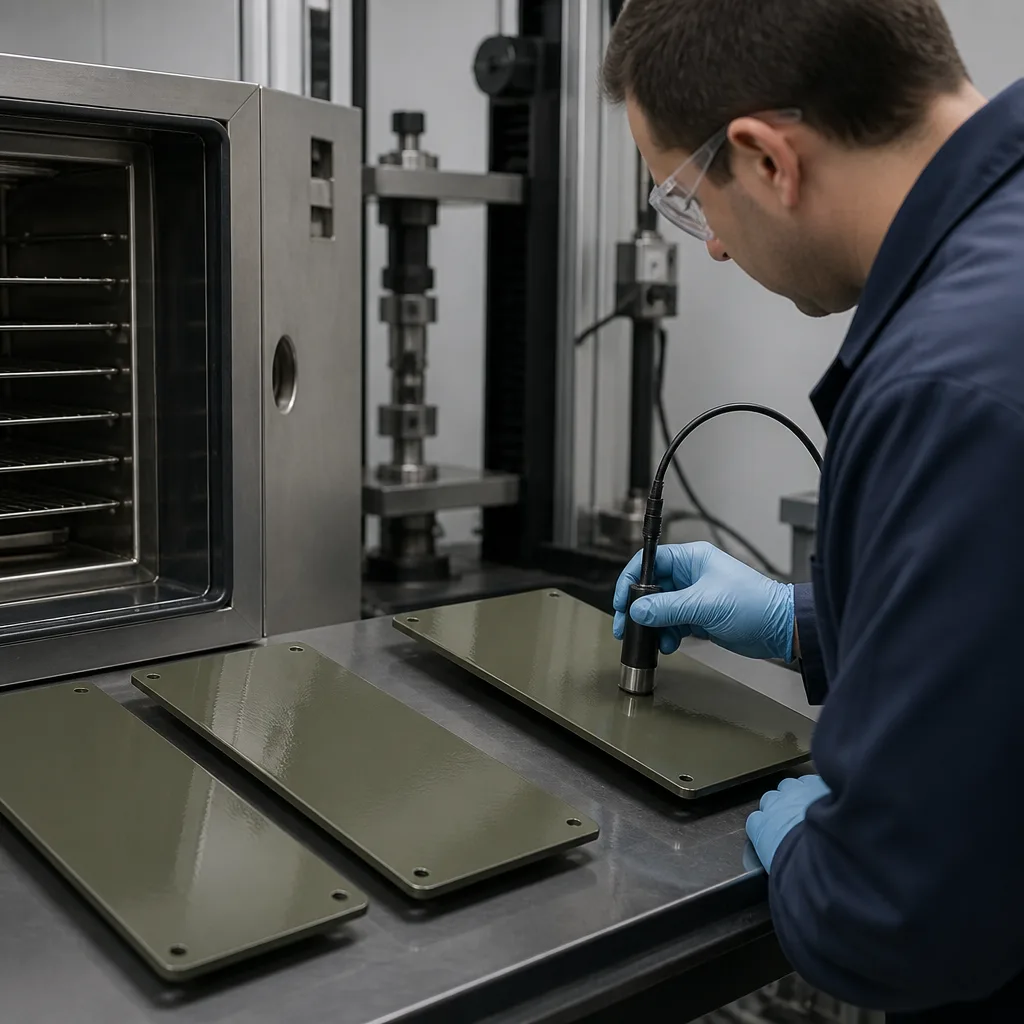
The MIL-PRF-23377 Performance specification: Primers: Epoxy, high solids standard, developed by the United States Department of Defense, covers corrosion-resistant, chemical and solvent-resistant, solvent-based, high-solids epoxy primers with a maximum volatile organic compound (VOC) content of 340 grams/liter (g/L).
According to this standard, primer coatings are of the following types and classes:
- Types: The types of primer coatings are as follows:
- Type I: Standard pigments (typically yellow)
- Type II: Low infrared (IR) reflective pigments (typically dark green or yellow for camouflage)
- Classifications: The classifications of primer coatings are as follows:
- Class C1 Barium chromate-based corrosion inhibitors
- Class C2 Strontium chromate-based corrosion inhibitors (common for chromium versions)
- Class N chromate-free corrosion inhibitors (environmentally preferable, although there are restrictions on the random use of hexavalent chromium).
- Part or identification number: The part or identification numbers to be used for primer coatings supplied according to this specification are generated as follows:
- M23377 - X (Type I, Type II) - XX (Class C1, Class C2, Class N) - XXXX (kit size identifier)
- Kit size: The primer coatings specified in this specification must be purchased by volume, which is a kit containing two components. The dimensions of the kit components do not need to be the same. When using this part numbering system, the kit size must be identified according to the provided table.
MIL-PRF-23377 is a U.S. Department of Defense performance specification for high-solids, corrosion-resistant epoxy primer coatings. These two-component (epoxy-polyamide) primers provide excellent corrosion protection, chemical resistance, and solvent resistance on aircraft and other military equipment, primarily on exterior metal surfaces such as aluminum and steel.
Primers conforming to this standard serve as a base coating layer under topcoats such as polyurethane (e.g., MIL-PRF-85285 standard) or epoxy topcoats. They are commonly used in aerospace, defense, and high-performance industrial applications where durability under harsh conditions is critical. Primers offer:
- Strong adhesion to properly prepared surfaces.
- Resistance to chemicals, solvents, hydraulic fluids, and synthetic oils.
- Corrosion prevention.
- Compatibility with various spray application methods (conventional, airless, HVLP, electrostatic).
High-quality linings must undergo rigorous testing in the following areas:
- Corrosion resistance (e.g., salt spray)
- Flexibility
- Fluid resistance (lubricating oils, hydraulic fluids)
- Adhesion
- Chemical and solvent resistance
- Curing properties
- Application characteristics (no sagging/flow at a dry film thickness of 15-23 µm).
They are usually supplied in kits (base + curing agent, sometimes thinner) and must be mixed homogeneously.
This latest revision of the standard has evolved from previous versions to the performance-based MIL-PRF-23377 series. Key updates focus on higher solids content, lower VOCs, and the introduction of chromium-free (Class N) options for environmental and health compliance.
Traditional C1/C2 class versions use chromium inhibitors for superior long-term corrosion protection but contain hexavalent chromium (carcinogenic, regulated). N class chromium-free primers meet performance needs in many applications while reducing environmental and health risks (subject to engineering approval).
Practical considerations regarding this standard are as follows:
- Surface preparation: This is critical for performance; surfaces must be clean and properly treated.
- Mixing and application: Manufacturer's ratios and shelf life must be followed.
- Topcoat paint: Designed for compatibility with military topcoat paints.
- Shelf life: Generally 1 year from the date of manufacture.
- Safety: Chrome versions require appropriate personal protective equipment and use in accordance with regulations.
The MIL-PRF-23377 standard continues to be a fundamental specification for military aircraft and equipment termination systems, balancing performance, regulatory compliance, and environmental concerns through its evolving classes.
This standard is essential because it defines performance requirements for epoxy primer coatings used primarily in military aircraft, spacecraft, and other high-performance metal structures. It ensures the primer, which protects critical equipment, is sufficiently durable in harsh environments where conventional paint systems would fail. This standard is considered important for the following reasons:
- Corrosion protection: Aircraft and defense equipment are constantly exposed to moisture, salt spray, hydraulic fluids, fuels, and temperature variations. Liners conforming to this standard are designed to strongly adhere to metals such as aluminum and steel while preventing corrosion beneath the coating. Without a robust liner standard, metal structures corrode more rapidly, structural integrity can be weakened, and maintenance costs can increase significantly.
- Adhesion to aerospace surfaces: Aircraft materials include aluminum alloys, steel, magnesium, and composite-compatible surfaces. This standard ensures reliable adhesion of the primer to these materials and also provides an ideal base for topcoats such as polyurethane coatings. This prevents problems such as peeling, blistering, and delamination.
- Chemical and liquid resistance: Military and aerospace environments expose coatings to aggressive chemicals including: jet fuel, lubricants, de-icing fluids, cleaning solvents, and hydraulic fluids. This standard verifies that the coating exhibits resistance to these chemicals without softening, swelling, or loss of adhesion.
- Environmental durability: Aircraft are exposed to UV radiation, humidity, thermal cycling, and high-altitude conditions. This standard requires long-term durability testing to ensure coatings retain their protective properties throughout their service life.
- Maintenance standardization: A military fleet may contain thousands of parts manufactured by different producers. This standard establishes a common performance benchmark to ensure liners from approved suppliers are interchangeable while maintaining consistent quality.
- Low volatile organic compound (VOC) and environmental compliance: This standard includes lower volatile organic compound options that help manufacturers comply with environmental regulations while maintaining performance.
In conclusion, the MIL-PRF-23377 standard guarantees that epoxy primers used in aerospace and military equipment provide the following:
- Corrosion resistance
- Strong adhesion
- Chemical resistance
- Environmental durability
- Coating system compatibility
- Standardized performance among suppliers.
Without this standard, aircraft coating systems become less reliable, more difficult to maintain, and more vulnerable to corrosion-related failures.
For many years, our organization, with its competent and experienced staff, has been understanding the needs of its clients, providing the advanced testing services they require, and assisting them in the establishment, implementation, and improvement of management systems. Within this framework, we also provide testing services compliant with the MIL-PRF-23377 standard.



