

One of the many services offered within the scope of applied technical services in advanced laboratories today is tensile testing at high temperature. This test assists customers in getting an accurate understanding of the material properties of their products. High temperature testing services are provided for a wide variety of materials for military and industrial use. For example metals, rebar, pipes, fasteners, polymers, tubes, composites and welding work.
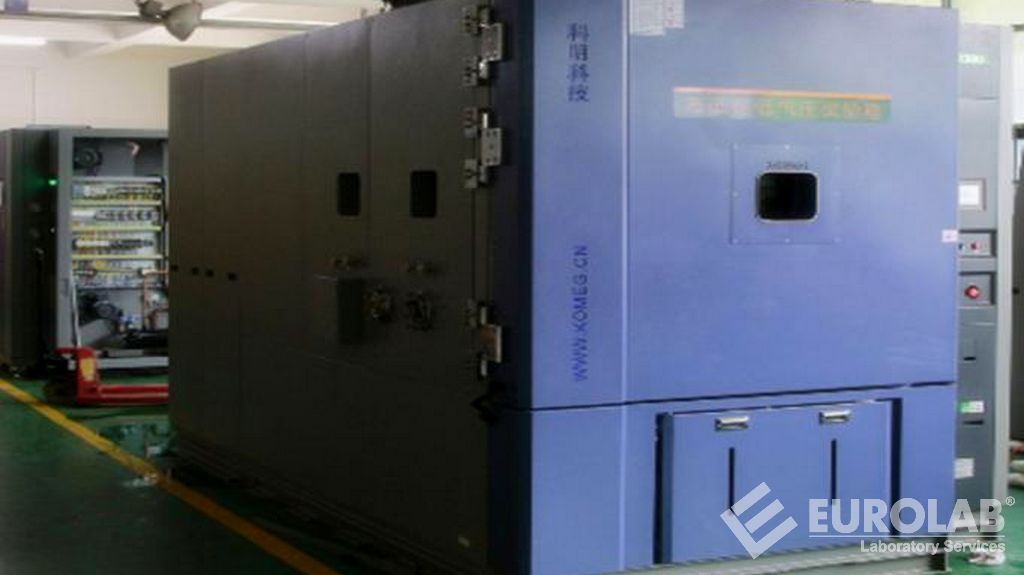
The high temperature tensile test uses a standard tensile test and furnace combination to determine the effects of high temperatures and stress on tensile strength and material properties. Many industries such as power generation, aerospace and automotive require materials with this property to sustain high temperature conditions. Components such as pistons, turbine blades and valves are exposed to high temperatures during service. In this case, the materials that compose them must be strong enough to withstand these extreme service conditions without deterioration.
The purposes of the high temperature tensile test can be listed as follows:
This test also provides a comparative measure for strength and ductility. The test data obtained and the stress-strain curve provide technicians with the following values:
Round or flat samples are tested at temperatures up to 1000 degrees Celsius, with precise temperature control, with modern equipment in advanced laboratories. Various ISO and ASTM standards are complied with in these tests. Here are a few of them:
In short, the testing process involves holding the sample in one of the precisely calibrated tensile testing machines and separating both ends until it fails according to applicable standards. The data collected from the test is then plotted on a stress-strain curve that measures specific material properties. In this way, the tensile test indicates whether a material is suitable for a specified application.
Military equipment is tested according to MIL-STD-810G Method 501.5, a United States military defense standard. This standard provides a test method developed to evaluate the effects of high temperature conditions on material safety, integrity and performance. Materials and equipment that should be used in areas where the ambient or induced temperature is higher than the standard ambient temperature are evaluated according to this test method. This standard defines three test methods: storage, operation and operational tactical standby.
Among the numerous tests, measurements, analyses, and evaluations our organization provides for businesses in various sectors, we also offer high-temperature testing services for military and industrial products, thanks to our trained and expert staff and advanced technological equipment .
To get an appointment, to get more detailed information or to request an evaluation, you can ask us to fill in our form and reach you.

