

STANAG standards, which are NATO standardization agreements, determine the military standards of NATO member countries. In this context, the “NATO STANAG 2920 Ballistic test method for personal armor materials and combat clothing” standard describes a test method for measuring the ability of materials to stop shrapnel and fragmentation. The measurement technique was initially developed for body armor, but is now generally used in all situations where parts are the primary concern. For example, this standard is used in the measurement of add-on armor systems for armored vehicles.
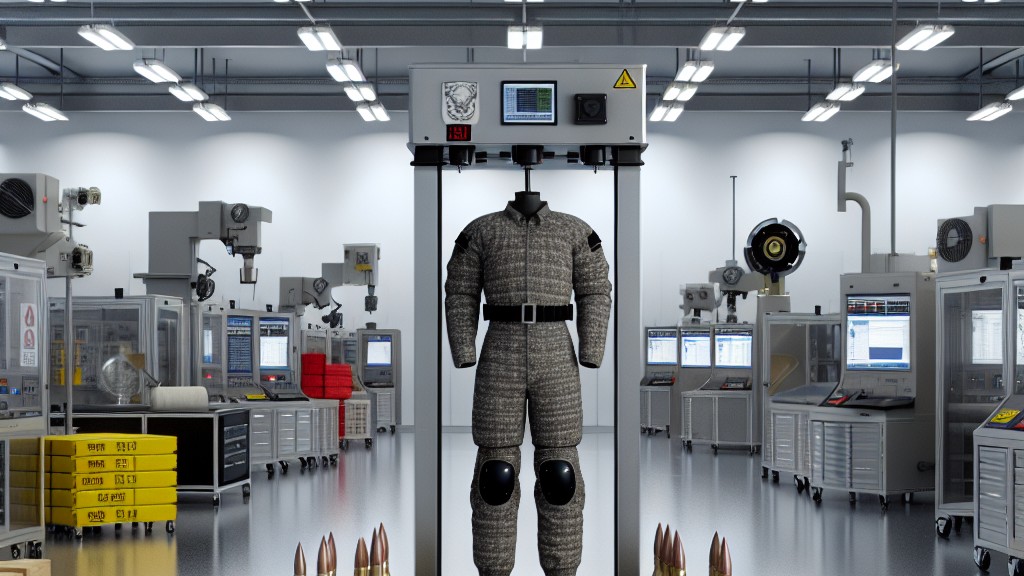
According to this standard, tests are performed by firing fragment simulated bullets at different velocities onto the test specimen and measuring the velocity of each fragment simulated bullet. By varying the velocities, an estimate of the ballistic limit can be obtained after a series of shots. This is the velocity at which the material defeats the fragment.
Combatants rarely suffer injury or death from projectiles, but are at high risk from primary (direct) and secondary (environmental) fragmentation. To combat these threats, a specific range of fragmentation levels is used, the performance of which is measured by the V50 value.
The V50 test is an internationally accepted standard for assessing the fragmentation resistance of personal protection. Fragmentation testing is performed using fragment simulated projectiles in a weight range that approximately follows the binomial sequence. The test is performed by firing fragment simulated projectiles at increasing velocities until the average velocity of armor-penetrating and armor-nonpenetrating projectiles is achieved.
The higher the ballistic velocity, measured in metres per second, the higher the grade of the material and is shown as V50 000 m/s. V50 (velocity 50 per cent or average velocity) is the average of the velocities recorded for six fair impacts, the three lowest velocities for full penetration and the three highest velocities for partial penetration. According to STANAG 2920, the spread is not greater than 40 metres per second.
Modern battlefield conditions expose military personnel and equipment to high-velocity threats such as shrapnel, bullets and explosive fragments. STANAG 2920 tests ensure that protective materials used in combat equipment, vehicles and defensive systems can effectively absorb and mitigate the impact of these threats. So,
The V50 ballistic limit test is the primary method used to evaluate materials covered by STANAG 2920. This test method includes:
Military organizations ensure that their protective equipment complies with NATO ballistic protection standards by following STANAG 2920 testing procedures.
On the other hand, robust military lighting solutions are being developed that complement protective equipment certified to STANAG 2920. Durable, battlefield-ready lighting systems are designed to withstand shock, impact and combat environments, ensuring mission-critical reliability.
In short, this standard is a military standard for ballistic protection and armor solutions for military applications. The adoption of standards such as this standard for ballistic protection levels and tests is generally related to protection levels. STANAG standards are military standards accepted in all NATO countries. The STANAG 2920 standard covers bulletproof materials and combat clothing. In general, all types of military equipment are subjected to impact tests using bullets that simulate ballistic fragments.
Our organization, which has been trying to support businesses from every sector with its testing, measurement, analysis and evaluation studies carried out in a wide range for years, has a strong staff that closely follows the developments in the world in the field of science and technology and constantly improves itself. In this context, testing services in accordance with the "ISO 10534 Acoustic - Determination of sound absorption coefficient and impedance in impedance tubes" standard are also provided to businesses.
To get an appointment, to get more detailed information or to request an evaluation, you can ask us to fill in our form and reach you.

