

STANAG standards, which are NATO standardization agreements, determine the military standards of NATO member countries. The aim of the STANAG 2601 standard published in this framework is to respond to the interoperability requirements of electrical systems in military vehicles.
The STANAG 2601 standard aims to standardize the rated voltage of electrical systems of tactical land vehicles for practical purposes such as:
Meanwhile, circuit features such as voltage drops, surges and spikes are not included in this standard.
Studies on the needs and issues regarding the application of 42 volt direct current power systems in military vehicles are ongoing. Current voltage levels, usually 28 volts in military vehicles, have difficulty meeting the increasing demands of electrical loads, largely due to the advent of power electronics. However, there are still some important points to be examined for the transition of 42-volt systems to military vehicles. Until the Second World War, the 24 Volt power system was used for system radios. Therefore, as the use of radio became widespread after the war, it was decided that all military vehicles would be 24 volts in order to allow the use of radio in any vehicle.
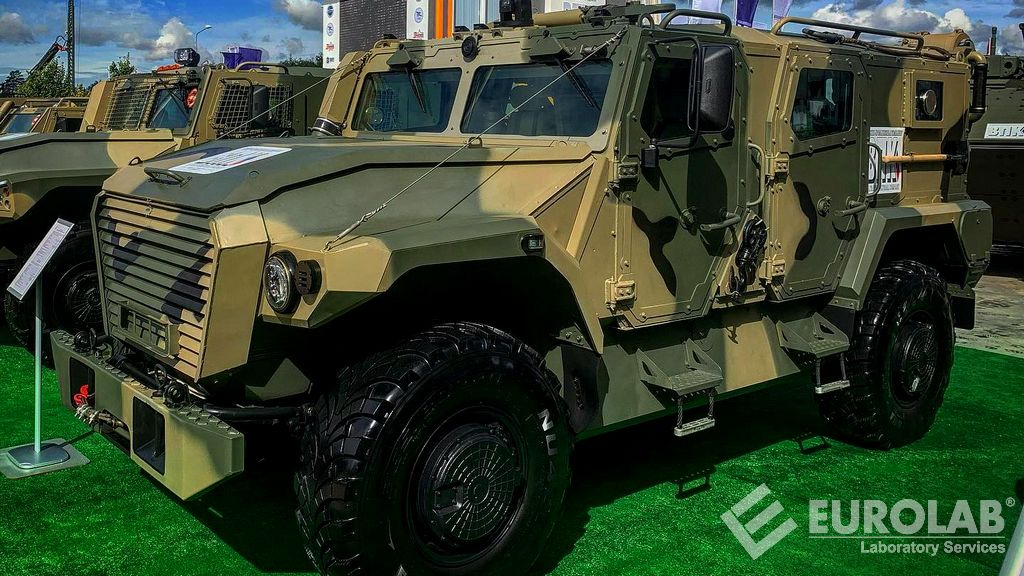
Tactical vehicles are motor vehicles designed to military specification or commercial design motor vehicles modified to military specification to meet the transport support of combat or tactical operations or to train personnel for such operations. In today's ever-evolving battlefield, there is a growing need for heavy tactical vehicles to keep up with the terrain, environment, threats, demands and troops.
Among the numerous test, measurement, analysis and evaluation studies it provides for businesses in various sectors, our organization also provides test services for the standardization of electrical systems in tactical land vehicles, within the scope of the STANAG 2601 standard, with its trained and expert staff and advanced technological equipment.
To get an appointment, to get more detailed information or to request an evaluation, you can ask us to fill in our form and reach you.

