MIL-DTL-27443 Detailed Technical Specifications - Pallets, Cargo, Aircraft, Type HCU-6/E and HCU-12/E
The MIL-DTL-27443 Detailed Technical Specifications - Pallets, Cargo, Aircraft, Type HCU-6/E and HCU-12/E standard, a military standard developed by the United States Department of Defense, describes detailed technical specifications for aircraft equipped with two cargo pallets with payload capacities of 10.000 pounds (HCU-6/E) and 5.000 pounds (HCU-12/E).
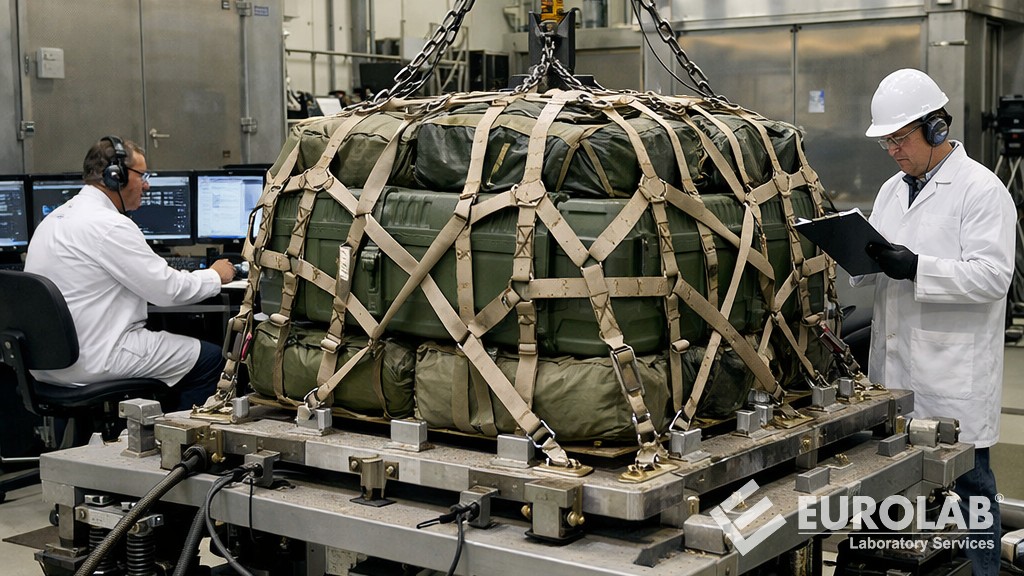
The aircraft cargo pallets specified in this standard are of the following types:
- Type I: 10.000 pound (4.536 kg) capacity, designated HCU-6/E.
- Type II: With a capacity of 5.000 pounds (2.268 kg), designated as HCU-12-E.
The MIL-DTL-27443 standard specifies requirements for aircraft cargo pallets used as part of the 463L cargo handling system. This standard defines design, material, manufacturing, performance, testing, and quality assurance criteria for standardized military cargo pallets that enable efficient and safe air transport of cargo on fixed-wing military aircraft, as well as its handling at air cargo terminals, on trucks, and on other ground support equipment.
This specification focuses primarily on two main pallet types:
- HCU-6/E: Standard full-size pallet (2,25 m x 2,74 m) with a nominal load capacity of 10.000 pounds (4.536 kg). This type is the most commonly used 463L compliant pallet.
- HCU-12/E: Half-size pallet (1,37 m x 2,25 m) with a nominal load capacity of 5.000 pounds (2.268 kg).
These pallets feature a lightweight aluminum construction with a honeycomb core deck, perimeter rails, and standardized lashing rings/restraint arrangements that interface with the roller conveyors, rails, and locking mechanisms of the 463L system.
The 463L system revolutionized military air transport by enabling rapid loading and unloading of cargo using forklift-compatible, wheeled pallets. The MIL-DTL-27443 standard ensures that the pallets meet the following stringent criteria (structural strength including restraint during turbulence and maneuvers under flight loads):
- Dimensional tolerances
- Environmental resistance (corrosion, extreme temperatures)
- Compatibility with aircraft restriction systems.
- Durability for repeated use in demanding operational environments.
Pallets must withstand dynamic loads, forklift operation, and stacking while maintaining their airworthy condition.
The MIL-DTL-27443 standard is crucial because it defines the precise requirements for HCU-6/E (full-size) and HCU-12/E (half-size) 463L compliant cargo pallets, which form the backbone of modern military air transport logistics. The main reasons this standard is necessary are as follows:
- It enables rapid loading and unloading to minimize the time the aircraft spends on the ground: Before the 463L system and standardized pallets, cargo was loaded manually, piece by piece, onto the ground, a slow and labor-intensive process. Pallets conforming to the MIL-DTL-27443 standard integrate seamlessly with roller conveyors, safety rails, and locking mechanisms on military aircraft and ground handling equipment. This allows for rapid loading and unloading of pre-palletized cargo, typically reducing the time the aircraft spends on the ground by up to 75 percent. Rapid deployments are critical for humanitarian missions or combat resupply where every minute counts.
- It guarantees safety and structural integrity under extreme flight conditions: Aircraft are subjected to intense dynamic forces during flight: turbulence, maneuvers, rapid climbs and descents, and loads of up to 8g in emergency situations. 8g loads represent a load factor of 8 times the gravitational force applied to the cargo under aircraft flight conditions. This standard mandates rigorous testing in the following areas:
- Payload capacity: 10.000 lb (4.536 kg) for HCU-6/E, 5.000 lb (2.268 kg) for HCU-12/E.
- Mooring: With 22 mooring rings, each with a capacity of 7.500 lb (3.402 kg).
- Dimensional tolerances: Total dimensions 2,25 m x 2,74 m, with precision notches for locks.
- Resistance to corrosion, extreme temperatures, humidity, UV exposure, and repeated forklift/handling abuse.
Incompatible tracks can malfunction during flight, endangering the crew, aircraft, and mission.
- It ensures full interoperability and standardization across the forces: U.S. Air Force, NATO allies, and Civil Reserve Air Fleet aircraft all rely on the same 463L interface. A single, tightly controlled specification allows any approved pallet to operate anywhere in the system (from airfields to trucks and aircraft floors) without special modifications. This eliminates compatibility issues, accelerates global logistics, and supports pre-planning of loads to ensure maximum aircraft utilization.
- It supports efficient, scalable global military logistics: The 463L system, operating with these pallets, has revolutionized air transport by providing unit loading device-style efficiency in a military context. Standardized pallets enable:
- Faster transaction processing at terminals.
- Improved asset tracking and redistribution.
- Reduced damage and repair costs thanks to proven designs.
In high-tempo operations, the availability of compatible pallets in the right place and at the right time can determine mission success or failure.
The MIL-DTL-27443 standard defines the following test methods:
- Product review.
- Touch test.
- Binding ring tests:
- Ring position and movement test.
- Ring load test 1.
- Ring load test 2.
- Ring load test 3.
- Static load test.
- Lifting ability tests:
- Corner lift test.
- Forklift lifting test.
- Forklift wedge lift test.
- Passable aptitude tests:
- Conveyor test.
- Conveyor ramp test.
- Final load test.
- Environmental tests:
- High temperature test.
- Core resistance and low-temperature testing.
- Moisture test.
- Salt spray test.
- Damage analysis.
- Peel test.
- Cutting and tying inspection.
In conclusion, the MIL-DTL-27443 standard is not merely a technical standard, but the engineering foundation that enables rapid, safe, reliable, and interoperable military air cargo transportation on the scale required for national defense and global operations.
For many years, our organization, with its competent and experienced staff, has been understanding the needs of its customers, providing the advanced testing services they require, and assisting them in the establishment, implementation, and improvement of management systems. Within this framework, we also provide testing services to businesses in accordance with the "MIL-DTL-27443 Detailed technical specifications - Pallets, cargo, aircraft, Type HCU-6/E and HCU-12/E" standard.



