MIL-S-901D Military Specification: Shock Tests - HI (High Impact) Ship Machinery, Equipment and Systems, Requirements
The standard “MIL-S-901D Military specification: Shock tests - HI (high impact) ship machinery, equipment, and systems, requirements” developed by the US Department of Defense describes shock testing requirements for shipboard machinery, equipment, systems, and structures, excluding submarine pressure hull penetrations.
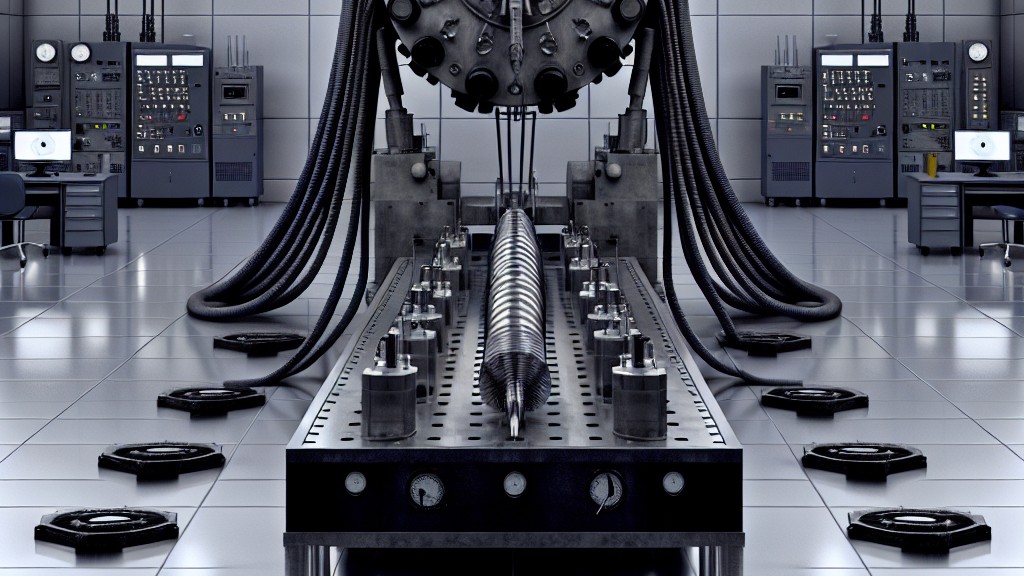
The purpose of these requirements is to verify the ability of shipboard facilities to withstand shock loads that would occur during wartime service due to the effects of nuclear or conventional weapons.
Tests are classified into one of the following test categories:
- A light weight test is a test performed on a light shock machine.
- The medium weight test is a test performed on a medium weight shock machine.
- A heavy weight test is a test performed on a standard or large floating shock platform.
Items to be tested are classified into one of the following shock ratings as specified:
- Class A items are items essential to the ship's safety and continued combat capability.
- Class B items are items whose operation is not essential to the safety and combat capability of the ship, but which may pose a hazard to personnel, Class A items or the entire ship through exposure to shock.
The products to be tested are classified into one of the following classes:
- Class I equipment is defined as equipment required to meet these shock requirements without the use of flexible mountings installed between the equipment and the ship structure or foundation.
- Class II equipment is defined as equipment required to meet these shock requirements using flexible mountings installed between the equipment and the ship structure or ship bottom.
- Unless otherwise stated, Class III equipment is defined as equipment that has shipboard application both with and without the use of flexible mountings and therefore must meet both Class I and Class II requirements.
Shock test types should be classified into one of the following types:
- The Type A test is the test of a major unit. This is the preferred test. Major units are items supported directly by the ship structure or by a foundation directly attached to the ship structure, and items mounted in piping systems, ductwork, or similar systems supported by the ship structure. The shock response of a major unit is primarily a function of the stiffness and mass of the item and the ship mounting structure, ship mounting location, and configuration of the item. Such items typically include diesel generator sets, air conditioning plants, switchgear, radio transmitters, steam generators, missile launchers, and valves (if mounted in piping supported by the ship structure).
- A Type B test is a test of an auxiliary component. Auxiliary components are items that are major parts of a main unit. The shock response of the auxiliary component is significantly affected by the shock response of the associated main unit and all associated auxiliary components. The shock responses of the associated main unit and all associated auxiliary components are significantly affected by the shock response of the auxiliary component. Examples include the diesel engine of a diesel generator set, the electric motor of an air conditioning unit, or the power supply section of a radio transmitter.
- Type C testing is testing of a subassembly. Subassemblies are items that are part of a main unit or an auxiliary component. The shock response of the subassembly is significantly affected by the shock response of the associated main unit or auxiliary component, but the shock response of the main unit or auxiliary component is not significantly affected by the subassembly. Examples include thermometers, gauges, meters, relays, and reactances. The distinction between subassembly and assembly or part used herein may differ from the distinction used in various equipment specifications or other purchasing documentation.
Items are classified according to one of the following mounting locations on the ship:
- Body-mounted items are those mounted on:
- For surface ships, the major structural elements of the ship, including structural bulkheads and structural bulkhead stiffeners below the main deck and the shell plating above the waterline.
- For submarines, the major structural elements of the ship, including hull frames, structural bulkheads, and structural bulkhead stiffeners.
- Deck mounted items are those mounted on:
- For surface vessels, berths, platforms and non-structural bulkheads on and above the main deck and below the main deck.
- For submarines, platforms and non-structural compartments.
- Shell mounted products are installed as follows:
- For surface ships, shell plating below the waterline.
- For submarines, hull coating (this specification does not cover underwater explosion testing of products that penetrate the submarine pressure hull).
- Wet surface mount products are installed as follows:
- For surface vessels, outside the hull and below the waterline.
- For submarines, outside the pressure hull.
Our organization has a strong staff that closely follows the developments in the world in the field of science and technology and constantly improves itself. Among the numerous test, measurement, analysis and evaluation studies provided for businesses in various sectors, there are also test services in accordance with the standard “MIL-S-901D Military specifications: Shock tests - HI (high impact) ship machinery, equipment and systems, requirements”.



