Defense Industry Product Tests
The defense industry operates in high-risk environments where equipment reliability, safety, and performance are paramount. Defense industry product testing is a critical process that ensures the effective operation of military systems, from weapons to communications devices, under challenging conditions.
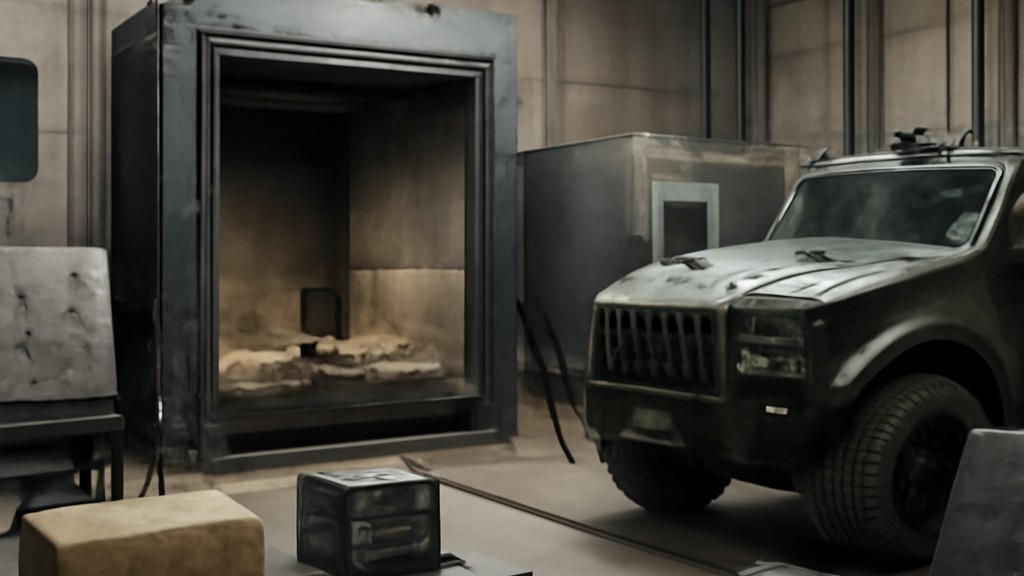
The defense industry plays a critical role in protecting a nation's sovereignty and requires not only innovation but also uncompromising reliability in its products. To meet this standard, rigorous product testing is the cornerstone of the industry's research, development, and deployment cycle. From armored vehicles and missile systems to communications equipment and cybersecurity solutions, defense industry product testing ensures flawless performance in mission-critical situations.
Whether used in combat, surveillance, or logistics, defense systems must perform flawlessly in diverse and often challenging environments, including extreme temperatures, high altitudes, or corrosive conditions like salt fog. Inadequate testing can lead to equipment failures, loss of life, mission delays, and significant costs through redesigns or recalls. For example, identifying design deficiencies early in the product development cycle prevents costly failures during operational testing, protecting both personnel and the company's reputation.
Testing also ensures compliance with military standards, such as the MIL-STD-810 Department of Defense Test Method Standard: Environmental Engineering Considerations and Laboratory Testing for environmental testing and the MIL-STD-461 Military Standard: Electromagnetic Interference Characteristics Requirements for Equipment for Electromagnetic Compatibility (EMC). These standards verify that products can withstand the climatic, dynamic, and electromagnetic stresses encountered throughout their life cycle. Furthermore, rigorous testing encourages innovation by identifying weaknesses that drive improvements in materials, design, and technology.
Unlike consumer goods, defense industry products are subject to unique and demanding operational demands. Product testing in this sector serves several key purposes:
- Performance verification: Ensures that the product meets specifications and intended functionality.
- Durability rating: Evaluates durability under harsh conditions such as extreme temperatures, vibrations, and electromagnetic interference.
- Safety compliance: Identifies potential hazards to operators or environments.
- Operational readiness: Validates the reliability and effectiveness of the product in real-world scenarios.
- Regulatory approval: Meets military standards before field deployment.
In general, defense industry product testing types are as follows:
- Environmental testing: Simulates environmental conditions such as humidity, altitude, salt fog, and thermal shock to ensure products are durable for deployment anywhere in the world.
- Mechanical and structural testing: This includes stress, fatigue, and impact tests to assess a system's physical integrity. For example, armored vehicles undergo blast and ballistic tests to verify their protective capabilities.
- Live-fire testing: Weapons and protective equipment are tested using live ammunition to assess lethality, accuracy, and survivability. This includes battlefield simulations.
- Software and cybersecurity testing: Defensive software systems undergo extensive penetration testing and validation to prevent cyberattacks. Control systems in drones and missile guidance technologies must be resilient to attack and jamming.
- Human factors and ergonomics: Tests ensure equipment is operational and safe for human use under combat stress, taking into account factors such as fatigue, reaction time, and usability.
- Field trials: Once laboratory testing is complete, equipment is tested in actual military environments, typically with soldiers during training exercises, to measure real-world performance.
Defense industry product testing encompasses a variety of phases and methodologies, each tailored to specific requirements. The following are the main types of testing performed:
- Development testing and evaluation: This is the first phase of testing conducted by product developers to verify design and performance against customer specifications. This phase includes:
- Climate testing: This testing evaluates the equipment's durability in extreme temperature, humidity, and other environmental conditions, in accordance with standards such as MIL-STD-810.
- Dynamic testing: This test evaluates resistance to shock, vibration, and other mechanical stresses, ensuring functionality in transportation or combat scenarios.
- Electromagnetic interference (EMI) and electromagnetic compatibility (EMC) tests: These tests ensure that devices operate without being affected by electromagnetic signals, which are critical for communication systems and radars. The MIL-STD-461 standard is an important standard in this regard.
- Electrical compatibility testing: This testing verifies that systems integrate seamlessly with other military hardware, such as aircraft or ships.
- Operational tests: These tests evaluate systems under realistic combat or field conditions. These include:
- Range testing: This testing tests the accuracy and performance of weapons such as missiles at various distances.
- Integration testing: This testing ensures compatibility with existing military platforms such as communications systems or vehicles.
- Simulated combat testing: This testing replicates real-world scenarios to evaluate how systems perform under stress and how personnel interact with them.
- Environmental and durability testing: Environmental testing subjects products to harsh conditions, such as those seen in aerospace applications, such as high altitude, salt fog, or rapid depressurization. Durability testing, often automated, validates long-term reliability, such as with aircraft actuators, freeing up resources and improving efficiency.
- Software testing: As defense systems become increasingly software-dependent, automated testing is gaining momentum. Automated tools can run thousands of test permutations spanning functional, performance, and stress tests in minutes, significantly reducing time and resources compared to manual testing. This is critical as software updates become more frequent and require extensive regression testing.
The defense industry adheres to rigorous standards to ensure consistency and reliability:
- MIL-STD-810 standard: This standard covers environmental engineering aspects, including 29 test methodologies for climatic and dynamic stresses. Test plans are tailored to the expected product life cycle.
- MIL-STD-461 standard: Focuses on electromagnetic interference (EMI) and electromagnetic compatibility (EMC), ensuring that systems are immune to interference and do not emit disruptive signals.
- MIL-STD-883 standard: Specifies tests for microelectronic devices critical to avionics and other electronic equipment.
- RTCA DO-160 standard: Defines environmental conditions and test procedures for aircraft, ensuring reliability in aviation applications.
Test facilities accredited with the Defense Logistics Agency or ISO-17025 standard often use state-of-the-art equipment such as electrodynamic vibration systems and anechoic chambers to meet these standards.
Today, the defense industry is evolving with technological advancements that increase test efficiency and accuracy:
- Digital twins and simulation: Digital twin technology reduces the need for costly physical testing by creating virtual copies of systems for testing and optimization. Simulations mimic real-world conditions, improving predictive maintenance and system longevity.
- AI and machine learning: AI analyzes large datasets from testing to identify patterns and predict failures, streamlining processes and improving reliability. For example, AI-powered testing is used for autonomous systems and cybersecurity applications.
- Additive manufacturing: 3D printing speeds prototyping and enables testing of lightweight, high-performance components such as turbine blades, reducing production costs and environmental impact.
- Automated test systems: These systems enable faster verification and data collection, which is critical for complex systems like automated systems, actuators, or jammers. Automation reduces operator hours and increases throughput.
- Sustainability in testing: The industry is embracing sustainable practices such as biofuels and electric propulsion systems, requiring new testing protocols to verify performance while meeting environmental goals.
Despite rapid advancements, challenges remain. Inadequate testing can lead to unreliable systems, jeopardizing missions and increasing costs. The Department of Defense has highlighted the need for robust test program management, citing issues with supplier test quality. Furthermore, as systems are expected to have longer lifespans, test equipment and component obsolescence is a growing concern. Modular and scalable platforms can address this issue by supporting upgrades and new technologies.
Ultimately, defense product testing is fundamental to ensuring military systems perform reliably under the most challenging conditions. From development to operational testing, compliance with standards like MIL-STD-810 and MIL-STD-461 ensures safety and performance. New technologies like artificial intelligence, digital twins, and additive manufacturing are transforming testing, making it more efficient and sustainable. By investing in rigorous testing, the defense industry not only protects national security but also fosters innovation, ensuring systems are ready for the challenges of modern warfare.
Our organization, which has been supporting businesses across all sectors for years through a wide range of testing, measurement, analysis, and evaluation activities, has a strong team of employees who closely follow global developments in science and technology and are constantly improving themselves. In this context, we also provide defense industry product testing services to businesses.



