

The standard “ASHRAE standard 51-16 (ANSI/AMCA standard 210-16) Laboratory methods for testing fans for certified aerodynamic performance rating” developed by the American Society of Heating, Refrigerating and Air-Conditioning Engineers (ASHRAE) describes uniform test methods for laboratory testing of a fan or other air-moving device to determine its aerodynamic performance in terms of air flow rate, generated pressure, power consumption, air density, rotational speed and efficiency.
This standard applies to a fan or other air-moving device when air is used as the test gas, with the following exceptions:
For the purposes of this standard, the following terms and definitions apply:
Having accurate fan data means that the design can be optimized and the highest possible performance can be obtained from the products. The use of fans and blowers dates back to the Middle Ages and continues to be a fundamental element of modern technology today. Fans and blowers are widely used as components of both commercial and consumer products. Applications range from hair dryers to large data servers, air purifiers to industrial heaters, and leaf blowers to jet engines. As part of a system, the fan needs to be both effective and efficient for its intended purpose and not contribute excessively to the product’s energy consumption.
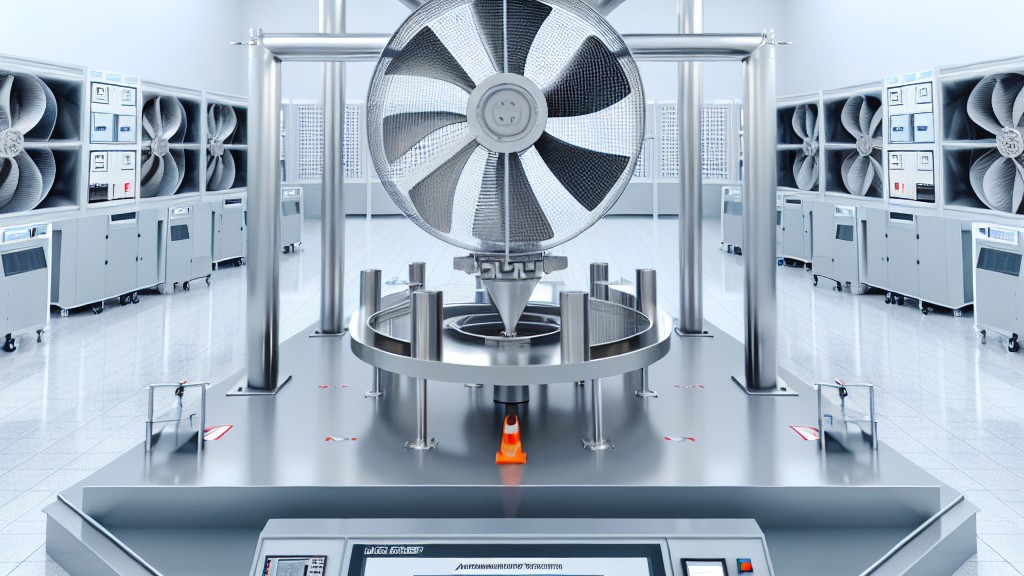
Many independent laboratories perform testing to ASHRAE 51-16 (ANSI/AMCA 210-16), but today, custom wind tunnels are being built that allow manufacturers to conduct fan testing in-house. These flow tunnels are designed directly for the products that customers will be testing and are automated to collect all the data they need. These systems include touch screens and data logging capabilities. The system includes pressure, temperature, and humidity sensors, as well as instrumentation to measure unit power and fan speed.
The testing process for creating a fan curve with a custom flow tunnel is simple. After mounting the test fan in the flow tunnel, the user simply sets the desired static pressure. A data logger automatically reports the resulting test fan flow rate based on the measurements and calculations performed.
Our organization has a strong staff that closely follows the developments in the world in the field of science and technology and constantly improves itself. Among the numerous test, measurement, analysis and evaluation studies provided for businesses in various sectors, there are also test services in accordance with the standard "ASHRAE standard 51-16 (ANSI/AMCA standard 210-16) Laboratory methods for testing fans for certified aerodynamic performance rating".
To get an appointment, to get more detailed information or to request an evaluation, you can ask us to fill in our form and reach you.

