

The Cooling Technology Institute (CTI) sets industry standards for cooling towers, and compliance with these standards ensures that cooling towers are designed, constructed, and operated efficiently and safely. Testing and certification are integral components to evaluating the performance and safety of cooling towers.
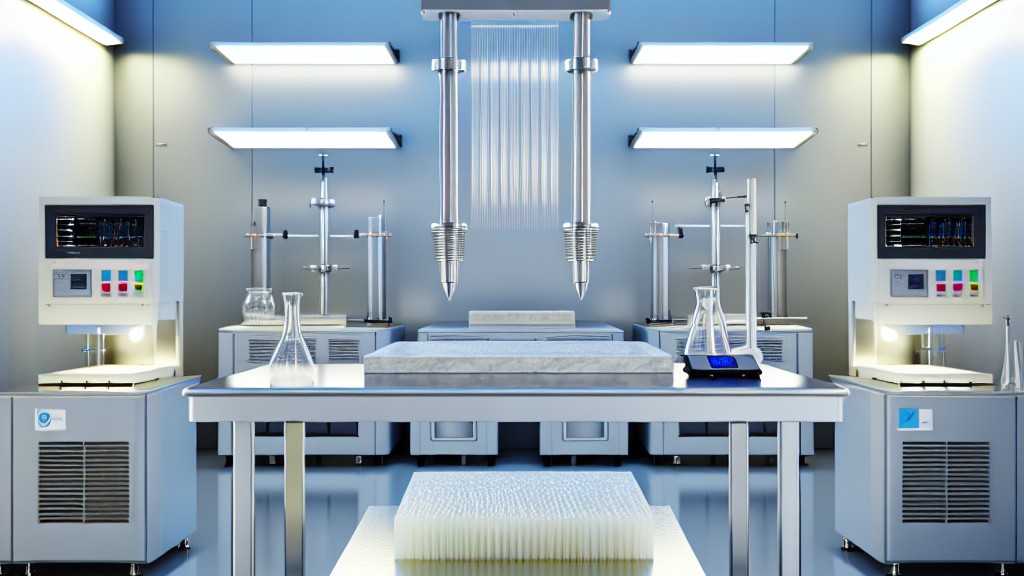
The standard "CTI STD-137, Fiberglass Pultruded Structural Products for Use in Cooling Towers" developed by the Refrigeration Technology Institute (CTI) provides recommendations for the classification, materials of construction, tolerances, defects, workmanship, inspection, physical, mechanical and design properties of fiberglass-reinforced pultruded structural shapes designed for use as construction materials in cooling tower applications. Pultrusion is a manufacturing process used to create continuous lengths of fiber-reinforced polymer composites with constant cross-section.
The recommendations described in this standard are defined by existing American Society for Testing and Materials (ASTM) standards. Additional information on glass fiber reinforced plastic pultrusion structural products may be obtained from the pultrusion supplier. It is not intended to restrict or limit technological changes that affect performance when agreed to by the pultrusion supplier and the cooling tower manufacturer.
Laboratory tests performed under controlled conditions should be used to measure and characterize the properties of materials, products, or assemblies covered by this standard and should not be used to evaluate risk conditions. It is the responsibility of the user of this standard to determine appropriate safety and health practices and to determine the applicability of regulatory limitations prior to use.
Fiberglass pultrusion structural products are components used to create the structural elements of a cooling tower, such as guardrails, supports, etc. These products have become an increasingly popular choice for cooling tower installations due to their durability and resistance to corrosion.
Glass fiber reinforcements may be continuous yarn mats, woven or nonwoven fabrics, unidirectional fabrics, or combinations thereof. The resin used throughout the part shall be isophthalic polyester, vinyl ester, or another resin agreed upon with the manufacturer. The resin may contain additives for the following purposes: flame retardancy, UV stabilization, pigmentation, and smoke reduction. These additives are selected to improve the overall performance of the product without affecting the structural properties, chemical resistance, or service life of the part.
Design criteria for pultrusion, flat sheet, and structural shapes used under flexural or compressive loads should be obtained from an appropriate engineering design guide (CTI FRP Design Guide ESG-152) or from the pultrusion supplier. For structural products exposed to temperatures greater than 25 degrees Celsius for extended periods, the pultrusion supplier's design criteria for flexural and compressive loads should be reduced to account for the higher temperatures. These correction factors are included in CTI STD-137.
A quality assurance audit should be performed to ensure the consistency of fiberglass reinforced pultrusion structural products. Final acceptance criteria for these products should be agreed upon by both the pultrusion supplier and the cooling tower purchaser. The requirements for passing a routine quality assurance audit are outlined in the CTI STD-137 standard. For example, all structural components for the tower should be designed to account for the maximum expected hot water temperature. This helps account for the possible effects of fan off operation, tower idle during hot weather, and load deviations.
These tests are an independent, third-party thermal performance test to help manufacturers and operators get the best performance from their cooling towers.
Cooling towers are structures designed to provide cooling water to industrial facilities of various purposes and sizes. There are towers that reach different heights. Industrial cooling towers are used in natural gas processing plants, petrochemical plants, oil refineries, power plants and other industrial facilities to remove the heat taken from the cooling water circulating in the system.
Our organization has a strong staff that closely follows the developments in the world in the field of science and technology and constantly improves itself. Among the numerous test, measurement, analysis and evaluation studies provided for businesses in various sectors, there are also test services in accordance with the "CTI STD-137 Fiberglass pultruded structural products for use in cooling towers" standard.
To get an appointment, to get more detailed information or to request an evaluation, you can ask us to fill in our form and reach you.

