
EN IEC 61810-1 Electromechanical Basic Relay - Part 1: General and Safety Recommendations

EN IEC 61810-1 Electromechanical Basic Relay - Part 1: General and Safety Recommendations

The standard "EN IEC 61810-1 Electromechanical basic relay - Part 1: General and safety recommendations", which is based on a European standard and subsequently published by the International Electrotechnical Commission (IEC), describes general and safety recommendations for electromechanical basic relays for incorporation into low-voltage equipment (alternating current circuits up to 1000 Volts or direct current circuits up to 1500 Volts). This standard contains the essential functional and safety requirements and safety-related aspects for applications in all areas of electrical engineering or electronics. For example, it defines the essential functional and safety requirements and safety-related aspects for applications in all areas of electrical engineering or electronics, including:
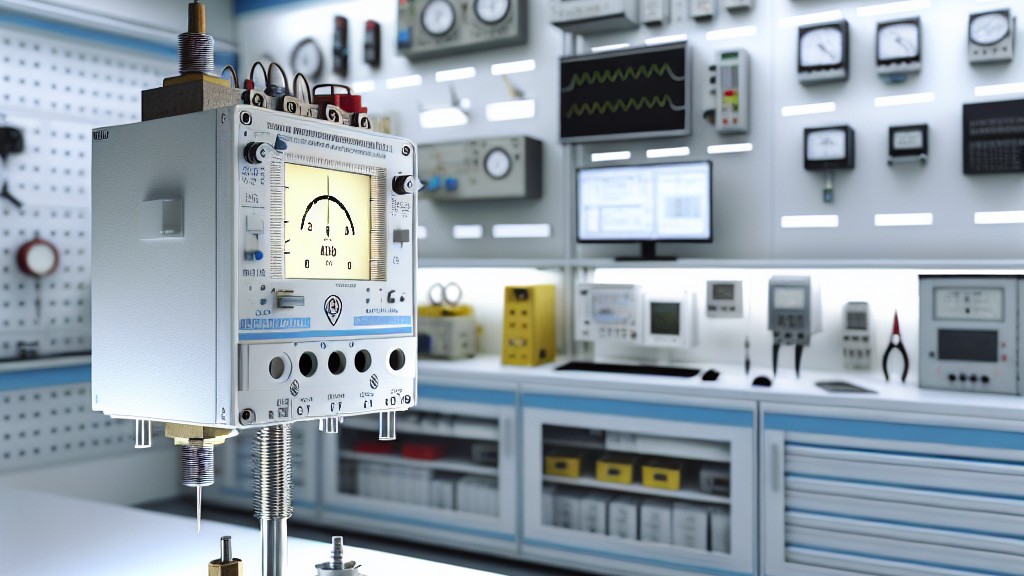
EN IEC 61810-1 Electromechanical Basic Relay - Part 1: General and Safety Recommendations

  • General industrial equipment
  • Electrical installations
  • Electric machines
  • Electrical appliances for household and similar uses
  • Information technology and business equipment
  • Building automation equipment
  • Automation equipment
  • Electrical installation equipment
  • Medical Equipment
  • Control equipment
  • Telecommunication
  • Araçlar
  • Transport (e.g. railways)

Compliance with the requirements of this standard is verified by the type tests specified. If the application of a relay imposes additional requirements that go beyond those specified in this standard, the relay shall be evaluated in accordance with the relevant IEC standard, for example IEC 60730-1, IEC 60335-1 or IEC 60950-1, in accordance with this application.

Electromechanical basic relays are generally of two types:

  • Type A: Relay in which all contacts are mechanically interconnected (or forcibly guided).
  • Type B: Relay containing both mechanically interconnected contacts and non-mechanically interconnected contacts.

There are only two parts to these:

  • Control part: It is the coil that moves the auxiliary contacts.
  • Auxiliary contacts: Some are normally open and some are normally closed.

An electromechanical relay is a type of switch that is operated by an electromagnet to mechanically open or close one or more sets of contacts. The main function of such relays is to control a high power circuit using a low power signal, providing isolation between the control and operating circuits. These are the mechanics of electromechanical thermal relays, which are an integral part of various electronic systems and guarantee the safety and efficiency of operation.

The operation of the electromechanical relay consists of the following steps:

  • 1. Energizing the coil: When a small voltage is applied to the coil of the relay, a magnetic field is created.
  • Magnetic attraction: This magnetic field attracts a moving armature attached to the coil.
  • Contact switching: The movement of the armature makes or breaks the connection with the electrical contacts. In a normally open relay, the circuit remains open until the relay is activated. In a normally closed relay, the circuit remains closed until the relay is activated.
  • Circuit control: This mechanical action allows the relay to control the connected circuit by opening and closing the contacts, thereby managing the current flow.

Electromechanical relays come in several types, each suited to specific applications:

  • General purpose relays: Used in a wide variety of applications for switching AC or DC loads.
  • Latching relays: They retain their position after control power is removed, ideal for memory and energy saving applications.
  • Reed relays: These relays, which use reed switches, are known for their fast operation and low contact resistance.
  • Time-delay relays: They provide a delay between the activation signal and relay operation, useful for time-dependent applications.
  • Thermal relays: These are relays that operate by utilizing the thermal effect of electric current and are widely used in motor protection circuits.
  • Automotive relays: Designed for automotive applications, these relays can handle high currents and are resistant to environmental factors such as vibration and temperature.

Electromechanical relays are widely used due to their versatility and reliability, mainly in the following applications:

  • Industrial automation: Used for switching and control purposes in control panels, machines and production systems.
  • Automotive: Essential for controlling lights, horns and other electrical components in vehicle electronics.
  • Telecommunications: It is used for signal routing in telephone exchanges and communication systems.
  • Home appliances: Used to control various functions in refrigerators, washing machines, and heating, ventilation, and air conditioning systems (HVAC).
  • Power systems: Used for circuit protection and load management in power generation and distribution systems.
  • Security systems: Used in alarm and monitoring systems to trigger responses based on sensor inputs.

Electromechanical relays continue to be a cornerstone in a variety of technological applications due to their reliability, versatility, and cost-effectiveness. While there are some limitations, ongoing innovations are addressing these challenges, paving the way for more advanced and efficient relays.

Our organization, which has been trying to support businesses from every sector with its testing, measurement, analysis and evaluation studies carried out in a wide range for years, has a strong staff that closely follows the developments in the world in the field of science and technology and constantly improves itself. In this context, testing services in accordance with the "EN IEC 61810-1 Electromechanical basic relay - Part 1: General and safety recommendations" standard are also provided to businesses.

WhatsApp

