

The standard "EN IEC 62444 Cable glands for electrical installations", which is based on a European standard and subsequently published by the International Electrotechnical Commission (IEC), specifies the requirements and test methods for the construction and performance of cable glands. This standard covers complete cable glands supplied by the manufacturer or the supplier responsible for placing the product on the market. This standard does not cover cable glands for mineral insulated cables. This standard covers cable glands with metric entry threads falling within the scope of IEC 60423. This standard can be used as a guide for cable glands with other types of entry threads.
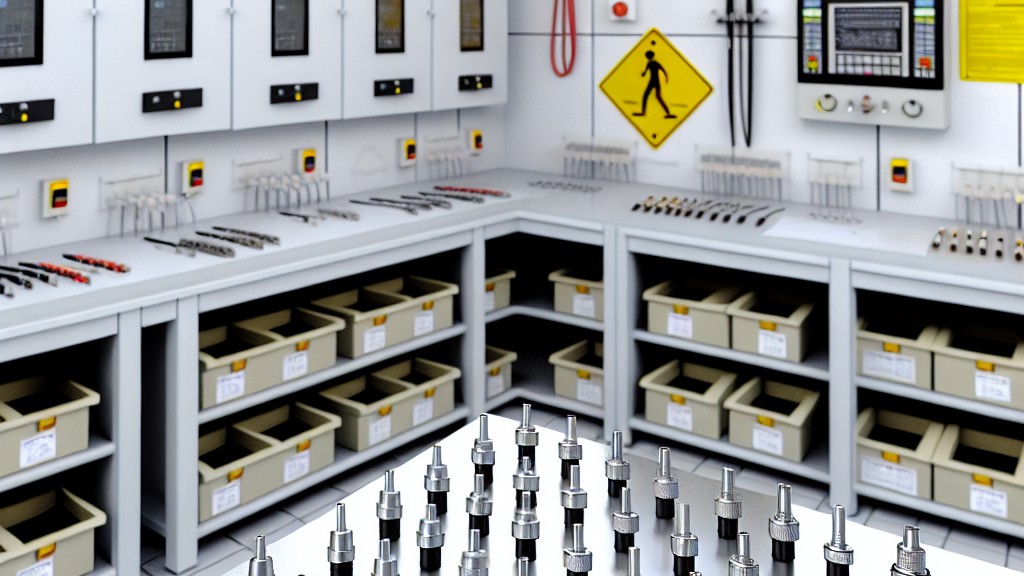
Some cable glands can also be used in hazardous areas. Then, any other or additional requirements necessary for the installation of the enclosure in such conditions, as specified in the IEC 60079 series, must be taken into account.
For the purposes of this standard, the following terms and definitions apply:
In general, cable glands must be designed to provide all functions declared by the manufacturer or supplier in normal use.
Tests performed in accordance with this standard are type tests. Unless otherwise stated, tests shall be performed on new cable glands assembled and installed in accordance with the manufacturer's or supplier's instructions as declared herein. No adjustments shall be made between or during the tests. Reassembly of the sample between tests shall not be considered as adjustment.
Unless otherwise stated, tests shall be carried out at an ambient temperature of 20 degrees plus/minus 5 degrees. Sealing systems of non-metallic and composite cable glands and metallic cable glands shall be pre-conditioned in an oven at 70 degrees plus/minus 2 degrees and maintained for 168 hours plus/minus 4 hours. If the maximum temperature declared by the manufacturer is greater than 65 degrees, the test temperature shall be the declared temperature plus 5 degrees.
Before the tests, the sealing systems of non-metallic and composite cable glands and metal cable glands are conditioned for at least 24 hours or longer as specified by the manufacturer at a temperature of 20 degrees plus/minus 5 degrees and a relative humidity of 40 to 60 percent. Unless otherwise specified, three samples are subjected to the relevant tests.
In the case of a series of cable glands, the three largest and smallest samples and one sample from all other sizes in the same series are subjected to the relevant tests. In the case of a cable gland using alternative sealing arrangements, each sealing arrangement specified by the manufacturer or supplier is considered a sample.
If a specimen fails a test due to an assembly or manufacturing error, that test and any previous tests that may have affected the results of the test shall be repeated on three new specimens of the failed size. The tests described shall be performed in the required order. All new specimens shall meet the requirements.
Unless otherwise specified, test mandrels shall consist of rods with a hardness of 868 Shore D plus/minus 65 according to ISO 15 and a surface roughness of less than or equal to 4287 µm Ra according to ISO 7. The test mandrel shall have a tolerance of plus/minus 16 mm for test mandrels up to 0,2 mm in diameter and plus/minus 16 mm for test mandrels greater than 0,3 mm in diameter. The shape shall be circular or profiled, simulating the external dimension of the cables declared by the manufacturer or supplier.
Unless otherwise specified by the manufacturer or supplier, clearance holes for testing purposes shall have the values shown in the table given in the standard. The annex to this standard (Annex B) shows the test sequences to be used for guidance only.
Our organization, which has been trying to support businesses from every sector with its testing, measurement, analysis and evaluation studies carried out in a wide range for years, has a strong staff that closely follows the developments in the world in the field of science and technology and constantly improves itself. In this context, testing services in accordance with the "EN IEC 62444 Cable glands for electrical installations" standard are also provided to businesses.
To get an appointment, to get more detailed information or to request an evaluation, you can ask us to fill in our form and reach you.

