

The standard “EN ISO 3821 Gas welding equipment - Rubber hoses for welding, cutting and related processes”, a European standard and later published by the International Organization for Standardization (ISO), describes the requirements for rubber hoses (including double hoses) for welding, cutting and related processes.
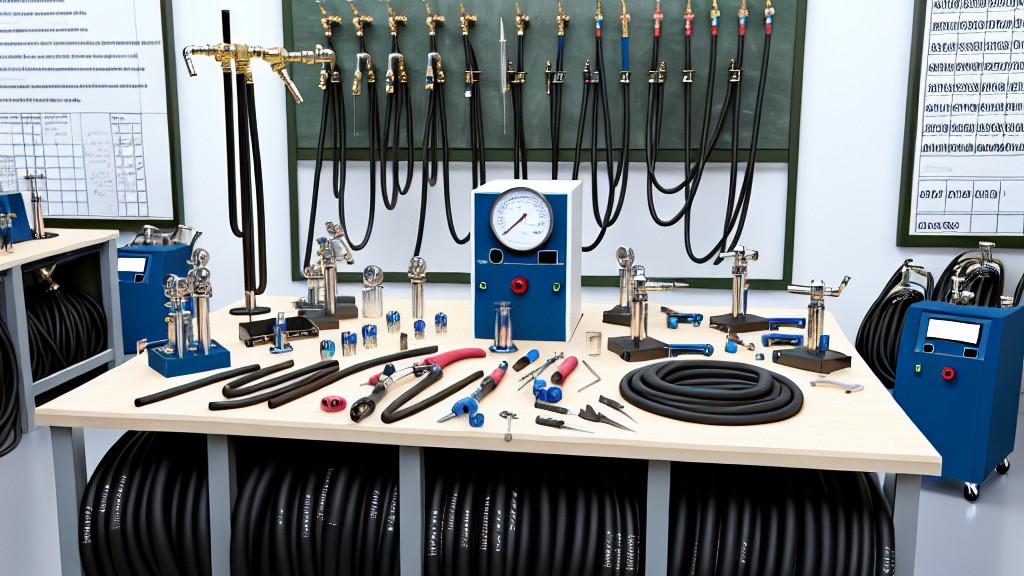
This standard includes requirements for rubber hoses for normal duty and light duty 2 MPa (20 bar). This standard is limited to hoses with a maximum working pressure of 1 MPa (10 bar) and bores up to and including 6,3 mm.
This standard applies to hoses operated at temperatures from minus 20 degrees to plus 60 degrees and used in:
However, this standard does not specify the requirements for hose assemblies. These are detailed in ISO 8207 Gas welding equipment - Specification for hose assemblies for equipment for welding, cutting and allied processes.
This standard does not apply to thermoplastic hoses or hoses used for high pressure (minimum 0,15 MPa or 1,5 bar) acetylene.
For the purposes of this standard, the following definitions apply, in addition to the terms and definitions given in ISO 8330 and ISO 15296:
The hoses covered in this standard are specified using the following information:
The goal of this process is to test the role and privilege manipulation in order to access the resources of a
Light and normal duty hoses shall consist of:
The flux fuel gas hose shall consist of:
Each hose used in the construction of a double hose must be as specified above. The two hoses must be joined longitudinally during the extrusion or vulcanization process. They must be able to be separated without damage to enable the end fittings to be fitted.
In production, the liner and cover must be of uniform thickness and free from holes, pores and other defects.
The inner diameters of the hoses must comply with the dimensions and tolerances shown in the table given in the standard.
The basic dimensions of the outer diameter of the hoses are determined by the manufacturer by determining the total wall thickness of the hoses (including rubber lining, rubber coating and reinforcement layer) according to the basic dimensions of the inner diameter by the manufacturer. The tolerances in the basic dimensions of the outer diameters must comply with the values shown in the table given in the standard.
The wall thickness of the rubber lining, rubber sheath and inner plastic layer of the hoses must not be less than the minimum thickness specified above.
The concentricity of the hose measured according to the ISO 4671 standard must comply with the values shown in the table given in the standard.
Tolerances for cutting lengths must comply with the ISO 1307 standard.
The manufacturer shall specify the combination of the basic dimensions of the inner diameter and outer diameter on the hose as specified in this standard. In addition, the basic dimensions of the inner diameter and outer diameter of the hose and their permissible tolerances shall be described in catalogs, specifications, user manuals and similar documents.
A summary of the requirements and type tests and the corresponding number of samples are included in the annex of the standard (Annex D).
Among the numerous testing, measurement, analysis and evaluation studies that our organization has carried out for businesses in various sectors, it also provides testing services defined in the standard “EN ISO 3821 Gas welding equipment - Rubber hoses for welding, cutting and related processes” with its trained and expert staff and advanced technological equipment.
To get an appointment, to get more detailed information or to request an evaluation, you can ask us to fill in our form and reach you.

