

The “ISO 4406 Hydraulic fluid power - Fluids - Method of coding the level of contamination with solid particles” standard, published by the International Organization for Standardization (ISO), defines the code to be used to describe the amount of solid particles present in the fluid used in a particular hydraulic power system.
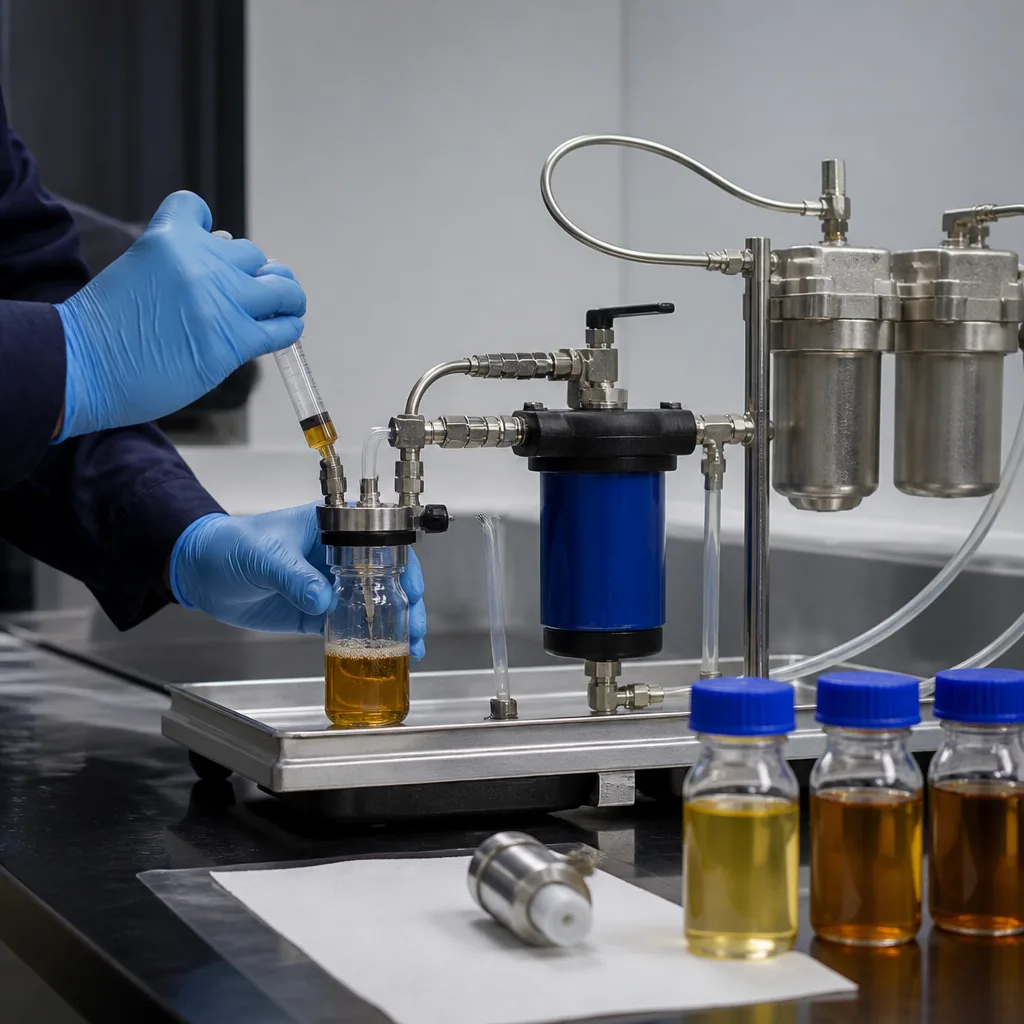
This standard establishes a uniform method for expressing the cleanliness level of hydraulic fluids based on the number and size of solid particles suspended in the fluid.
ISO 4406 is one of the most widely used standards in the hydraulic and lubrication industries because particulate contamination is a leading cause of hydraulic system failures. This standard provides a standardized cleaning coding system, enabling manufacturers, maintenance crews, laboratories, and equipment operators to consistently communicate fluid cleaning requirements.
Rather than specifying acceptable pollution limits, this standard defines how pollution should be measured and reported. Hydraulic systems contain sensitive components with extremely small clearances. Examples include:
Solid particles can cause the following:
Industrial studies show that a large proportion of hydraulic failures are directly or indirectly related to contamination.
The ISO 4406 standard classifies contamination based on the number of particles present in 1 milliliter (mL) of hydraulic fluid. Particle counts are grouped according to three size ranges:
The “(c)” symbol indicates particle sizes calibrated according to the ISO 11171 standard, ensuring consistent particle counter calibration.
Each particle concentration is converted into a numerical cleanliness code. The cleanliness code consists of three digits. For example, 18 / 16 / 13. These represent:
The meaning of the code “18 / 16 / 13” is as follows:
Each code corresponds to a range of particle counts per milliliter. A simplified example is shown below:
Each code increment approximately doubles the allowed particle concentration.
For example, let's assume the laboratory tests yield the following results:
The cleanliness code would be: 18 / 16 / 13. This provides a concise description of the contamination levels without listing the number of each particle.
The ISO 4406 standard uses particle counts obtained from the following types of devices:
Particle counting procedures are generally performed in accordance with the standard “ISO 11500 Hydraulic fluid power - Determination of particle contamination level of liquid sample by automatic particle counting using light damping principle” and instrument calibration is carried out according to the standard “ISO 11171 Hydraulic fluid power - Calibration of automatic particle counters for liquids”.
Different hydraulic systems require different levels of cleanliness. For example, applications and typical ISO 4406 code application are as follows:
Actual requirements are usually specified by the equipment manufacturers.
The ISO 4406 standard is widely used in the following areas:
Organizations that monitor hydraulic cleaning using the ISO 4406 standard can benefit from the following:
The ISO 4406 standard is often used in conjunction with the following standards:
Together, these standards provide a comprehensive framework for pollution control and hydraulic filtration.
The ISO 4406 standard is widely used in the following sectors:
Using this standard offers the following advantages:
In conclusion, the ISO 4406 standard is a global benchmark for classifying the cleanliness of hydraulic fluids. By converting particle concentrations into a standardized three-digit cleanliness code, it enables engineers, maintenance professionals, equipment manufacturers, and laboratories to communicate contamination levels consistently and accurately.
Routine monitoring according to the ISO 4406 standard supports effective contamination control, optimized filtration, and predictive maintenance strategies. When combined with complementary fluid analysis techniques and appropriate filtration practices, it helps to improve system reliability, extend component life, reduce downtime, and lower operating costs in a wide range of hydraulic applications.
For many years, our organization, with its competent and experienced staff, has been understanding the needs of its clients, providing the advanced testing services they require, and assisting them in the establishment, implementation, and improvement of management systems. Within this framework, we also provide testing services compliant with the ISO 4406 standard.
To get an appointment, to get more detailed information or to request an evaluation, you can ask us to fill in our form and reach you.

