

It is a European standard EN 81-20 designed for the transport of persons and goods, serving certain stall levels, with traction, positive or hydraulic drive, suspended by ropes, chains or jacks and moving between guide rails with a slope of not more than 15 degrees to the vertical. Safety rules are explained for new passenger or freight elevators that are permanently installed with a car.
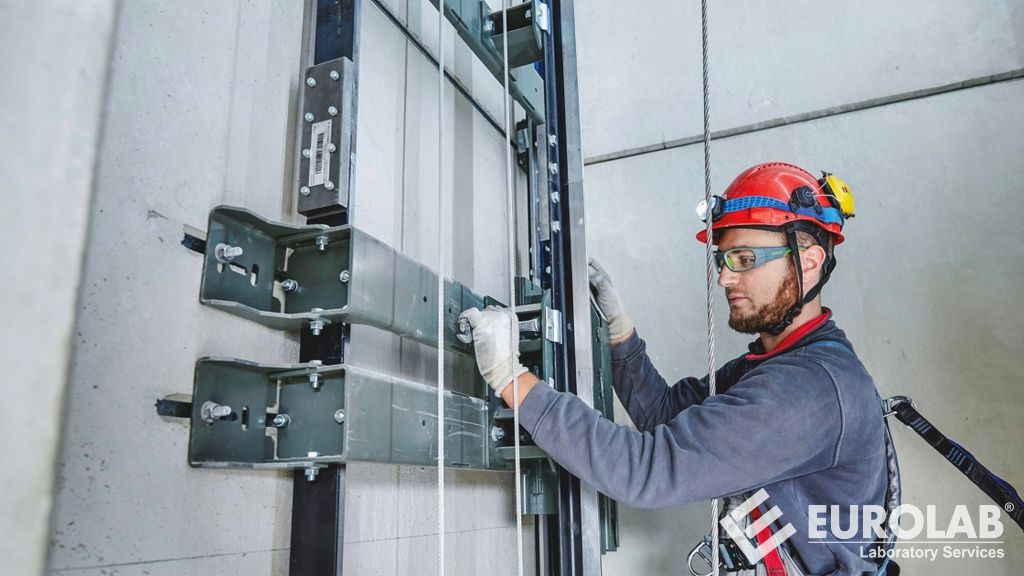
In addition to the requirements of this standard, additional requirements are taken into account in the use of elevators by persons with disabilities, in case of fire, potentially explosive atmosphere, extreme climatic conditions, seismic conditions, transportation of dangerous goods and similar special situations.
However, this standard does not cover:
However, in these cases, the EN 81-20 (TSE K 171) standard is usefully taken as a basis.
Our organization, among the numerous test, measurement, analysis and evaluation studies it has given for businesses in various sectors, with its trained and expert staff and advanced technological equipment, within the scope of EN 81-20 (TSE K 171) standard, within the framework of safety rules for the construction and installation of elevators. It also provides testing services for passenger and freight elevators used in transportation of goods and goods.
To get an appointment, to get more detailed information or to request an evaluation, you can ask us to fill in our form and reach you.

