

The “ISO 10380 Piping – Corrugated metal hoses and hose assemblies” standard, developed by the International Organization for Standardization (ISO), describes the minimum requirements for the design, manufacture, testing and installation of corrugated metal hoses and metal hose assemblies.
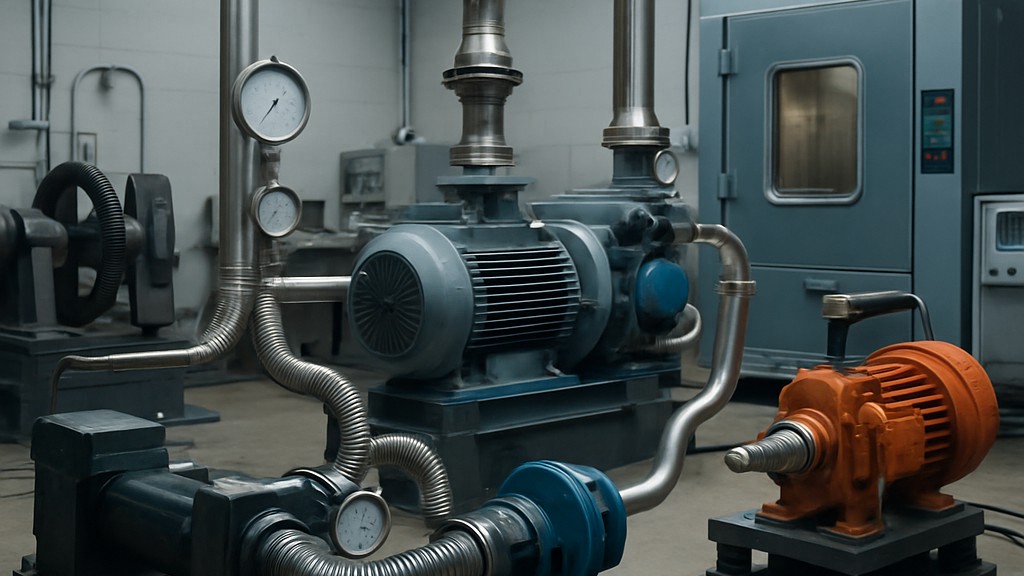
Corrugated metal hoses are designed with or without braiding, and their installations are designed to allow for frequent movement or flexibility. These design requirements should ensure long-term, safe operation of the corrugated metal hoses without degradation when properly installed and used under the chemical, mechanical, and thermal conditions of general use.
Corrugated metal hoses are divided into four different types and tested accordingly as described in this standard:
The corresponding radii for flexibility tests and the corresponding radii for fatigue tests are included in the tables given in the standard.
The fatigue life of corrugated metal hose is mainly affected by bending radius, pressure and temperature:
Passing a test does not imply that the minimum or average fatigue life will be achieved under conditions other than those specified in the test procedure. If a user requires a fatigue life higher than that specified in this standard, the manufacturer should be consulted. Installation configuration, such as type of movement, pressure characteristics, and environmental conditions, have a strong influence on the fatigue life of corrugated metal hose assemblies. The lubrication status of the braid affects the fatigue life of corrugated metal hose. Loss of lubrication may occur during installation, cleaning, transportation, storage, or service.
Nominal dimensions shall be as given in the table. The inside diameter of a corrugated metal hose shall not be less than 98 percent of the nominal size specification. Other nominal dimensions may be manufactured to suit the customer's requirements. Performance values shall be interpolated from the values for the nearest nominal dimensions given in the table.
Unless expressly agreed upon between the manufacturer and the purchaser, the overall length of the metal hose assembly shall be the ordered length with a tolerance of plus 3 percent and minus 1 percent. For short hose assemblies, these tolerances do not apply because a chamfer tolerance is often required depending on the connection technology of the fittings. In no case shall the overall length be less than 99 percent of the ordered length.
Corrugated metal hose must be constructed from seamless pipe, welded pipe, or strip. When welded construction is used, the hose may be butt-welded or overlap-welded. The weld may be axial or spiral along the length of the hose and conforms to qualified welding and forming procedures. Corrugations may be ring-shaped or helical. The corrugation must be regular, continuous, and concentric along the length of the hose and free from defects such as nicks, dents, cuts, or weld variations that could lead to premature failure. If necessary, a hose may be heat treated after it has been formed. Heat treatment affects flexibility, fatigue life, and pressure-carrying capacity. Therefore, the manufacturer must provide details on the properties affected by such treatment.
Materials for the manufacture of corrugated metal hoses and metal hose assemblies should be selected based on their suitability for fabrication (e.g., cold forming, welding) and the conditions under which they will be used. Lists of suitable materials and alternative equivalent European material designations are included in the tables provided in the standard.
The ISO 10380 standard is deemed necessary for the following reasons:
Our organization, which has been supporting businesses across all sectors for years through a wide range of testing, measurement, analysis, and evaluation activities, has a strong team of employees who closely follow global developments in science and technology and are constantly improving themselves. In this context, we also provide testing services in accordance with the ISO 10380 Piping - Corrugated Metal Hoses and Hose Assemblies standard.
To get an appointment, to get more detailed information or to request an evaluation, you can ask us to fill in our form and reach you.

