ISO 11119 Gas Cylinders - Design, Construction and Testing of Refillable Composite Gas Cylinders and Tubes
The “ISO 11119 Gas cylinders – Design, construction and testing of refillable composite gas cylinders and tubes” standard, published by the International Organization for Standardization (ISO), consists of the following sub-sections published under the same title:
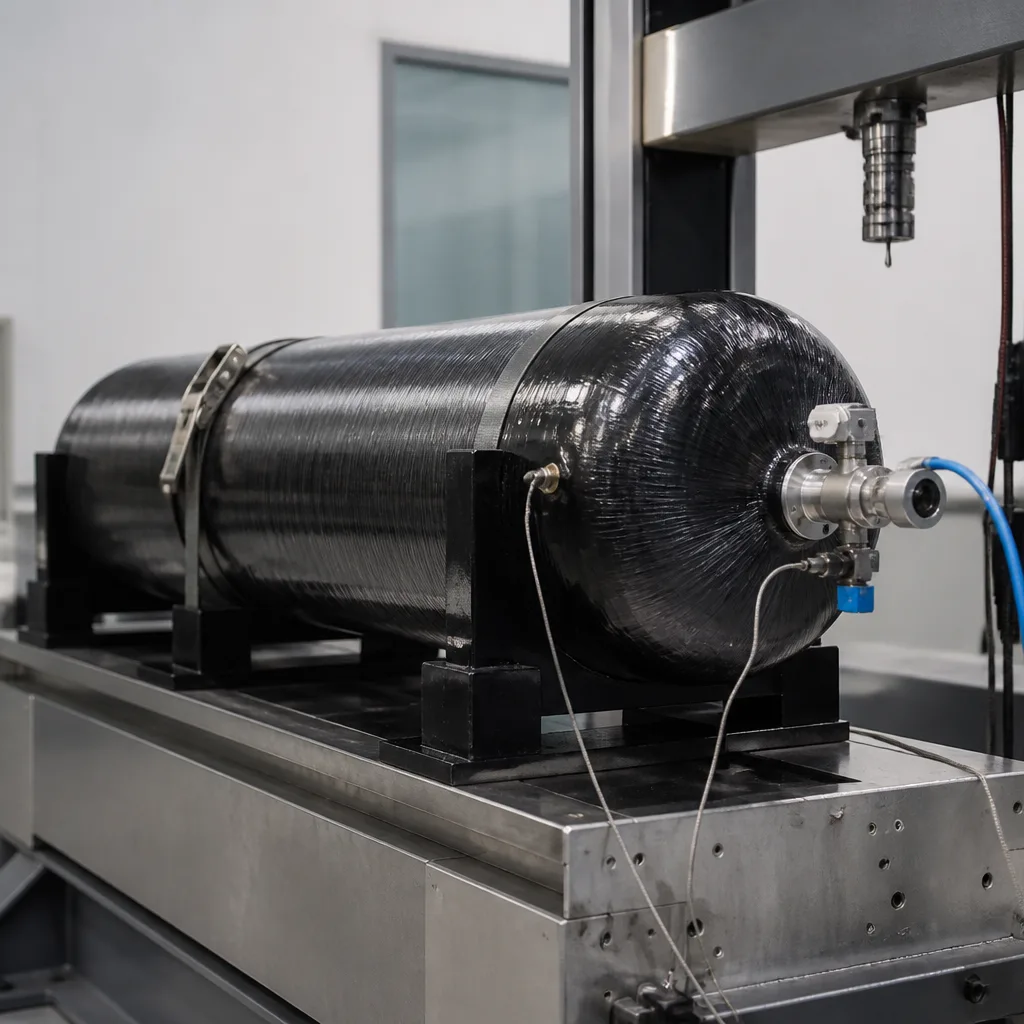
- The standard “ISO 11119-1 Part 1: Strapped fiber-reinforced composite gas cylinders and tubes up to 450 liters” describes the minimum requirements for materials, design, construction and workmanship, manufacturing processes, and inspection and testing during manufacturing.
- Type 2 composite ring-wound cylinders or tubes with metal lining and composite reinforcement only in the cylindrical section, providing load sharing.
- Water capacities up to 450 liters.
- Storage and transportation of compressed or liquefied gases.
- Composite reinforced cylinders and tubes made of carbon fiber, aramid fiber, or glass fiber (or a mixture thereof) within a matrix or steel wire to provide perimeter reinforcement.
- Minimum design life of 15 years.
This standard does not address the design, installation, or performance of removable protective cases.
Cylinder references in this standard include composite tubes where applicable.
The ISO 11439 standard applies to cylinders designed for use as fuel tanks in natural gas vehicles, and the ISO 11623 standard covers the periodic inspection and retesting of composite cylinders.
In short, the ISO 11119-1 standard applies to the following:
- Refillable composite cylinders and tubes with a water capacity of up to 450 liters.
- Cylinders designed for the storage and transport of compressed gases, liquefied gases, and dissolved gases.
This standard specifically covers ring-wrapped cylinders, where the composite reinforcement is wrapped primarily around (circumferentially) the cylindrical body rather than completely enveloping the entire cylinder. These cylinders typically consist of:
- Lining: Metal liner (steel or aluminum) or non-metal liner. Provides gas tightness.
- Composite reinforcement: fibers such as glass fiber, carbon fiber, or aramid fiber. A resin matrix binds the fibers and transfers the load.
- Hub/neck components: Metal fittings for valve connections and pressure interfaces.
The standard “ISO 11119-2 Part 2: Load-sharing metal-lined, fully coiled fiber-reinforced composite gas cylinders and tubes up to 450 litres” describes the minimum requirements for materials, design, construction and workmanship, manufacturing processes, and inspection and testing during manufacturing.
- Type 3 fully coiled cylinders or tubes with metal lining and composite reinforcement in both the cylindrical section and the dome ends, enabling load sharing.
- Water capacities up to 450 liters.
- Storage and transportation of compressed or liquefied gases.
- Cylinders and tubes reinforced with carbon fiber, aramid fiber, or glass fiber (or a mixture) composite within a matrix.
- Minimum design life of 15 years.
This standard does not address the design, installation, or performance of removable protective cases.
This standard does not apply to welded-lined cylinders.
Cylinder references in this standard include composite tubes where applicable.
The ISO 11439 standard applies to cylinders designed for use as fuel tanks in natural gas vehicles, and the ISO 11623 standard covers the periodic inspection and retesting of composite cylinders.
In short, the ISO 11119-2 standard applies to the following:
- Refillable composite cylinders and tubes with a water capacity of up to 450 liters.
- Cylinders designed for compressed gases, liquefied gases, and dissolved gases.
The cylinders included in this standard are:
- Load-sharing aid metal liner: Typically aluminum or steel. It contributes structurally to pressure containment.
- Fully encased composite reinforcement: Fiber strands completely enclose the cylindrical and dome sections. Common reinforcement materials include glass fiber, carbon fiber, and aramid fiber.
- Resin matrix: Thermoset resin binds the fibers and distributes stresses.
Unlike ring-wound cylinders under the ISO 11119-1 standard, ISO 11119-2 standard cylinders are reinforced throughout the entire pressure vessel, including the end domes.
- The standard “ISO 11119-3 Part 3: Fully wrapped fiber-reinforced composite gas cylinders and tubes, metallic or non-metallic, lined or unlined, up to 450 litres, that do not share load” describes the minimum requirements for materials, design, construction and workmanship, manufacturing processes, and inspection and testing during manufacturing.
- Type 4 composite fully wrapped cylinders or tubes with non-load-sharing lining and composite reinforcement in both the cylindrical section and the dome ends.
- Type 5 fully coiled cylinders or tubes, unlined, with a test pressure of less than 60 bar, and reinforced with composite material in both the cylindrical section and the dome ends.
- Water capacity up to 450 liters.
- For the storage and transport of compressed or liquefied gases.
- Cylinders and tubes reinforced with carbon fiber, aramid fiber, or glass fiber (or a mixture thereof) composite within a matrix.
- Minimum design life of 15 years.
Cylinders and tubes manufactured and tested according to this standard are not designed to contain toxic, oxidizing, or corrosive gases.
This standard does not address the design, installation, or performance of removable protective cases.
Cylinder references in this standard include composite tubes where applicable.
The ISO 11439 standard applies to cylinders designed for use as fuel tanks in natural gas vehicles, and the ISO 11623 standard covers the periodic inspection and retesting of composite cylinders.
In short, the ISO 11119-3 standard applies to the following:
- Fully wrapped composite cylinders and tubes.
- Cylinders with the following characteristics:
- Metallic linings that do not carry significant structural loads (typically aluminum or steel)
- Non-metallic linings such as thermoplastic materials
Composite reinforcement typically consists of the following:
- carbon fiber
- Fiberglass
- Aramid fiber
These fibers are embedded in resin systems such as:
- Epoxy
- Polyester
- Vinyl ester
This standard is designed for cylinders used with the following gases:
- Industrial gases
- Medical gases
- Special gases
- Respiratory device gases
- Depending on design approval, alternative fuels such as hydrogen or compressed natural gas (CNG).
The standard “ISO 11119-4 Part 4: Load-sharing welded metal-lined fully coiled fiber-reinforced composite gas cylinders up to 150 litres” describes the requirements for load-sharing welded-lined composite gas cylinders with capacities from 0,5 l to 150 l and a maximum test pressure of 450 bar, intended for the storage and transport of compressed or liquefied gases.
The cylinders are manufactured with a welded stainless steel liner, or a welded ferritic steel liner, or a welded aluminum alloy liner, and are wrapped in a matrix of carbon fiber, aramid fiber, or glass fiber (or a mixture thereof) to provide longitudinal and circumferential reinforcement.
Cylinders conforming to this standard are type 3 fully coiled cylinders with metal lining and composite reinforcement based on load-sharing in both the cylindrical section and the dome ends.
Cylinders manufactured according to this standard have a minimum design life of 15 years. Cylinders with a test pressure of up to 60 bar have an unlimited design life.
This standard does not relate to the design, assembly, or performance of removable protective cases.
This standard does not apply to seamless lined cylinders. For seamless liners, the ISO 11119-2 standard applies.
The ISO 11623 standard covers the periodic inspection and retesting of composite cylinders.
In short, the ISO 11119-4 standard applies to the following:
- Fully wrapped composite cylinders and tubes.
- Water capacity up to 150 liters.
- Welded metal liners (typically steel or aluminum alloys) for load-sharing.
- Refillable gas cylinders designed for compressed, liquefied, or dissolved gases, depending on compatibility and approval.
Cylinders are generally manufactured with the following materials:
- Welded metal liner forming the gas-tight inner shell.
- Outer fiber reinforcement wrapped around the lining.
Typical reinforcement materials include:
- carbon fiber
- Fiberglass
- Aramid fiber
Common resin systems include:
- Epoxy resin
- Polyester resin
- Vinyl ester resin
For many years, our organization, with its competent and experienced staff, has been understanding the needs of its clients, providing the advanced testing services they require, and assisting them in the establishment, implementation, and improvement of management systems. Within this framework, we also provide testing services compliant with the ISO 11119 standard.



